Category Archives: News

More Languages, More Science: Translating Zooniverse Projects

For a long time we’ve tried to translate Zooniverse projects and this has often worked out very well. When we have done it, we have definitely seen the benefits. For example, we know that Polish classifiers on Galaxy Zoo did more classifications per-person than their English-speaking counterparts in 2011. About 8% of all our classifications are completed by people using our websites in a language other than English. We think that number should be higher.

In the last year we’ve launched Galaxy Zoo in Spanish, Traditional and Simplified Mandarin, and Italian. Planet Four is also available in Traditional Mandarin. Plankton Portal is available in Polish and French. Planet Hunters is also available in Polish, and Snapshot Serengeti is in Polish and Finnish. Finally, Whale FM is available in Polish, German and Whale.

This has all been possible because of the hard work of colleagues and translators all around the world. We’re currently working on a place to credit them for their efforts so you know who’s been making this magic happen. Particular thanks should also go to Chris Snyder and Michael Parrish, at Zooniverse’s Chicago HQ, for their efforts in making our sites and infrastructure better at handing multiple languages.

Screenshot 2014-02-19 19.50.34

If you take a look at the Zooniverse Community Map we created to celebrate our millionth signup you’ll note the strong English-speaking dominance. Whilst this understandable, it’s still not ideal. We need to light up more of the world on that map. So recently several of our core team have been working to make more and more projects translatable. Currently the list stands at:

  • Galaxy Zoo
  • Disk Detective
  • Radio Galaxy Zoo
  • Plankton Portal
  • Planet Four
  • Milky Way Project
  • Worm Watch Lab

…and more are being added all the time. If you’re interested in helping out, please email me on rob@zooniverse.org and let me know your Zooniverse username and the language, and project(s) you’re interested in translating. We hope to bring you updates soon.

Come and Meet the Zooniverse at the Citizen Science Cafe

Citizen-Cyberscience-2014

As part of the Citizen Cyberscience Summit 2014, we’re taking part in the Citizen Science Cafe 6-8pm this coming Friday, 21st February. This is an event where citizen science projects from all over the world are gathering to let everyone see the plethora of citizen science that exists. Tickets are free and you can find them here: http://cybersciencesummit.org/register/.

You can talk to some of the people behind a huge variety of citizen science projects – including us of course. We’ll be showcasing Galaxy Zoo and the Milky Way Project – but happy to talk about any of our sites at all. Hope to see many of you in London!

One Million Volunteers

zoohome-1-million

The Zooniverse is now one million strong. That’s one million registered volunteers – so in fact many more people have taken part without logging in too.

The Zooniverse started less than 7 years ago with the launch of Galaxy Zoo. We have since created almost 30 citizen science projects from astronomy to zoology. Some of you have been with us from the very start, some have only joined this week. Either way, we are constantly amazed by the effort that the community puts into our projects.

zooniverse_map

To celebrate this momentous occasion we prepared some cool stuff for you all. Firstly, check out this awesome global map showing where all Zooniverse volunteers are based.

Screenshot 2014-02-14 19.10.20

Also, we have created a new profile page for each of you where you can see some of your personal participation stats (such as what your user number is relative to the one million signups) and view your ‘ribbon’! The image above shows my own ribbon – have a look at www.zooniverse.org/me to see yours.

We continue to add new papers to our publications page all the time (we added one today in fact!) and we always strive to make full use of your classifications and discussions on Talk around our various projects. We also continue to build new citizen science projects – there are more coming up soon – so stay tuned. Meanwhile why not tell everyone you know who hasn’t taken part in a Zooniverse project to get online and register now! A great way to do this would be to share our page with your friends on Facebook. Together we’re speeding up science around the world.

Thanks for all your continued hard work – and here’s to the next million Zooniverse citizen scientists.

Disk Detective

Disk Detective

Today we’ve launched Disk Detective: a new project that asks you to help scour infrared data from NASA’s WISE spacecraft. WISE is a NASA mission surveying the whole sky in infrared. Disk Detective is backed by a team of astronomers that need your help to look at data of stars to try and find dusty debris disks – similar to our asteroid field. These disks suggest that these stars are in the early stages of forming planetary systems.

Learning more about these stars can tell researchers how our Solar System formed. Computers often confuse debris disks around stars with other astronomical objects. The Disk Detective team need your help to sort out what stars actually have these disks from galaxies and nebulae.

Screenshot Disk Detective

To take part you have to look through flipbook-style sets of images made up of multiple wavelength data from each star. You watch the object change as you move from shorter, optical wavelengths to longer infrared wavelength data. For each star you’re looking at data from multiple surveys and missions taken over many years. Bring all this data together, on the web, is a really cool part of Disk Detective.

There’s lots of data to get through and the science promises to be really interesting. Follow along on the Disk Detective blog, on Twitter and on Facebook too. In the meantime jump on the new site and have a go at www.diskdetective.org.

Stargazing Live: The Results Are In

IMG_1172
The Lovell Telescope observing 9io9: a candidate lens spotted by volunteers on Space Warps.

BBC Stargazing Live 2014 has been asking people to visit the Zooniverse’s Space Warps site to identify gravitational lenses: extremely rare events caused by one galaxy passing in front of another (very distant) galaxy. Tens of thousands of you have taken part and classified more than 6.5 million images.

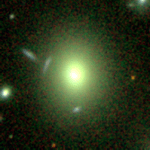
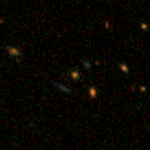
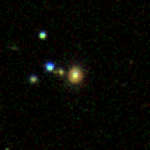
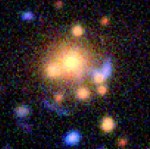
Your classifications have already led to the discovery of more than 50 potential gravitational lenses! Amongst them are several beautiful and interesting discoveries. You can see a few of our favourite candidates above. For Stargazing Live’s third and final show we have focussed on the spectacular red arc/ring shown below, it has been nicknamed 9io9 by the team right now, because of it’s Zooniverse ID. You can see more of what our volunteers are saying about it here on Talk.

Credit: Jim Geach / VICS82

The Space Warps team have produced a model of it and currently think the background (red) galaxy is at redshift of about 2, which means the light has taken more than 10 billion years to reach us! You can see the comparison of the model and the data below. There’s a chance it could be further away but we’ll keep you posted. The nearer object (white/yellow) is about 2 billion light years away and has a mass of 100 billion times that of our Sun – which makes it about the same size as our own galaxy.

Model_and_Data_Credit_A_More
Comparison of the model (left) and real (right) data.

We know all this because we have spent the last 24 hours calling in every favour we have worldwide. The Space Warps science team, and various Zooniverse scientists from other projects, have been literally asking favours from people using the world’s biggest telescopes. We were even able to get some time on the massive Keck telescope in Hawai’i, where astronomers were having to break ice off the dome to get data. Astronomers love a good challenge!

Of course Stargazing Live is filmed at Jodrell Bank, home to one of the world’s largest radio dishes: the Lovell Telescope. This candidate lens is perfect for a radio observation – which can tell us more about its mass and position in space – and I’m excited to say that the giant dish is observing the target as I write!

Space Warps has been a huge success over the past three days and the project continues! Every classification on Space Warps helps our computers understand the whole data set, and so in a way all the objects discovered on Space Warps are the result of everybody’s combined work. You can keep up to date with news from Space Warp via the project’s blog, Twitter and Facebook sites.

A huge thank you to the BBC crew, the Jodrell Bank team, the Space Warps scientists, developers and moderators, and to everyone that took part this week. Keep clicking!

Space Warps for BBC Stargazing Live

This week is the BBC’s Stargazing Live show: three now-annual nights of live stargazing and astronomy chatter, live from Jodrell Bank. In 2012 we asked the Stargazing Live viewers to help us discover a planet with Planet Hunters, in 2013 we explored the surface of Mars with Planet Four. This year we are inviting everybody to use our Space Warps project to discover some of most beautiful and rare objects in the universe: gravitational lenses.

Space Warps launched last year and originally the project asked everyone to spot gravitationally lensed features in optical images from the CFHT Legacy Survey. We’re still busy processing the data but you seem to have found lenses – including the three shown at the top of this post! For Stargazing Live we’re adding a whole new dataset of infrared images, which has not been deeply searched for lenses before. We’re also now working with ’targeted’ data. This means that we are only showing images containing objects in them that could either be lenses, or would be interesting if they were being lensed. So your odds of finding something amazing have really gone up!

Screenshot of Space Warps

Gravitational lenses occur when a massive galaxy – or cluster of galaxies – pass in front of more distant objects. The enormous mass of the (relatively) closer object literally bend light around them and distort the image of the distant source. Imagine holding up a magnifying glass and waving it around the night sky so that starlight is bent and warped by the lens. You can see more about this here on the ESO website.

We’re blogging right now from Jodrell Bank (the dish is looking lovely BTW) and the Stargazing Live set and everyone here is buzzing with the idea that we might find some gravitational lenses that have never been seen before! Good luck, and happy classifying. Even K9 is excited.

Season of Giving

Screenshot 2013-12-21 21.32.07

Yesterday – or today depending on your timezone – Google featured the Zooniverse as part of their One Today app in the USA. This is a fantastic chance to spread to word about the Zooniverse and to give people the chance to donate directly to help make it better. You can also see us on Google’s amazing 12 Days of Giving website.

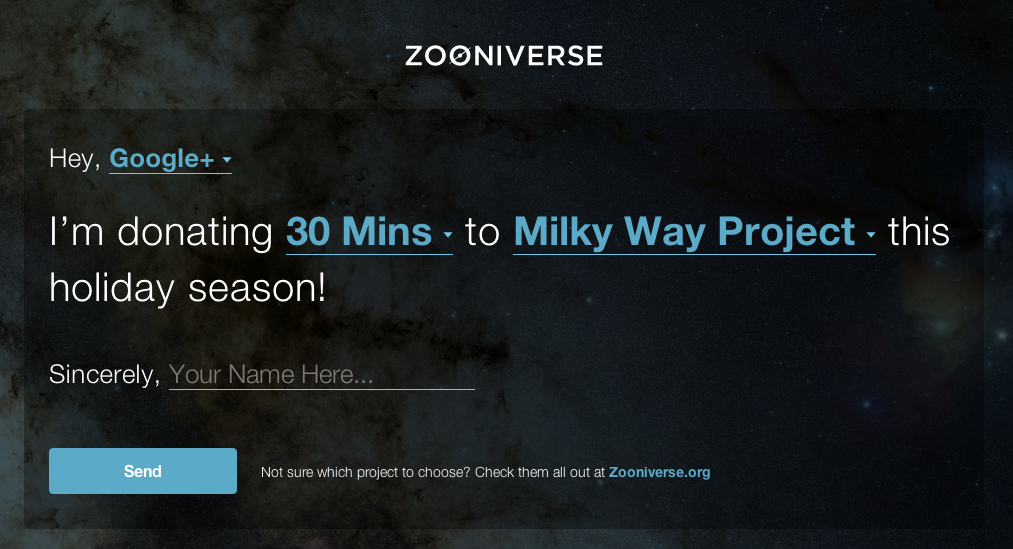
Regardless of where you are in the world, we think that the best thing most of you can give us is your time. So we’ve created giving.zooniverse.org which you can use to tell the world (or your social network at least) that you’re giving some of your time to the Zooniverse this holiday season. Perhaps you can help spread some citizen science cheer – or just show off that you’re an awesome contributor to science online.

Happy holidays, Merry Christmas, Nadolig Llawen – or whatever you say at this time of year!

Zooniverse Cocktails (Part Two)

Have a drink on the Zooniverse this festive season. Last year we created  a list of festive Zooniverse cocktails for the grown-ups amongst you. Here are a few more, courtesy of our very own Chris Lintott.

Planet 4 Margarita

This is a recipe passed onto me from the Mars Phoenix team, who were looking for two of its components – salt and ice – in the Martian arctic, a region not dissimilar to that explored by Planet 4 volunteers. It’s a nice twist on a classic margarita.

  • 2 cups tequila (a cup is a strange American unit. I use ‘some’ tequila)
  • 1-2 hot chillies, preferably habaneros
  • Salt
  • 6 cups pink grapefruit juice

Half the chillies and mix with the tequila. Allow to stand for the amount of time you can stand it, but at least a few hours. (The longer you leave it, the spicier the tequila). THROW THE CHILLIES OUT.

Dip the rims of the glasses into a little of the juice, then roll in the salt. Shake tequila and grapefruit juice in a 1:3 ratio with plenty of ice and serve in salted glasses. Drink until the rushing onset of winter brings with it an icy tomb. (Actually, that last bit might only apply to Phoenix itself)

PH1b

  • 2 shots Scotch – I like a nice smokey Islay blend like Black Bottle.
  • 1/2 shot sweet vermouth
  • 1/2 shot dry vermouth
  • Dash Angostura bitters
  • Cherry

This is a perfect Rob Roy, but we’ve renamed this classic in honour of our planet with four stars, PH1b. The four liquid ingredients represent the four stars, so shake all of them together and serve in a Martini glass, adding the cherry to represent the planet. This cocktail is not to scale.

Galaxy Zoo Treacle

Becky Smethurst, our new(isn) Galaxy Zoo PhD student in Oxford, loves rum, so this is in honour of her first term in the Zooniverse. As with spiral galaxies, the direction of stirring is essential.

  • 2 shots Rum – preferably dark Jamacian rum
  • 1/4 shot Sugar syrup (you can make this by dissolving lots of sugar in water – typically 1 water : 2 sugar)
  • 1/2 shot apple juice
  • 2 dash Angostura bitters

Put two ice cubes in a glass and stir in the sugar syrup and the bitters. Stir clockwise. Add 1 shot rum, with two more ice cubes, and stir anti clockwise. Add the rest of the rum, two more ice cubes, stir clockwise. Pour apple juice into the top and sip gently.

The Layered Giraffe

In honour of Snapshot Serengeti, this was suggested by Zooniverse volunteer Emma Price.

  • 1 shot Baileys
  • 1 shot Amaretto
  • 1 shot Kahlua

Pour each shot carefully into a glass, then shake cocoa powder on top in a suitably giraffey pattern. (Note this cocktail uses three of my four least favourite ingredients, so I haven’t tried it myself. Let me know how it goes).

The GitHub Gimlet

As many of you know, we lost our Technical Lead Arfon Smith to GitHub earlier this year. I’m pleased to see he’s working hard in his new role, contributing this gin gimlet recipe to an open source cocktail repository :

https://github.com/balevine/cocktails/pull/2/files

To make it a GitHub gimlet, add one single, solitary tear shed at our lost of Arfon and shake viciously.

New Project: Radio Galaxy Zoo

Seasons greetings everyone! Since you’ve been so good this year we have a very special present for you… a brand new project: Radio Galaxy Zoo. We need you to help us discover black holes.

radiogzavatar

Earlier this year, Galaxy Zoo expanded to include the infrared. Now Radio Galaxy Zoo involves looking at galaxies in yet another light. This time we are asking you to match huge jets – seen in radio emission – to the supermassive black holes at the centre of the galaxy that produced them. This requires looking at the galaxies in infrared and radio wavelengths. These galaxies are nothing like our own, and your classifications will allow scientists to understand the causes of these erupting black holes and how they affect the galaxy surrounding them.

Get involved now at http://radio.galaxyzoo.org – and have fun discovering black holes in our Universe.

Google confirms that the Zooniverse is awesome!

The Zooniverse is extremely pleased to announce that it has been named as one of six Google Global Impact Awardees announced in December 2013. The awards are given by Google to projects that show three key elements:
  • technology or innovative approach that can deliver transformational impact
  • a specific project that tests a big game-changing idea
  • a brilliant team with a healthy disregard for the impossible

The grant we have received from Google as part of their Global Impact Award program will allow us to build a platform that can support hundreds or maybe even thousands of new and exciting citizen science projects. A list of the awardees can be seen at the Google Global Impact Award site here http://www.google.com/giving/global-impact-awards/

It means a lot to us at the Zooniverse to have been given this award and we could not have managed it without you, our volunteers. The time and effort you dedicate to our projects shows the world how important citizen science can be, and we’re looking forward to the next few years.

So thanks to you, and thanks to Google!

The Zooniverse team

PS: Just to be clear, this is a philanthropic act from Google – we’ll continue to be an academic project run by the team at Oxford, Adler Planetarium and elsewhere and all your data remains with the Zooniverse as before. Nothing changes, except our ability to scale!