Category Archives: News

Introducing Darren McRoy – Zooniverse Community Builder!

darren


Back in August I wrote about our search for someone we were calling a ‘community builder,’ which I said was ‘the most important job in the Zooniverse.’ The position was created because of the rapid expansion of the project, and the plans we have for the next year or two, which will mean we may be able to create hundreds or thousands of new projects. If the Zooniverse isn’t constrained by the slow process of project-by-project development, then we need to rethink how we choose what is hosted on our platform, what gets promoted—and how we talk about such things. We need, in fact, to try and build a broader Zooniverse community, capable of taking the choice of projects out of our hands. At the same time, we want the tools we use to engage with this community to let everyone have a say, from new classifiers on a single project to those who roam freely across all of our Talk discussion boards.

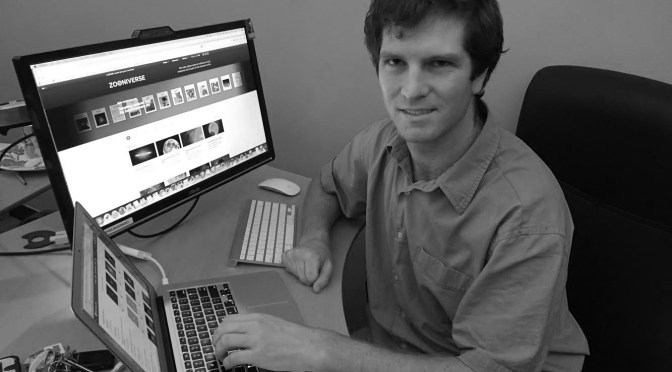
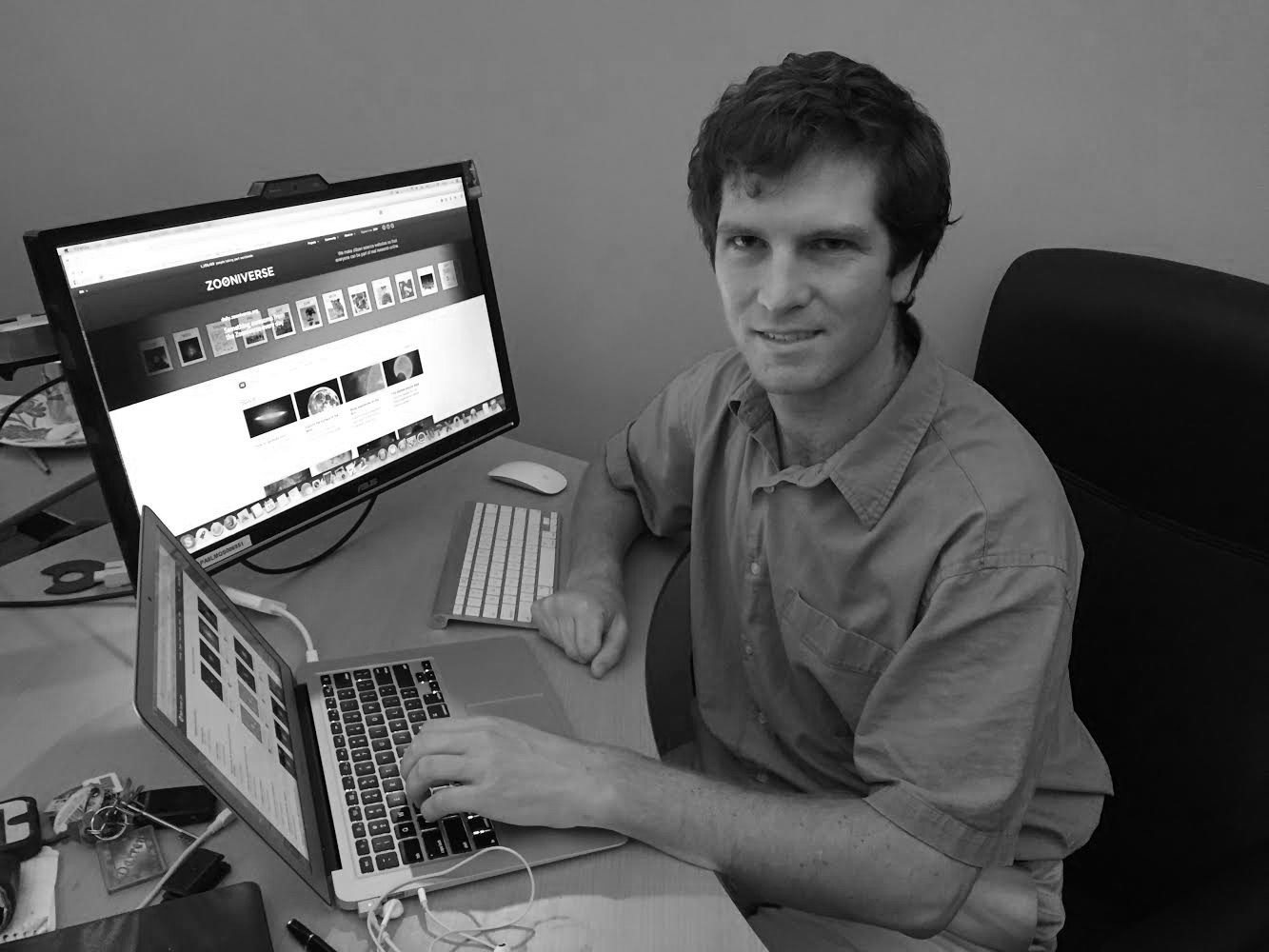
As many of you will have already discovered, we’ve found someone we can help us with this process — Darren McRoy. Darren is a 2010 graduate of Northwestern University’s Medill School of Journalism. He has worked as a reporter and editor and is an experienced writer and communicator with a strong focus on developing online communities and strategic digital content. One of his first projects will be gathering and compiling the feedback that will inform the upcoming rebuild of the Talk discussion system. He will be a regular presence on the forums, responding to users’ comments and concerns and seeking opportunities to spur additional conversation. He will also be contributing some written content for Zooniverse projects, blogs, websites, etc. when needed, and giving feedback to the development team.

You should see quite a lot of Darren, and we’d like to encourage you to talk to him if you have any questions, comments, concerns, or other feedback about the Zooniverse community. In particular, right now he is seeking feedback about how Talk can be improved to better serve both the science goals and the growing community of contributors and volunteers.

Darren can be reached via email at darren@zooniverse.org or DZM on Talk. Please feel free to contact him — he is looking forward to working with all of you!

Chris

We Need Us: Online Art, Powered by the Zooniverse

Screenshot 2014-10-09 12.08.31

The Zooniverse is the subject of a new artwork co-commissioned by the Open Data Institute (ODI) and The Space (a website for artists and audiences around the world to create and explore digital art). We Need Us is a ‘living’ dynamic artwork, powered by your activity on the Zooniverse, driven by the thriving mass of participation across various Zooniverse sites. You can learn more about it at www.thespace.org/weneedus

We Need Us has been created by artist Julie Freeman. She takes anonymised information from your clicks, counting the number of volunteers active on various Zooniverse projects, and classifications that you all create, every minute. She stores this in a new database as sets of values, while also recording the frequency of activity over an hour, a day, and a month. These sets of values create rhythms that are translated into moving shapes, and play different sounds.

The result is a set of living artworks – one for each of 10 Zooniverse projects – and more are on the way! The live data ensures constant change to the visual and sonic composition. The sounds are processed and manipulated just like the data.

Screenshot 2014-10-09 12.08.15

While many researchers have tried to analyse and understand the Zooniverse, We Need Us will be the first time someone has tackled the idea from the perspective of art. The Zooniverse community is an engine of discovery and a force unlike any other. We Need Us highlights its rhythms and patterns, showing how diverse and vibrant Zooniverse citizen scientists really are.

You can run the artwork in your web browser by visiting http://www.weneedus.org

Do you have what it takes to be a Zoomanities Developer?

The Zooniverse team is looking to recruit a Javascript/front-end developer as part of a joint project between Zooniverse, based in the Department of Physics at the University of Oxford, and Tate Britain (London).

Building on the success of high-profile research crowdsourcing projects such as Galaxy Zoo (www.galaxyzoo.org), Planet Hunters (www.planethunters.org), Operation War Diary (www.operationwardiary.org/) and the rest of the Zooniverse.org platform, the successful candidate will lead the development of a ‘citizen art history’ project, working closely with a team from Tate and Zooniverse.  As the lead front-end developer for the project you would have a background in excellent interface design and an understanding of user behaviour.

This is an exciting opportunity for a talented developer to work on a high-visibility project. This is a full-time position for 12 months (including benefits). Strong HTML/CSS/JavaScript skills are required including experience of working with third party REST APIs and modern JavaScript MVC frameworks like Backbone. A good understanding of user interface design is also a must. A background in developing highly-usable interfaces for web applications and experience of working with a modern web framework such as Ruby on Rails would be an advantage.

The application and further details can be found here.

The most important job in the Zooniverse

Job ad

The Zooniverse team has, over the last five years or so, shown signs of growing uncontrollably like some sort of bacterial colony that requires feeding with grant money. The job we’ve just advertised (at Adler Planetarium) might, though, be the most important yet. As those who are eager followers of this blog will know, we’re currently working hard on rebuilding the Zooniverse platform so that it can support many more projects.

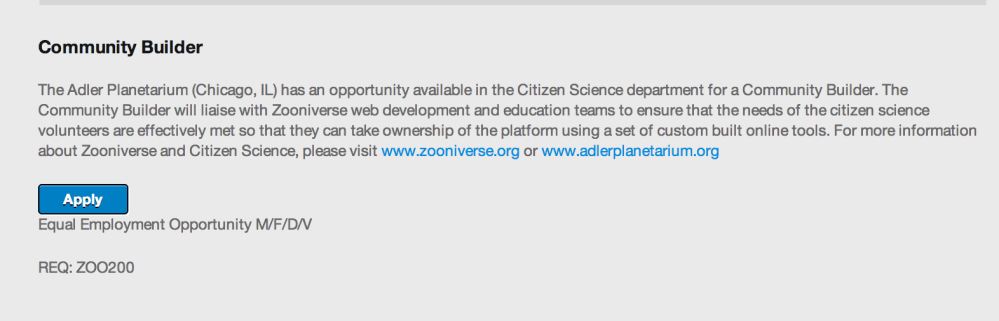
If the Zooniverse can get to the point where we’re no longer constrained by the number of projects that can be built, we will need to think about how projects get chosen to appear on the Zooniverse, and about who should make that decision. Our opinion is that you – our community – should be more involved, and to work out how to make that happen we’re looking for what we’re calling a ‘community builder’. As you’ll see from the job description, this isn’t a technical post, but rather we’re looking for someone who knows how to build a community that is capable of awesome things. If that sounds like you, please get in touch.

Chris

PS The post is funded by a new grant from our friends at the Alfred P. Sloan foundation, to whom we’re eternally* grateful.

* – or as near as we can make it

Thanks to the Forum – and Farewell

Today marks the end of an era for the Zooniverse: the closure of the Galaxy Zoo forum. Read all about it on the Zooniverse blog.

chrislintott's avatarGalaxy Zoo

Afbeelding1-500x499

After very nearly seven years online, and over 650,000 posts by its members, the time has come to shut the doors on the original Galaxy Zoo Forum. Originally an afterthought, created to deal with the fact that we couldn’t possibly deal with the volume of mail that we were getting, the Forum quickly established itself as a very special place. It generated science – the Voorwerp and its diminutive colleagues, the Voorwerpjes, the Peas and much more came from discussions amongst its boards, as well as such random fun things as the letters that power My Galaxies.

It was also a very civilized place – entirely due to the standards set by Alice and the team of moderators that followed, especially Graham and Hanny who have served most recently. The forum inspired much of what the Zooniverse tries to do today, but time has moved on and we…

View original post 176 more words

New Zooniverse digital humanities job

Here at Zooniverse we’re starting some exciting new work in the humanities!

We’re pleased to announce our new collaboration with Tate Britain, a world-leading institute for art in the modern era, based in London.

Zooniverse and Tate are teaming up to tackle the difficult task of crowd-powered full-text manuscript transcription. This project follows on from the success of projects like Operation War Diary and Old Weather and will no doubt feed into other humanities projects in the future.

The new transcription interface will enable volunteers to read and transcribe the personal papers of modern British artists. Volunteers will encounter letters, notebooks and sketches that reveal artists’ everyday lives, creative practices and the processes by which great works of art were made.

We are seeking a talented front end developer with a passion for art and the humanities to work alongside our humanities specialist and the Zooniverse and Tate teams to deliver the project.

The closing date for applications is 12 noon on 25 July, 2014. For more information and to apply, see here: http://www.jobs.ac.uk/job/AJB887/citizen-science-front-end-developer/


PS: We are also looking for a new web developer to join our team at the Adler Planetarium in Chicago. You can view the job description here.

Call for Proposals

conscicom


The Constructing Scientific Communities project (ConSciCom), part of the AHRC’s ‘Science in Culture’ theme, is inviting proposals for citizen science or citizen humanities projects to be developed as part of the Zooniverse platform.

ConSciCom examines citizen science in the 19th and 21st centuries, contrasting and reflecting on engagement with distributed communities of amateur researchers in both the historical record and in contemporary practice.

Between one and four successful projects will be selected from responses to this call, and will be developed and hosted by the Zooniverse in association with the applications. We hope to include both scientific and historical projects; those writing proposals should review the existing range of Zooniverse projects which include not only classification, but also transcription projects. Please note, however, ConSciCom cannot distribute funds nor support imaging or other digitization in support of the project.

Projects will be selected according to the following criteria:

  1. Merit and usefulness of the data expected to result from the project.
  2. Novelty of the problem; projects which require extending the capability of the Zooniverse platform or serve as case studies for crowdsourcing in new areas or in new ways are welcome.
  3. Alignment with the goals and interests of the Constructing Scientific Communities project. In particular, we wish to encourage projects that:
    1. Have a significant historical dimension, especially in relation to the history of science.
    2. Involve the transcription of text, either in its entirety or for rich metadata.

Note it is anticipated that some, but not necessarily all selected projects, will meet this third criterion; please do submit proposals on other topics.

The deadline for submissions is July 25th 2014. You can submit a proposal by following this link http://conscicom.org/proposals/form/


Become a Sunspotter and play Solar ‘Hot-or-Not’

avatar_sunspotter

A few months ago we quietly placed a new project online. Called Sunspotter, it was essentially a game of hot-or-not for sunspot data – and since there were not many images available at the time, we thought it best to just let it be used by the people who noticed it, or who had tried it during the beta test. The results have since been validated, and the site works! In fact there are even preliminary results, which is all very exciting. Loads of new images have now been prepared, so today Sunspotter gets its proper debut. Try it at www.sunspotter.org.

On the site you are shown two images of sunspot groups and asked which is more complex. That might sound odd at first, but really it’s quite easy. The idea behind the science of Sunspotter is summed-up neatly on the Sunspotter blog:

I’m pretty sure you have an idea of which is the more complex: a graduate text on quantum mechanics, or an Italian cookbook? On the other hand, it would not be straight-forward for a computer to make that choice. The same is true with sunspot groups.

Or put another way: like many things in life, you’ll know complexity when you see it. Try it out now: it works on laptops, desktops, tablets and phones and you can keep up to date on Twitter, Facebook, G+, and the project’s own blog.

Screenshot 2014-06-13 19.39.24

Zooniverse job at the University of Portsmouth

As part of the increased involvement in the Zooniverse at the University of Portsmouth, we are offering a two-year research position to work closely with the main Zooinverse development team and help foster local Zooniverse projects within Portsmouth and beyond. This new position is part of the official buy-in of Portsmouth into the Citizen Science Alliance and builds on past and present Zooniverse interest at the university. For example, researchers at the Institute of Cosmology and Gravitation were involved in getting the original Zooniverse project Galaxy Zoo off the ground in 2007, and they have also explored the subsequent data-set from this ground-breaking citizen science project. ICG researchers such as Karen Masters, Bob Nichol and Tom Melvin remain heavily involved in Zooniverse projects related to Galaxy Zoo. Also at Portsmouth, Joe Cox is PI of a funded EPSRC project entitled VOLCROWE, looking at the economics of online volunteering with particular interest in crowd-sourcing and crowd-funding. This project plans to study the motivations of citizen scientists and explore ways to optimise the breadth and depth of user involvement. The new developer would join this diverse team and help build a growing interest in all things Zooniverse at the University of Portsmouth and beyond.

Details of the job, including how to apply, can be found at http://www.icg.port.ac.uk/2014/04/senior-research-associate-zooniverse/

Helping the California Condor with ‘Condor Watch’

Today we’re launching a new, and hugely important Zooniverse project: Condor Watch. The are only around 200 California Condors living in the wild and they are in serious danger from lead poisoning, which they get by eating carcasses shot with lead bullets. Getting a better idea of how they interact and socialise is crucial to ongoing conservation efforts.

avatar_condors

Using camera traps, ecologists in the US have been observing them in the wild. However the sheer volume of images is now overwhelming. Starting today we need your help to look through the first set of data: 264,000 images of condors eating, socialising, and nesting. Ecologists need everyone’s help to identify the individual birds from their numbered tags. Your efforts on this project will help preserve an endangered species – and we think that’s really special.

Try it now at www.condorwatch.org