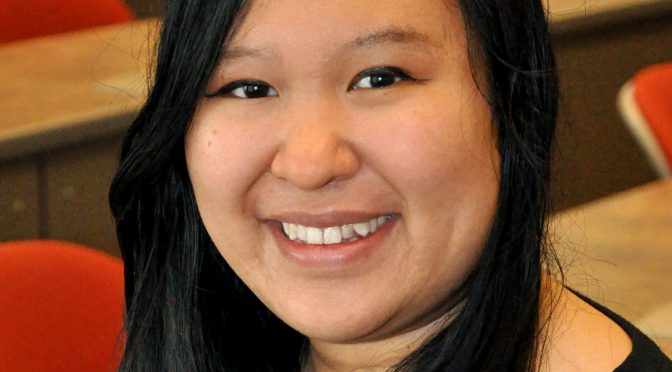
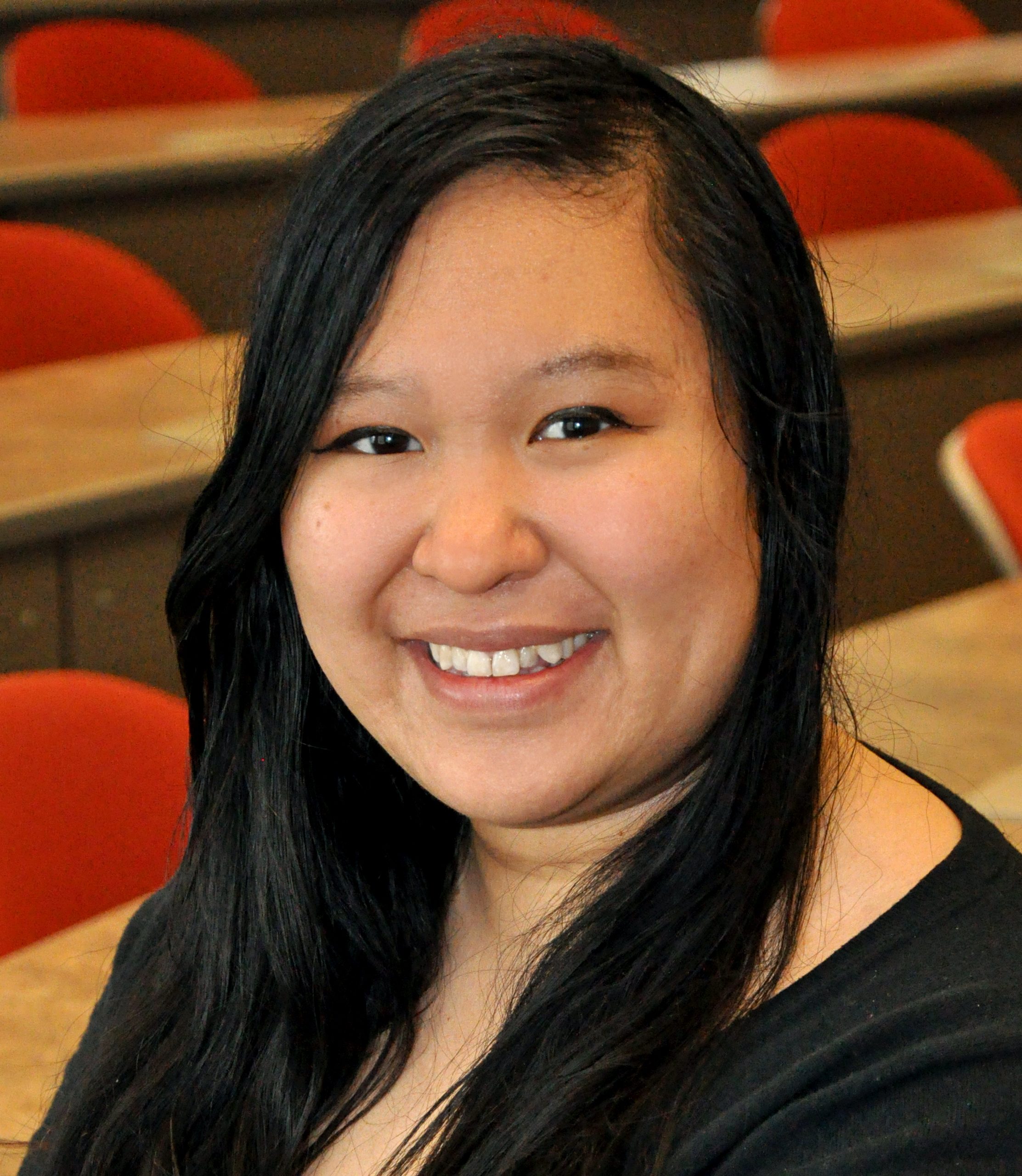
In this edition of Who’s who in the Zoo, meet Michelle Yuen, a Zooniverse backend developer.
Who: Michelle Yuen, Backend developer at Zooniverse
Location: Adler Planetarium, Chicago USA
Zooniverse projects: Panoptes, ERAS (Stats service), Talk API, Caesar
What’s something people might not expect about your job or daily routine?
People assume I just sit and code all day, but most of my time is spent playing detective with invisible problems—tracking down mysterious server crashes, optimizing data no one ever sees, or convincing stubborn APIs to behave. Basically, I fight invisible fires and hope no one notices.
Outside of work, what do you enjoy doing?
Outside of work, I enjoy playing tennis and pickleball. I enjoy cuddling with my cat, Bela. I love all things Disney and am also a cozy gamer—I’m currently hooked on Dreamlight Valley. I’m passionate about baking and often bring in my test recipes and treats for my colleagues at the Adler to try.
What are you favourite citizen science projects?
I’ve enjoyed working with Active Asteroids in the past and even spoke about Zooniverse at a tech conference, where I highlighted what the classification process looks like using Active Asteroids as an example project (you can learn more here).
What guidance would you give to other researchers considering creating a citizen research project?
Remember that community matters. Treating volunteers as partners, staying engaged, and sharing progress helps make the experience rewarding for everyone involved 🙂
Is there anything else you’d like to share with our readers?
It’s really wonderful to see how thoughtful and engaged the Zooniverse community is—from volunteers to researchers and everyone in between. The genuine enthusiasm people bring to supporting and advancing research is incredibly meaningful. I’m deeply grateful to be part of this community; it truly makes coming to work each day a joy.
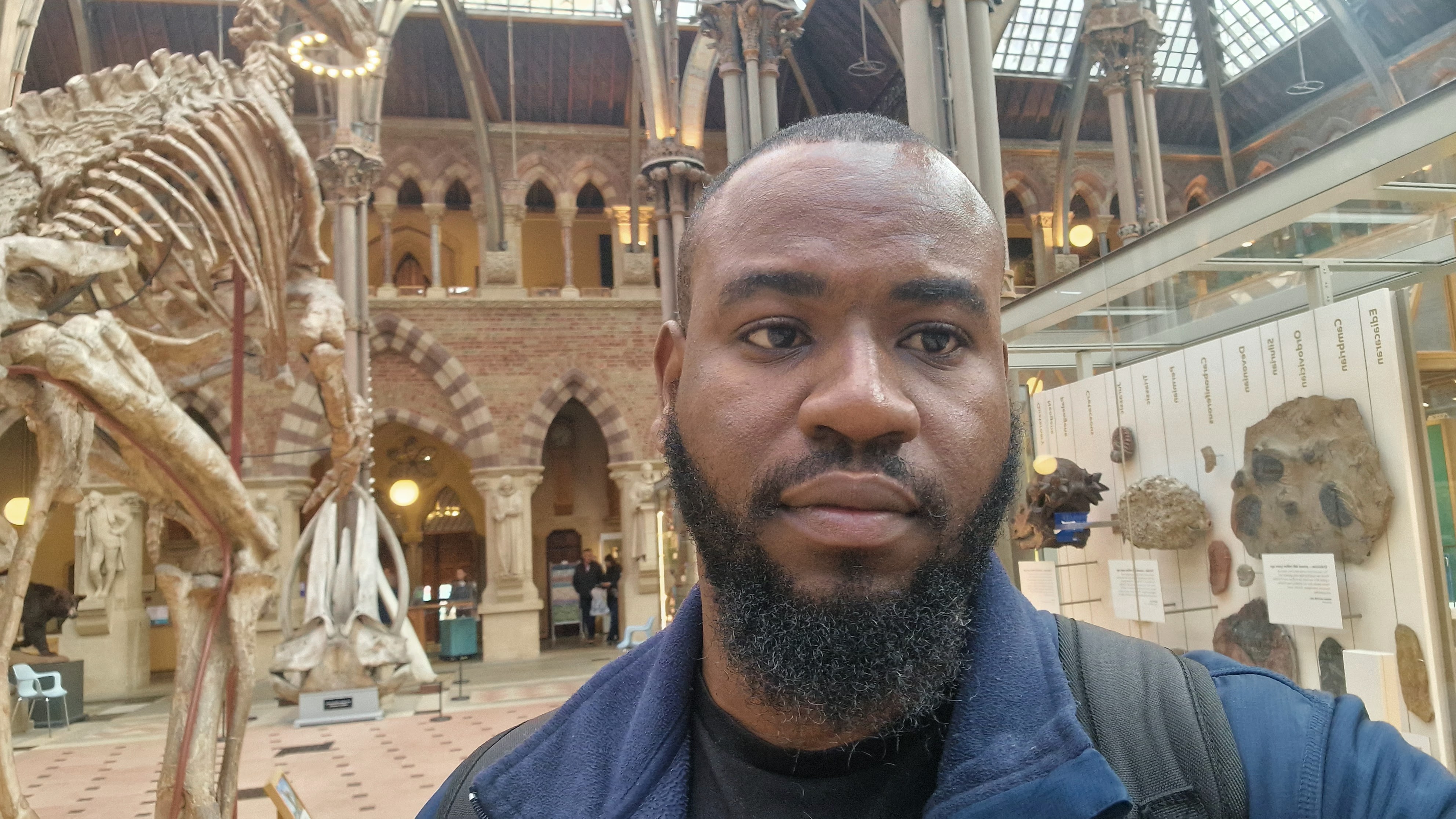
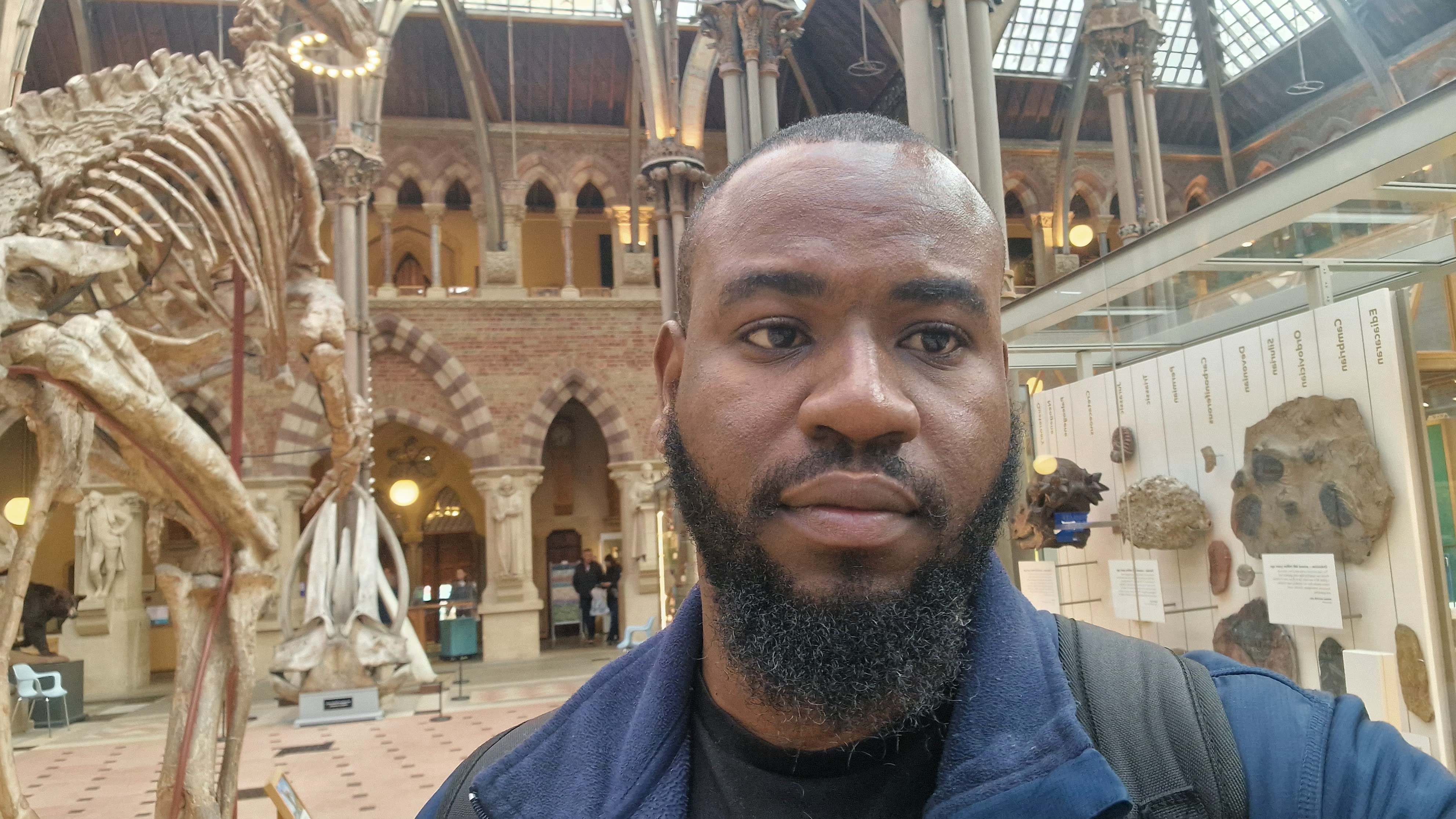
In this edition of Who’s who in the Zoo, meet Oluwatoyosi Oyegoke, a Zooniverse backend developer.
Who: Oluwatoyosi Oyegoke, Backend developer at Zooniverse
Location: University of Oxford
Zooniverse projects: Panoptes API, Panoptes Python Client & CLI, KaDE (Knowledge and Discovery Engine), BaJor (Azure Batch Job Runner), Active Learning Pipelines
What is your research about?
My work focuses on helping scientists manage the huge amount of data created by Zooniverse projects. These projects can produce millions of images from telescopes, wildlife cameras, or research surveys. Volunteers classify these images, and I build the systems that collect this information and make it useful for researchers.
I work on the Panoptes API, which is the core platform that stores project data and volunteer classifications. I also improve the Python client and CLI so researchers can easily access and analyse their data. Another part of my role involves building and maintaining the machine learning pipelines. These pipelines take the volunteer classifications, train models, run predictions, and manage large Azure Batch jobs.
In simple terms: scientists and volunteers create the data, machine learning tries to learn from it, and I build the tools and backend systems that help everything work together smoothly. My work makes it easier for researchers to understand very large datasets by improving the platforms and workflows behind the scenes.
How do Zooniverse volunteers contribute to your research?
Zooniverse volunteers play a central role in how the whole platform functions. They create the classifications that flow through the systems I work on, and their input is what brings each project to life. When a project is created, volunteers are the ones who generate the data that the platform processes, stores, and makes available to researchers.
My work focuses on the core systems behind this experience. I help maintain and improve the Panoptes API, the tools researchers use to access data, and the pipelines that handle classification processing and machine learning.
Everything depends on volunteers contributing high-quality classifications, and their work is what keeps the entire platform active and meaningful. What I find exciting is seeing how thousands of people from around the world can come together and create data that supports real scientific discovery. My role is to make sure the systems behind that process are fast, reliable, and able to handle the huge amount of participation that Zooniverse projects receive.
While I do not work on individual research outputs, the systems I help build and maintain support all the scientific papers, datasets, and discoveries that come from Zooniverse projects. Without volunteers, and without the infrastructure behind them.
What’s a surprising or fun fact about your research field?
For me, one surprising thing is how global the participation is. A project can receive classifications from people in completely different parts of the world within the same minute. It amazes me how many people contribute to science from their sofa, their commute, or wherever they happen to be.
What first got you interested in research?
I love working on systems that have a direct impact, and the mix of technology, community, and science is what keeps it exciting.
What’s something people might not expect about your job or daily routine?
One thing people might not expect is how often small changes make a big impact. Sometimes a single line of code or a small optimisation can improve performance for millions of classifications. It’s a very technical role, but it’s also rewarding to know that quiet, invisible work can support so many people doing science together.
Outside of work, what do you enjoy doing?
Outside of work, I spend my weekends playing football with friends. I also spend a lot of time playing video games like FIFA and GTA. It’s my favourite way to unwind and switch off. I also enjoy watching documentaries, especially ones about historical events, and I love exploring new technologies just out of curiosity. It keeps things fun and gives me something new to learn all the time.
Is there anything else you’d like to share with our readers?
I’d just like to say that being part of Zooniverse has shown me how powerful community-driven science can be. Every contribution, no matter how small, helps move real research forward. It’s a privilege to help build the systems that make that possible, and I’m excited to see what volunteers and researchers will discover next.
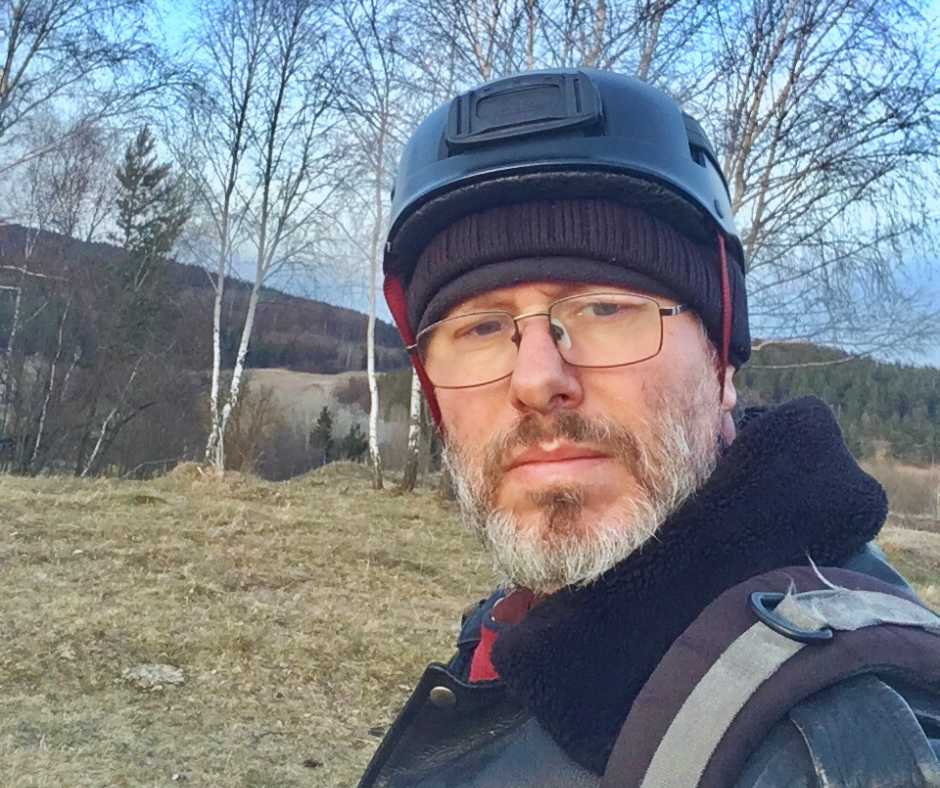
In this edition of Who’s who in the Zoo, meet Adam McMaster, a Research Fellow working at the University of Southampton
Who: Adam McMaster, Research Fellow
Location: University of Southampton, UK
Zooniverse projects: Black Hole Hunters, SuperWASP Variable Stars
What is your research about?
I search archives of astronomical observations, looking for patterns which might be caused by interesting types of star or rare astronomical events. I work with so-called “time series” data, which is where measurements are taken repeatedly over time. In my case, I’m looking at how the brightness of stars changes over anything from days to years. In SuperWASP Variable Stars, we’re looking for certain kinds of repeating variability, such as eclipses and pulsations, in data originally collected by the SuperWASP exoplanet search. In Black Hole Hunters, we’re looking for a type of gravitational microlensing, where a black hole briefly magnifies the light from a star, and we’re currently searching the archives of the TESS exoplanet search, with plans to add data from several other surveys in the near future.
How do Zooniverse volunteers contribute to your research?
The volunteers make our projects possible. We’re looking for the things that get missed by automated searches. Computer algorithms are great at finding a lot of things, but no matter how good they are there will always be things that they miss. Slightly odd looking examples, noisy data, and unexpected things that no one knew to program the computer to find. Only people can find these things, and there is simply too much data to look through ourselves.
In SuperWASP Variable Stars, we’re looking for stars that have been missed in previous searches of the data. The SuperWASP data can be particularly noisy, which can make searching it a challenge. We’ve found that people are really good at separating the noise from the real thing. We’ve written up and published some of the results of this project already, and we publish an interactive database of the results at superwasp.org.
In Black Hole Hunters, the microlensing events we’re looking for are expected to be the hardest ones to spot. Even with really high quality data, we expect the most interesting events to barely stand out against the background noise. That’s what makes a manual search so useful.
What’s a surprising or fun fact about your research field?
The Milky Way is predicted to contain millions of black holes, but we only know about roughly 70 of them. Those were almost all spotted because they’re not really black, at least in X-rays. They’re very bright in X-rays because they’re consuming matter, which heats up as it falls into the black hole. The vast majority of black holes are not expected to be feeding and should truly be black. Those are the ones we’re looking for! We can’t see the black holes themselves, but we should be able to see the effects of their gravity. That’s why we think gravitational microlensing is a good way to find them.
What first got you interested in research?
I have always been interested in science and astronomy for as long as I can remember. I had a telescope as a kid, and I remember going outside to look at the comet Hale-Bopp with my dad. I’m afraid I don’t really remember the first time I thought about actually doing research myself, but I took a rather indirect route to get here. Despite being interested in research (and almost doing a computer science PhD), after university I first worked as a web developer for a few years before eventually finding my way to an astronomy PhD.
Outside of work, what do you enjoy doing?
I’d honestly love just to be able to spend a day sitting and reading a book, but these days my children take up most of my spare time (and energy)! Maybe I’ll be able to do that again in a few years. Also, nothing beats a long walk in the country with the dog.
What are you favourite citizen science projects?
It’s been a long time since it was active, but I always had a soft spot for the SETI Live project here on the Zooniverse. It was obviously unlikely to find anything, but there was something exciting about working on data in real time as it came off of the telescope.
What guidance would you give to other researchers considering creating a citizen research project?
If you’ve never done it before, talk to those of us who have! Especially when it comes to the Zooniverse, everyone is very friendly and happy to help, so there’s no need to try and figure everything out on your own.
All Zooniverse projects are created in English. But many of them are available in different languages – from Armenian and Chinese to Korean and Hungarian. Here is the latest list of translated projects.
The truth is, everyone can become a translator on Zooniverse! But how do you do that? We talked with some of our amazing volunteers who helped various research teams to translate their projects, and here is what we’ve learned.
Zooniverse translators come from all walks of life
Jiří Podhorecký (@trendspotter) lives in Cesky Krumov, a small beautiful town in the Czech Republic. He works in tourism and spends most of his free time supporting various IT projects focusing on ecology, nature conservation and virtual volunteering. Translating the Zooniverse platform and projects into Czech is one of these projects.
InoSenpai (イノ先輩) is a citizen scientist in her 20s in Japan. She studied astronomy in college, but now has another job. She has translated more than 30 Zooniverse space projects into Japanese and she even created a blog in order to introduce them to the Japanese people.
Aarush Naskar (@Sunray_2013) from India is the youngest translator on Zooniverse! He is an amateur astronomer. Story writing, sky watching, reading and coding are his main interests.
Jason Richye is an international student from Indonesia. He is 18 years old and is a business major student. His hobbies are playing basketball, listening to music and watching movies, especially action, comedy and horror.
Louis Verhaeghe (@veragon) is a young French electrical technician passionate about astronomy and astrophysics. As an amateur astronomer, he loves immersing himself in the vastness of the universe and gaining a deeper understanding of what surrounds us. In September 2024, he reached a major milestone: more than 50 projects fully translated into French!
Aarush Naskar (@Sunray_2013) from India is the youngest Zooniverse translator
They translate to help more people discover Zooniverse
Jiří: “I wish that once in the future the whole Zooniverse was available to people in my language. I think that there is a huge and untapped potential in people of all ages, but especially in young people, to build a positive relationship with the world around us and to contribute to it in some way. Citizen science can be an enjoyable and unencumbered contribution to the community that will eventually process this citizen science into real science.”
イノ先輩: “Since Zooniverse is not well known in Japan, I am currently working as a Japanese translator for a number of projects to create a foundation for Japanese users to participate in Zooniverse without feeling any barriers.”
Aarush: ”I was attending a citizen science seminar hosted by the Kolkata Astronomy Club, which my father is the co-founder of, so naturally, I was also a part of it, when I heard about a boy who translated Einstein@Home: Pulsar Seekers to Bengali, so I decided to translate projects to Hindi. I know both Hindi and Bengali, but I am more comfortable with Hindi in terms of writing. It also motivated me that if I translated projects, more people would be able to do them. I also did it thinking I would know more Hindi words.”
Jason: “I’ve always wanted to be part of a research project and contribute in a meaningful way, even in a small role. When I saw one of the translation projects last winter in 2024, I remember feeling genuinely excited. I thought, “This is something I could actually help with.” So when I had the chance to volunteer, I was happy to be involved. Translating made me feel like I was part of something bigger, helping bridge gaps and support the research in a real, practical way.”
Louis (@veragon): “I have been contributing to the Zooniverse platform for almost nine years now. Initially, between 2017 and 2019, I focused exclusively on classifying images and scientific data. In fact, I have surpassed 12,900 classifications! But in late 2019, as my English improved, I asked myself: why not translate projects into French? This would allow more French speakers to get involved in citizen science and contribute to various research initiatives.
It is an immense source of pride for me to contribute, in my own way, to making science more accessible. It is important for me to translate these projects because science should be open to everyone. Many research projects rely on public participation, but the language barrier can be a major obstacle. By translating these projects, I enable thousands of people who are not fluent in English to contribute to scientific research. And the more participants there are, the more high-quality data researchers can gather. It’s a virtuous cycle!”
Louis Verhaeghe (@veragon) translated more than 50 Zooniverse projects into French
Translation expands your knowledge
Aarush: “It is funny that I make a lot (not that many!) mistakes when writing Hindi in real life but I make only some mistakes while translating.”
Jiří: “Fortunately for me, the process is already quite easy, not least because information technology helps us all to get in touch today. The enriching part is always the beginning, when you need to dig into the philosophy of the project and understand how best to use language to express yourself accurately.”
イノ先輩: “I love astronomy, but it has been difficult to love and have knowledge of all of this entire broad field equally. I have always been interested in the classification of light curves of variable stars and how to read radar observation data of meteors, but I had avoided them because they seemed difficult, but I was able to learn them in one week through translation.
The process of grasping all of that content in one’s own brain, reconstructing it in one’s native language, and outputting it is far more effective than simply reading and learning.”
And it makes you realise that your efforts really matter!
イノ先輩: “It is not only the light side of the researcher that we see when we do translations. Unfortunately, we also encounter projects that have been abandoned due to lack of bearers.
Behind this may be issues such as the reality of researchers being chronically overworked and the instability of their posts. But it is not only the beautiful and exciting top part, but also the glimpse into a part of the research project that makes us realize that we are not customers or students, but co-members of the project.”
Jiří: “Citizen science knows no boundaries! You can be all over the world. And it will give you back a strong sense of meaningful help, usefulness, confidence and joy.”
Jason: “You don’t need to be an expert to make a difference.”
Louis: “Together, we can make science more accessible and understandable for everyone. Every contribution matters, and the more of us there are, the greater our impact!”
Jiří Podhorecký (@trendspotter) wishes that once in the future the whole Zooniverse was available to people in Czech.
We asked if they had any advice for aspiring translators
Jason: “Take your time, ask questions, and focus on clarity. It’s a fun way to learn and be part of something meaningful.”
イノ先輩: “Add a bit of playfulness to your project title when you rewrite it in your native language! Mix in parodies and phrases that are unique to the respective cultures of each linguistic area, but only to the extent that they do not detract from the essence of the project. The title of the project may be the reason why some people are interested in it.”
Louis: “If you believe you have a good enough understanding of the languages you’re translating, then go for it! Reach out to various projects that haven’t been translated into your language and offer to translate them. Help us make science more accessible to the entire world!”
Jiří: “Your translation will make it easier for people who may know a foreign language, but whose native language is still closest to them. Without it, they would hardly, if ever, know about the Zooniverse. Oddly enough, language and territorial barriers sometimes serve more as a tool to better divide society. Don’t give up and bring foreign ideas, experience and science to people who need to learn about it in their own language.”
It is easy to start!
Louis: “I started my first translations by directly reaching out to project leaders and offering to translate their projects into French. Over time, I learned how to use Zooniverse’s translation tool, which turned out to be quite intuitive. This approach allowed me to better understand the process and refine my working method.”
Are you interested in volunteering as a Zooniverse translator?
Then you should definitely try it! Here is how:
1. Choose the project you would like to translate
2. Send a message to one of the research team members (privately or on their Talk)*
5. When you are done, let the team know and they will activate your translation to be visible for everyone on Zooniverse!
*An example of a message: “Hello! I’ve enjoyed working on your project (title) and would love to help translate it into (language). Do you think it could be useful? If so, please assign me the Translator role and I will give it a try!”
Are you a researcher looking to set up translations for your project? Please read these instructions. Contact us at contact@zooniverse.org if you need additional support. Please note that the Zooniverse team cannot recommend volunteers translators for your project.
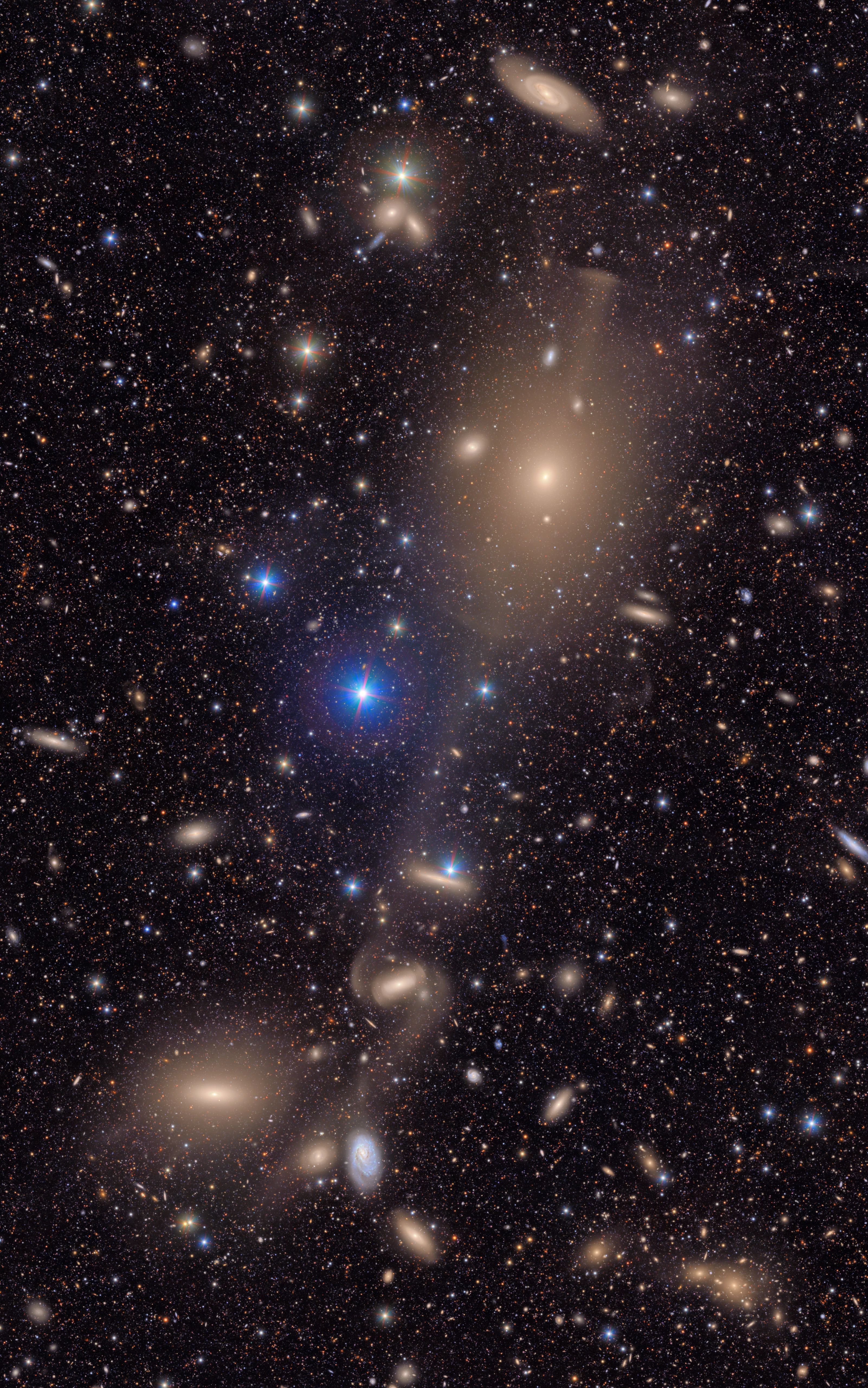
The Vera C. Rubin Observatory is a powerful new facility high in the dry Chilean mountains. Today, on 23 June 2025, for the first time, it is releasing images from its Legacy Survey of Space and Time camera. At 3200 megapixels, this largest camera ever built will allow us to see the universe in a new way. And with Zooniverse, everyone can join and help with discoveries!
Read on to learn more.
NSF-DOE Rubin Trifid and Lagoon Nebulas. Image credit: NSF-DOE Vera C. Rubin Observatory
The “First Look”: The new way of viewing the sky
The first images from the NSF–DOE Vera C Rubin Observatory, our new eye on the sky based high in the Chilean desert, have been released today. The culmination of more than a decade of effort by a team of engineers and scientists, these glimpses of what this new instrument is capable of mark the start of a new way of viewing the sky – and Zooniverse will be a significant part of it. The Observatory’s Legacy Survey of Space and Time (LSST) will start soon, producing data at a scale that means the efforts of volunteers to sort through it and make discoveries will be invaluable.
The images featured in today’s ‘First look’ event were taken by the observatory’s mighty LSSTCam, the instrument which will be the observatory’s workhorse for the next decade and at 3200 megapixels the largest ever built, will manage. They provide a glimpse into the new survey’s ability to catch the changing sky, tracking millions of new asteroids and discovering thousands of supernovae, as well as more exotic and hopefully unexpected events.
NSF-DOE Rubin Virgo cluster 2. Image credit: NSF-DOE Vera C. Rubin Observatory
Vera Rubin Observatory images on Zooniverse
These images are a significant milestone, and all of us at Zooniverse congratulate our partners in the international LSST collaboration on getting here. In the near future – hopefully in just a few days – scientists will get their hands on a first tranche of testing data and, because Zooniverse is a core part of their plans, we should expect to see the first citizen science projects launch shortly thereafter. Once the survey itself gets going later in the year, and when the first of the annual data releases happens next year, we should see a steady flow of Rubin data in Zooniverse projects old or new.
NSF-DOE Rubin Virgo cluster 1. Image credit: NSF-DOE Vera C. Rubin Observatory
Be part of discovery
Whenever astronomers have found a new way of looking at the sky, and thereby opened up a new window on the Universe, we’ve been surprised. A survey of the whole sky, carried out with a telescope that’s the equal of any in the world, and with an immensely sophisticated camera and software pipeline to match, definitely counts. Join us in this first look at the Rubin Observatory sky – and then hang on. We’re all on what looks set to be a fantastic, decade long voyage of discovery.
From June 2025 through January 2026, we will facilitate an online working group of neurodivergent citizen scientists and allies. Together, we will brainstorm, create and publish accessibility guidelines to empower people with all kinds of brains to participate more comfortably in crowdsourced research.
We encourage you to join this new online working group if you:
have experience with online citizen science,
consider yourself neurodivergent or are a neurodiversity ally,
are 18 years old or older,
can communicate in basic written English,
interested in improving accessibility of citizen science for people with mental health and neurological conditions and differences,
can volunteer at least 2 hours of your time (online, flexible) before 16 January 2026.
Please note that, for this call, we welcome participants from all online citizen science projects, not only Zooniverse. All active contributors will be acknowledged in the resulting publication.
No special knowledge is needed. All work is virtual and asynchronous. We are looking forward to working with you all on this important cause!
As the U.S. Congress deliberates on next year’s budget, proposed 50% cuts to agencies like NASA and the National Science Foundation (NSF), and the deeply concerning layoffs at the Institute of Museum and Library Services (IMLS), the National Endowment for the Humanities (NEH), and the National Endowment for the Arts (NEA), jeopardize the work of organizations like Zooniverse that rely on federal funding.
Although Zooniverse is an international collaboration, with core institutional partners in both the U.S. and the UK, this post focuses on the vital role that U.S. federal support has played in enabling our impact. As these funding decisions are made, we wanted to share how essential this support has been to Zooniverse’s impact on research and public engagement.
From the start, federal grants have been a cornerstone of Zooniverse’s ability to innovate and scale. A seed grant from the NSF in 2009 helped us explore the integration of machine learning with participatory science, work that laid the foundation for Zooniverse to become one of the world’s most sophisticated platforms for AI-enhanced crowdsourced research. A grant from IMLS advanced our Digital Humanities efforts, and a follow-on NEH grant enabled us to build critical infrastructure, like our ALICE system, for reviewing and editing transcriptions across humanities projects. Most recently, support from the National Institutes of Health (NIH) enabled a new initiative to render three-dimensional subjects within Zooniverse, expanding the platform’s capabilities to advance biomedical research.
Federal support has also been instrumental in strengthening Zooniverse’s public impacts, from an NSF Improving Undergraduate STEM Education (IUSE) grant that led to the creation of classroom.zooniverse.org to an NSF Advancing Informal STEM Learning (AISL) grant that launched a multi-person Galaxy Zoo touch table exhibit at the Adler Planetarium in Chicago. This hands-on experience reaches tens of thousands of visitors each year and often serves as the first entry point for children and their families into the world of participatory science.
Crucially, these federal grants don’t just fund abstract ideas or technologies, they fund people. Federal support helps pay the salaries of the software engineers, researchers, and participatory science professionals who build and maintain the Zooniverse platform, collaborate with research teams, and support our community of nearly 3 million volunteers.
Our current NASA grant, for example, enables over two dozen NASA research teams to unlock their datasets through Zooniverse and funds core platform maintenance efforts, an area of support notoriously difficult to secure. Our NASA grant also allowed us to respond directly to community needs through the implementation of new Group Engagement features and student service hours support, among the most requested tools from educators, classrooms, museums, and others using Zooniverse in group settings around the world.
Today, Zooniverse is part of the core infrastructure of research and scholarship. We partner with more than 150 research institutions and nearly 3 million volunteers worldwide. Our platform is a critical tool in the modern researcher’s toolkit, including in fields relying on human-in-the-loop AI methods to analyze vast datasets. At the same time, we are a trusted platform for public engagement, helping build confidence in science and fostering a sense of shared purpose across disciplines, borders, and backgrounds.
Like many research and public engagement organizations, Zooniverse has deeply benefitted from federal grant support. We felt it was important to share with our communities just how vital this support has been. Much of what we’ve built — our infrastructure, partnerships, and public-facing tools — would not have been possible without it. Continued federal investment remains critical to sustaining and growing this work.
We are incredibly grateful to the many individuals who volunteer through Zooniverse to fulfill service hour requirements for graduation, scholarships, and more. This is a fantastic way to meet your requirements while contributing to significant research and discoveries, helping teams worldwide better understand ourselves and the universe.
Below are instructions for participants (students), followed by instructions for Organization Leads supporting students in these efforts.
Instructions for Participants:
Step 1: Share this opportunity with your Organization
Contact your organization to see if participating in Zooniverse can fulfill your volunteering or other participation requirements. A good approach is to share this blog post with your organization so they understand what you will do and how you will document your participation. We strongly recommend checking with your organization before you start to ensure your efforts are recognized.
Step 2: Register at Zooniverse.org
Create a Zooniverse account by clicking ‘Register’ in the upper-right corner of the Zooniverse.org homepage. Only your name and email are captured, and we do not share email addresses outside of Zooniverse.
Note: Registration is not required to participate in Zooniverse, but it is useful in this case to create a volunteer certificate documenting the number of hours you spent classifying and the number of classifications you did. Volunteer certificates are often required documentation for service learning hours.
Step 3: Participate!
Dive into any project and start classifying! There are typically over 80 active projects listed at zooniverse.org/projects. You can filter by different disciplines (history, space, nature, climate, etc.) to find projects that align with your interests. Every project’s ‘classify’ page has a brief tutorial to guide you on what to do and how to do it.
Be sure to be logged in while you participate so that your stats and hours of participation are recorded and can be included in your certificate.
Step 4: Generate your Volunteer Certificate
Go to zooniverse.org, sign in, and click ‘More Stats’. Use the drop-down options on the upper-right of the stats bar cart to filter to a specific time period and/or project of interest. Then click on ‘Generate Volunteer Certificate’ (the button to the bottom-right of your stats bar chart).
Share your Certificate with your Organization. We’d love it if you continue participating!
By following these steps, you can fulfill your service hour requirements while making meaningful contributions to scientific research. Happy classifying!
For details on how hours are calculated, please see notes at the bottom of this post.
Instructions for Organization Leads:
Step 1: Get to know the Zooniverse
When sharing this opportunity with your volunteer community, we recommend emphasizing the benefits volunteers gain beyond just contributing time and classifications. Instead of creating busy work, encourage participants to reflect on how their efforts (and the community’s collective efforts) contribute to our understanding of the world and the broader universe.
Watch this brief introduction and video for more context about the Zooniverse, the world’s largest platform for people-powered research, with dozens of active projects and millions of participants worldwide.
Each Zooniverse project is led by a different research team, covering a wide range of subjects:
Share the instructions above for the simple steps on how to participate and generate a certificate.
If you need to reference a 501(c)(3): Chicago’s Adler Planetarium, one of the hosts of the Zooniverse Team, is a 501(c)(3). Organizations that need to link explicitly to a 501(c)(3) for their volunteering efforts use the Adler Planetarium as the reference. Documentation of the Adler Planetarium’s 501(c)(3) status is provided here. Note: Zooniverse is a program within Adler, Oxford, and the University of Minnesota; it is not a 501(c)3 of its own.
Step 3: Create a Group
If you’re interested in tracking your participants’ engagement, setting group goals, and more easily telling your story of collective impact, check out this blog post for details and instructions.
Step 4: Share your Stories of Impact with Us
We’d love to hear about your experience and share your stories of impact with the broader Zooniverse community to spark ideas and inspiration in others. See this Daily Zooniverse post as an example. Email us at contact@zooniverse.org with your stories, and don’t hesitate to email us if you have any questions or need additional information.
By following these steps, you can include Zooniverse in your volunteer opportunities and help your participants fulfill their service hour requirements while making meaningful contributions to scientific research. Thank you for including Zooniverse in your offerings!
How we calculate ‘Hours’ within Zooniverse Stats:
The hours displayed in the personal stats page are calculated based on the start and end times of your classification efforts. Hours posted there do not reflect time spent on Talk. Talk-based effort is deeply valued and important for Zooniverse projects – it’s where community is built and where many critical discoveries across the disciplines have been made. But within the scope of this phase of developing the new stats and group pages, we only built out views for hours spent classifying.
A little more detail on how the classification time is calculated. Over the years, Zooniverse has updated its infrastructure for robustness and sustainability. In 2015, we built and launched onto our current infrastructure, ‘Panoptes’, and its associated database. At that time in 2015, we started recording both the start and end times for each classification. This means that for all classifications 2015 and beyond, the calculation for time spent on each classification is a straightforward subtraction: finished_at – started_at. We then add up all these values to get the number of hours you’ve spent classifying.
When we made the choice to use the simple ‘finished_at – started_at’ we knew that that could lead to an overestimate of time spent classifying (i.e., you might step away from your computer after starting a classification and then come back to it later). We wanted to keep things as simple as possible and we didn’t want to make assumptions about what someone is doing during the time between ‘finished_at’ and ‘started_at’. We also preferred to err on the side of overestimating rather than underestimating – we’re just so grateful for people’s participation and want to celebrate that.
We do set a 3-hour cap on a single classification to mitigate the impact of ‘stepping away’ on the calculation of your stats. Volunteer tasks on Zooniverse vary widely in complexity—some are quick, like answering yes/no questions, while others, like detailed transcriptions, take more time. Analyzing classification durations across projects, we found that most average between 0–30 minutes, some exceed 30 minutes, with the longest averaging over 3 hours. We ran simulations testing different caps, from 15 minutes to 20 hours, discussed the findings, and decided on a 3-hour cap to fairly credit longer tasks while reducing the impact of idle time.
If you are required to list contact information:
If your program requires that you list contact information for the Zooniverse, please use the following:
Dr. Laura Trouille, Zooniverse Principal Investigator, Adler Planetarium, 1300 South DuSable Lake Shore Dr., Chicago, IL 60605, contact@zooniverse.org
Again, please keep in mind that we unfortunately do not have the capacity to fill out and/or sign individual forms. If your organization is not able to use the automatically generated signed Volunteer Certificate (see notes above), best to find an alternate volunteer opportunity.
Over the years, one of the most common requests from educators has been for tools to support group engagement in Zooniverse and better tell your story of collective impact. We’re so grateful for a grant from NASA enabling us to build these new tools to meet those needs.
Whether you’re a library or museum educator, a camp counselor, or a classroom teacher, read on to discover how Zooniverse can enhance your educational goals.
Zooniverse is the world’s largest platform for people-powered research, with millions of participants and dozens of active projects across various disciplines. By using Zooniverse, you join a global network of educators offering students often their first opportunity to engage in real research. From classifying galaxies and tagging penguins to transcribing historic documents and marking the structure of cells for cancer research, Zooniverse projects span a wide array of research fields.
For a list of curricular resources for educators, including lesson plans, instructor guides, and more, check out zooniverse.org/get-involved/education.
Tracking Individual and Collective Impact
Zooniverse offers easy ways to track both individual and collective impact, making it easy to use in educational settings. You can assign tasks, motivate participation, set up friendly competitions between classes, and more.
Personal Stats
When logged into Zooniverse, each individual sees their own stats, including classification counts and hours spent. A valuable feature for fulfilling service hour requirements is the ability to generate a signed volunteer certificate.
Group Stats
Groups in Zooniverse can view their collective impact, set shared goals, and celebrate milestones. These tools empower educators to engage students in new ways.
Step 1: Create Your Group
Go to zooniverse.org, sign in, and scroll down to ‘My Groups’. Click ‘Create New Group.’ Name your group appropriately, such as “Hammond’s 4th Period Biology” or “Davis County Public Library.”
As the admin, you can decide if the group stats page will be publicly viewable or only accessible to group members. Additionally, you can choose whether to display individual stats or only aggregate results. For example, if your group stats page is public, you can set it so that only you can see individual stats, or you can allow other group members or everyone to see them. Through the admin pop-up, you can update your group settings or remove group members at any time.
For additional Group details/features, see this blog post.
Step 2: Invite Participants to Join Your Group
Have your students or program participants create a Zooniverse account by clicking ‘Register’ in the upper-right corner of zooniverse.org. To invite them to join your group, click the ‘Copy Join Link’ on your group’s page and share it via email or other preferred means, such as creating a QR code.
Once they click the join link, all classifications they do on any Zooniverse project will be included in your group stats page, contributing to your group’s collective impact.
Step 3: View/Share Your Group Stats
When viewing your group stats page, you can use the drop-down options on the upper-right of the stats bar chart to filter to a specific time period and/or project of interest. Another helpful feature is the ‘See detailed stats’ option, where you can view all group contributors’ stats and generate a .CSV file for further analysis. A future feature will be the ability to filter to specific time periods within this detailed stats page.
Members of your group will also be able to view the group stats page. Depending on the choices you’ve made in the admin settings, group members will either be able to only view the aggregate stats OR they’ll be able to view both the aggregate and individual stats.
If you’ve set your group visibility settings to ‘public’, you’ll have the ‘Share Group’ option at the top of your group’s stats page. Clicking ‘Share group’ will copy a link to the public-facing view of your group’s stats page. This is different from a ‘Join Link’. Anyone with the ‘Share Group’ link will simply be able to view the group’s stats, but will not be added as a member of the group.
Celebrating Milestones
A few Zooniverse project teams have created short thank you videos, which are great rewards to share with your students after reaching a collective milestone.
Example: STEM Club at a Public Library
Imagine you lead a STEM club at your local public library. You create a group, set the settings to public but only for aggregate results (i.e, not showing individual stats publicly), copy the join link, and share it with your group members. You set a classification challenge for the week, share recommended projects (see zooniverse.org/projects for the full list), and encourage free choice. Throughout the week, you update your group on progress toward your goal. At your next meeting, you celebrate reaching the goal with a thank you video and highlight top contributors with special rewards. Then, you set the next week’s challenge to keep the momentum going.
Other Use Cases
Friendly competition among class periods
Extra credit opportunities for your students
Extension activity after a museum field trip experience
Summer camp group tracking independent research time
Share your Stories of Impact with Us
We’d love to hear about your experience and share your stories of impact with the broader Zooniverse community to spark ideas and inspiration in others. See this Daily Zooniverse post as an example. Email us at contact@zooniverse.org with your stories!
Get in Touch
If you have questions or need advice, join the conversation in our dedicated Talk discussion forum around Education and the Zooniverse or email us at contact@zooniverse.org.
On behalf of Zooniverse, we are incredibly grateful that you choose to use participatory science in your educational programs and hope to continue fostering this innovative community of educators around the world.
Thank you for including Zooniverse in your educational efforts!
At the Zooniverse, we strive to foster a vibrant community of software engineers, researchers, and public participants. Each week the Zooniverse volunteer community contributes over 1 million classifications across ~80 active projects. This collective effort has contributed to hundreds of publications. Many of you have experienced first-hand or heard about serendipitous discoveries through Talk or by reading a project’s results page. Your contributions make a real difference in advancing scientific research and discovery worldwide.
To further encourage and support this sense of collective effort leading to discovery, we’re exploring additional pathways for people to connect. With newly implemented Group Engagement features, like-minded participants can connect, collaborate on projects, and work together toward shared goals.
We can’t wait to see the creative ways our community will make the most of this new Groups feature!
WHAT IS IT?
With the new Groups feature, you will be able to track collaborative achievements with friends and family, fellow science enthusiasts, educational groups, and more* within the Zooniverse community. Track your stats and see which projects trend within your group.
HOW DOES IT WORK?
Creating a Group
Once you’re logged in to Zooniverse, you can select ‘Create New Group’ from the ‘My Groups’ panel in the zooniverse.org homepage. By creating a new group you are the admin of the group.
First, name your group. You can use any combination of characters including special characters and emojis. Next, select your group permissions. The private selection will only allow group members to access and view your group’s stats page. The public selection will make the group stats page viewable by anyone. Then, choose your members’ individual stats visibility. You can choose whether to never show each contributor’s stats, always show them, or only show them to members of the group. A group admin will always see these individual stats. Finally, click “Create New Group”. You will be brought to your new group stats page where you can then copy the join link and invite members. More on joining a Group below.
Using the Bar Chart
From the homepage click on any of your groups to view that group’s stats page. The bar chart will default to showing your stats for all contributors for all projects from the last 7 days.
To change the time range or projects use the dropdown menus above the chart. Note that if you change the dates, it will also change which projects are selectable based on your activity in that time period. The Hours tab shows a summary of the time spent across your group classifying subjects.
Top Projects
These are your most classified projects for the selected time period. If you change the time frame, you can expect your top projects to update as well.
Top Contributors
Next is a list of top contributors (group members with the most classifications during the specified time period). You can see a more detailed view if you click ‘See all contributors and detailed stats’. This will bring you to a full list of contributors and their stats across all time. Clicking ‘Export all stats’ generates a .csv file. A future feature will be the ability to filter to specific time periods within this detailed stats page.
Managing a Group
From the homepage click on any of your groups to view your group’s stats page. If you’re the admin for a group, you’ll have a ‘Manage Group’ option at the top of the group’s stats page. When you click on ‘Manage Group’, you will see the same settings as when you first created the group. You can change these admin settings at any time. You will also be able to manage the members of your group. Navigate to a member’s row and click on the 3-dot options menu. Here you can give admin access, remove admin access (if previously given), or remove a member. Note: as long as someone has a ‘Join Link’, they can always rejoin the group at any time. Press “Save changes” to return to your group.
If you click ‘Deactivate Group’, this removes the group and its stats’ visibility (making the group unsearchable and unjoinable). Note: this does not delete the group from our internal Zooniverse database.
Joining a Group
In order to join a group, the group admin or a group member will share the ‘Join Link’ for that group with you. The ‘Join Link’ is at the top of the group’s stats page.
Once you have the link, simply click it to be added to the group. Note: you must be logged-in in order to join a group. Once you’ve joined, you’ll immediately be able to view your group’s stats page.
At any time, you can view all of your groups by clicking ‘See all’ within the ‘My Groups’ panel in your zooniverse.org homepage.
You may notice a few existing groups with alphanumeric names (e.g., 597C5881-3808-4DF7-B91A-D29E58E19FFC) in your groups list. These groups were created via our classroom.zooniverse.org portal for curricula such as Wildcam Labs or Galaxy Zoo 101. If you’re the group admin (indicated by the ‘admin’ label), you can click ‘Manage Group’ to give your group a more descriptive name. If you’re a group member, you can either click ‘Leave Group’ (if the class experience is complete) or ask your instructor (the admin) to rename the group. In future updates, we’ll enable naming groups directly within the classroom.zooniverse experiences.
Leaving a Group
From the homepage click on any of your groups. At the top of the group’s stats page, click ‘Leave group’. Note: you can rejoin a group at any time as long as you still have access to the unique Join Link.
Sharing a Group
If the admin of your group has set your group visibility settings to ‘public’, you’ll have the ‘Share Group’ option at the top of your group’s stats page. Clicking ‘Share group’ will copy a link to the public-facing view of your group’s stats page. This is different from a ‘Join Link’. Anyone with the ‘Share Group’ link will simply be able to view the group’s stats, but will not be added as a member of the group.
Example of a Group
In November 2024 we interviewed members of PSR J0737-3039 – a Zooniverse group focused on space projects – to learn why and how Zooniverse contributors use this feature. Read the full interview.
JOIN THE CONVERSATION
We value your feedback! We’re keen to hear about your experiences with the new Groups feature. Please share in this Talk thread and mention @support if you are experiencing any issues.
*Corporate Groups
If you are a corporate group interested in including Zooniverse in your digital engagement and volunteering efforts, please see this blog post and email us at contact@zooniverse.org to learn more about our Zooniverse Corporate Partnership Program. Access to the Groups feature is available to corporate partners as part of our partnership levels.
The world's largest and most popular platform for people-powered research. This research is made possible by volunteers—millions of people around the world who come together to assist professional researchers.









 Zooniverse