This April, Citizen Science Month invites people everywhere to take part in something special: 2.50 Million Acts of Science in celebration of America’s 250th birthday.
SciStarter weekly online events
In addition to hundreds of projects and events scheduled throughout the month, our friends at SciStarter are organising weekly, online events where volunteers from around the world will work on the same project at the same time, guided by the scientists leading the research.
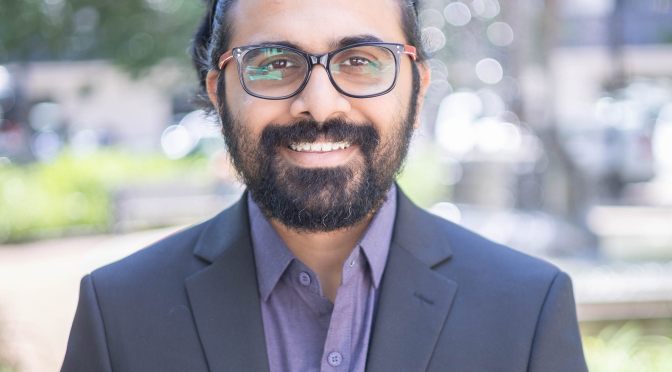
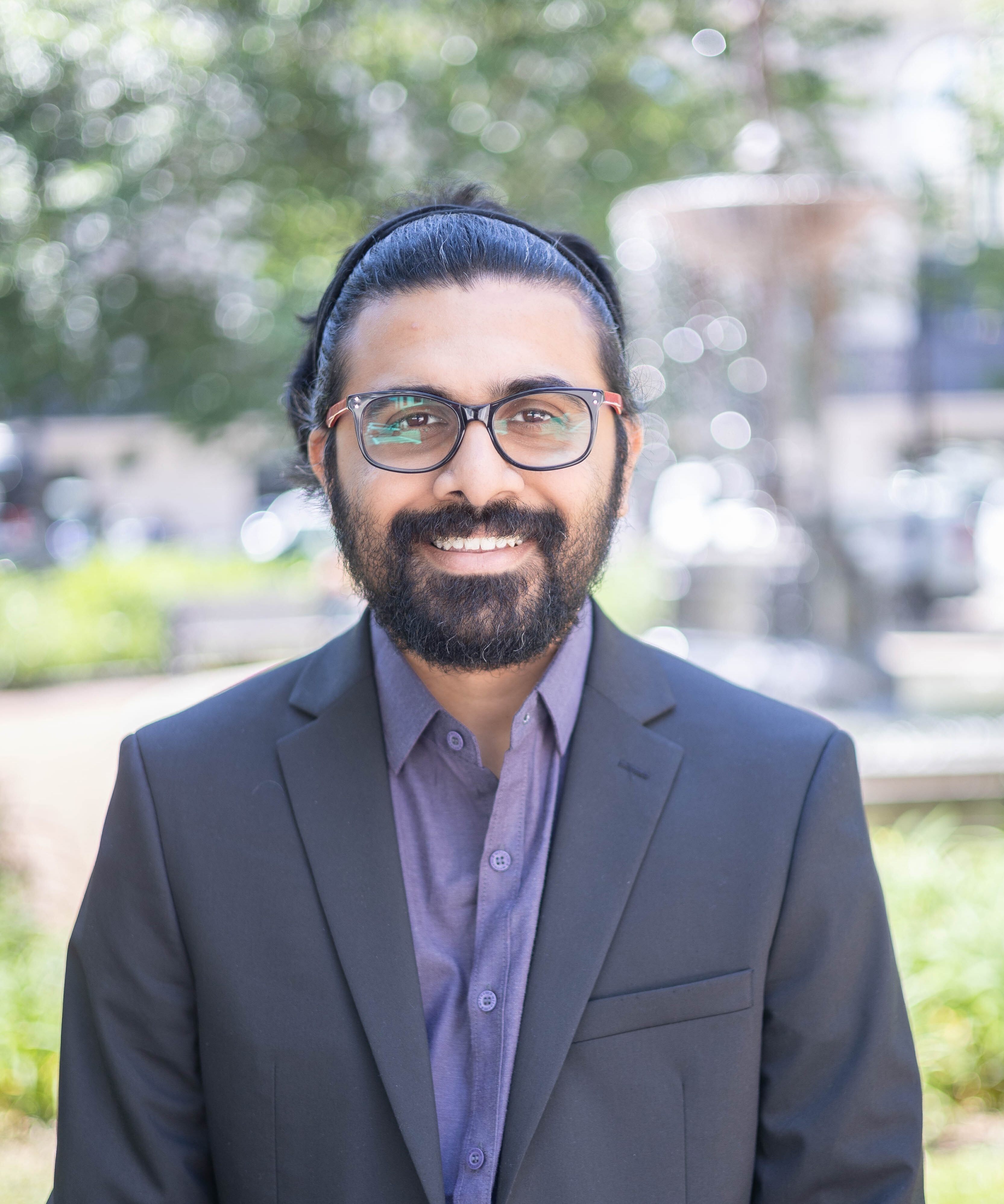
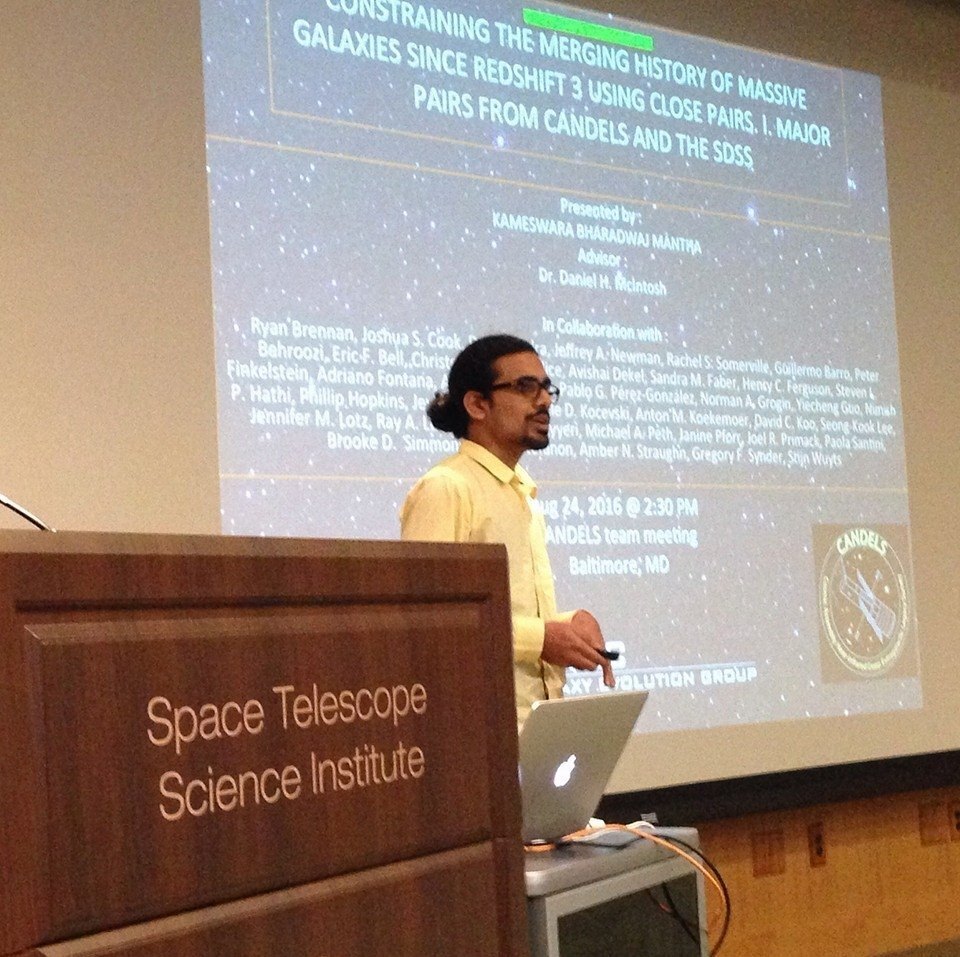
Name: Kameswara Bharadwaj Mantha (Senior AI/ML Research Scientist)
Location: University of Missouri-Kansas City
Zooniverse projects: Galaxy Zoo, Galaxy Zoo: Weird & Wonderful, Galaxy Zoo: Clump Scout, Cosmic Disco, MindMapper, many more probably 🙂
What is your research about?
My research is broadly about using AI, machine learning, and human-guided data analysis to make sense of large and complex scientific datasets across multiple fields. I have worked in areas ranging from astronomy and imaging-based science to biomedical and health-related research, and what connects all of these spaces is the same core challenge: we now generate far more data than any one person can carefully analyze alone. My work focuses on building ways for computational tools and human insight to work together so that we can identify meaningful patterns, unusual cases, and scientifically important signals more effectively.
What excites me especially is that this idea translates naturally across disciplines. In one setting, it might involve helping classify or discover unusual structures in astronomical data, whereas in another, it might involve biomedical images, disease-related patterns, or genetic data that can inform better diagnostics or drug discovery. I am particularly enthusiastic about the biomedical side of this work because of its direct potential to improve how we understand disease and develop better treatments. For me, projects like these are exciting because they sit at the intersection of discovery, data, and impact. Such work allows us to use large-scale human participation and AI not only to handle complex datasets, but also to ask better scientific questions and discover previously unknown landscapes.
How do Zooniverse volunteers contribute to your research?
Zooniverse volunteers play a central role in my research because they help generate the kind of high-quality human insight that large scientific datasets often still need. In many of the problems I work on, whether in astronomy or other data-rich areas, there is simply too much information for a small research team to inspect carefully by hand. Volunteers help by identifying key patterns, classifying structures, flagging unusual cases, and, importantly, surfacing examples that may not fit neatly into existing categories. That is especially exciting to me because those “hard-to-describe” or unexpected cases are often where new science begins. Rather than thinking of volunteers as just helping label data, I see them as active contributors to discovery and to the design of better collaborative human-AI systems.
What makes Zooniverse particularly important in my work is that I am interested not only in the final scientific answer, but also in how humans and machines can learn from each other. Volunteers can help us build more reliable training datasets, evaluate where machine-learning models succeed or fail, and identify “unknown unknowns” that are cases where automated systems might miss because they fall outside the patterns the model has already learned. That question has been central to some of my published work, including research on how citizen science and machine learning can be combined for more effective identification of unknown or unusual structures in big data.
Through Zooniverse, I hope to answer both scientific and methodological questions. On the scientific side, the goal is to better characterize complex structures and rare phenomena in large datasets. On the methodological side, I want to understand how to efficiently use volunteer’s time with machine learning, how disagreement or uncertainty in classifications can itself become scientifically meaningful, and how citizen science can be used for genuine discovery. That broader theme runs across my work in Zooniverse-related collaborations, including citizen-science projects connected to galaxy morphology, unusual object identification, and human-in-the-loop AI systems.
What’s a surprising or fun fact about your research field?
A weird and wonderful part (pun intended!) of the domains I work in is that sometimes the most valuable data points are the ones that do not belong. We spend a lot of time building systems to classify things and putting them in pre-determined buckets. However, the discoveries often emerge out of the outliers: the object that looks wrong, the signal that breaks expectations, or the pattern no one thought to search for. In that sense, “mistakes,” surprises, and oddballs can end up being the most scientifically useful part of the dataset. I believe this notion transcends beyond astronomy into any domain; In fact this same philosophy led me down a path of scientific discovery in the core biomedical domain!
Kameswara Bharadwaj Mantha (Senior AI/ML Research Scientist)
What first got you interested in research?
First, I wanted to become a medical doctor. Human body and its function fascinates me to this day. I carry with me a tinge of obsession for learning something new. As life took be down a different path, into pursuing engineering, I have been finding my way back into doing what I want for over a decade or so. That’s when I decided to pursue my graduate school in more fundamental science domains, such as Physics, and eventually in Astrophysics. My first research experience was in studying galaxies and their evolution. Astronomy made me realize the true breadth of knowledge and my place in the universe. It unlocked a new avenue in my learning and scientific research capabilities and I eagerly applied it to learning and contributing to biomedicine.
What’s something people might not expect about your job or daily routine?
My expertise and daily job related duties lies at the junction of Astrophysics, applied Artificial Intelligence & Machine Learning, and core biomedical clinical research. One potentially unexpected item that may come as a surprise is, how many times and how fast I have to switch gears from talking about distant galaxies, to microscopic cellular level genes, to aerospace optimizations, and to cybersecurity, often in back-to-back settings 🙂 … I love it though!
Outside of work, what do you enjoy doing?
Reading and collecting medical textbooks, listening to medical talks/test prep videos, hosting and creating podcasts, playing chess, planning road trips, cooking and experimenting with cuisine fusions, having philosophical discussions … and generally learning new things 🙂
What are your favourite citizen science projects?
Etch A Cell; Infection Inspection; Eyes on Eyes; Genome Detectives;
What guidance would you give to other researchers considering creating a citizen research project?
It is really important to double/triple check if the task is broken down into the the most intuitive and low cognitive burden way. Volunteers appreciate tasks that are to the point and can contribute meaningfully to the overall research goal. Next, communication with the volunteers is really important! Talk to your volunteers and engage with them!
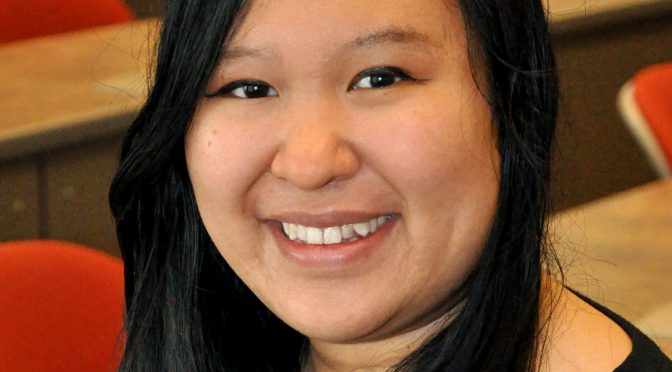
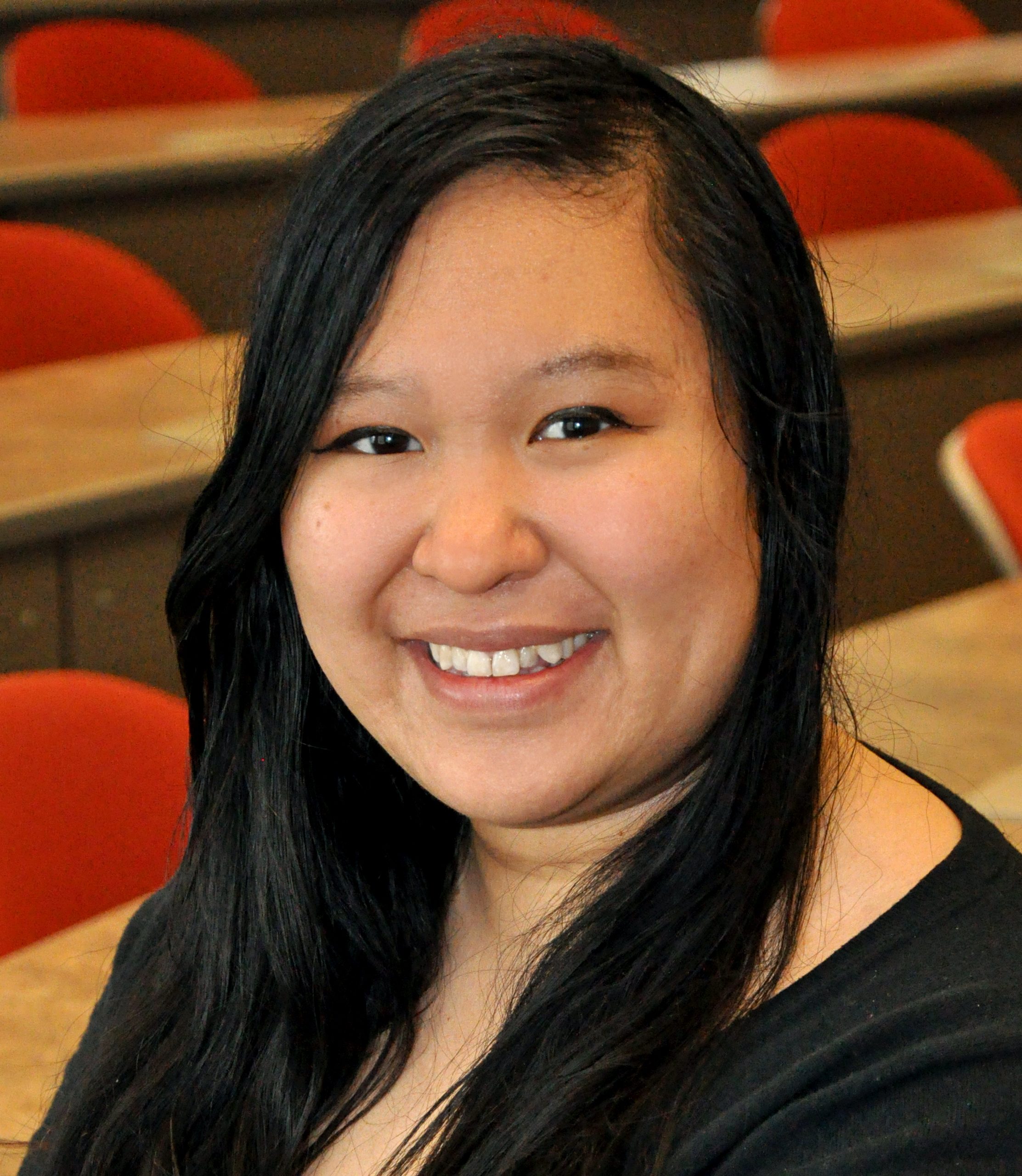
In this edition of Who’s who in the Zoo, meet Michelle Yuen, a Zooniverse backend developer.
Who: Michelle Yuen, Backend developer at Zooniverse
Location: Adler Planetarium, Chicago USA
Zooniverse projects: Panoptes, ERAS (Stats service), Talk API, Caesar
What’s something people might not expect about your job or daily routine?
People assume I just sit and code all day, but most of my time is spent playing detective with invisible problems—tracking down mysterious server crashes, optimizing data no one ever sees, or convincing stubborn APIs to behave. Basically, I fight invisible fires and hope no one notices.
Outside of work, what do you enjoy doing?
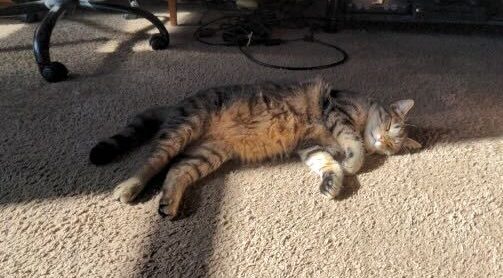
Outside of work, I enjoy playing tennis and pickleball. I enjoy cuddling with my cat, Bela. I love all things Disney and am also a cozy gamer—I’m currently hooked on Dreamlight Valley. I’m passionate about baking and often bring in my test recipes and treats for my colleagues at the Adler to try.
What are you favourite citizen science projects?
I’ve enjoyed working with Active Asteroids in the past and even spoke about Zooniverse at a tech conference, where I highlighted what the classification process looks like using Active Asteroids as an example project (you can learn more here).
What guidance would you give to other researchers considering creating a citizen research project?
Remember that community matters. Treating volunteers as partners, staying engaged, and sharing progress helps make the experience rewarding for everyone involved 🙂
Is there anything else you’d like to share with our readers?
It’s really wonderful to see how thoughtful and engaged the Zooniverse community is—from volunteers to researchers and everyone in between. The genuine enthusiasm people bring to supporting and advancing research is incredibly meaningful. I’m deeply grateful to be part of this community; it truly makes coming to work each day a joy.
We’re happy to introduce an updated Projects page on Zooniverse, designed to make it easier, faster and more enjoyable to find projects that match your interests.
The new page brings together improved navigation, long-requested features like sorting by language, and a refreshed visual design that aligns with Zooniverse’s evolving front-end experience.
One of the most requested features from our global community is finally here: project filtering by language.
Zooniverse is used by volunteers all over the world. Thanks to our amazing translators, projects are increasingly available in multiple languages. The new language filter makes it much easier to discover projects you can participate in comfortably, whether you’re looking for projects in Japanese, Czech, French, Italian or other languages.
This update helps make Zooniverse more accessible and more welcoming to the diverse community that makes participatory science possible.
Explore Projects by Organisation
The new Projects page also introduces the ability to browse projects by organisation.
On Zooniverse, organisations are research groups, institutions, observatories, universities, museums, and other teams that host and manage projects on the platform. Many organisations – such as Notes from Nature and Rubin Observatory – run multiple projects over time, often connected by shared research goals or themes.
With organisation listings now visible on the Projects page, it’s easier to discover related projects from the same research team, follow the work of organisations you’re interested in and get a clearer sense of the research communities behind the projects.
A Refreshed Look and Feel
Alongside these new features, the Projects page has been visually redesigned to match Zooniverse’s new front-end design system.
The updated layout improves consistent navigation across the platform. Project cards, filters and search tools are more clearly structured, making it simpler to scan, compare, and jump into projects that catch your eye.
This design update reflects ongoing work across Zooniverse to create a more cohesive and intuitive experience for everyone who takes part.
Built for Discovery
Whether you arrive knowing exactly what you’re looking for or just want to browse and see what’s happening across Zooniverse, the new tools are there to help you discover projects that match your interests and curiosity.
Take a look, try out the filters, explore new navigation, and enjoy the updated experience.
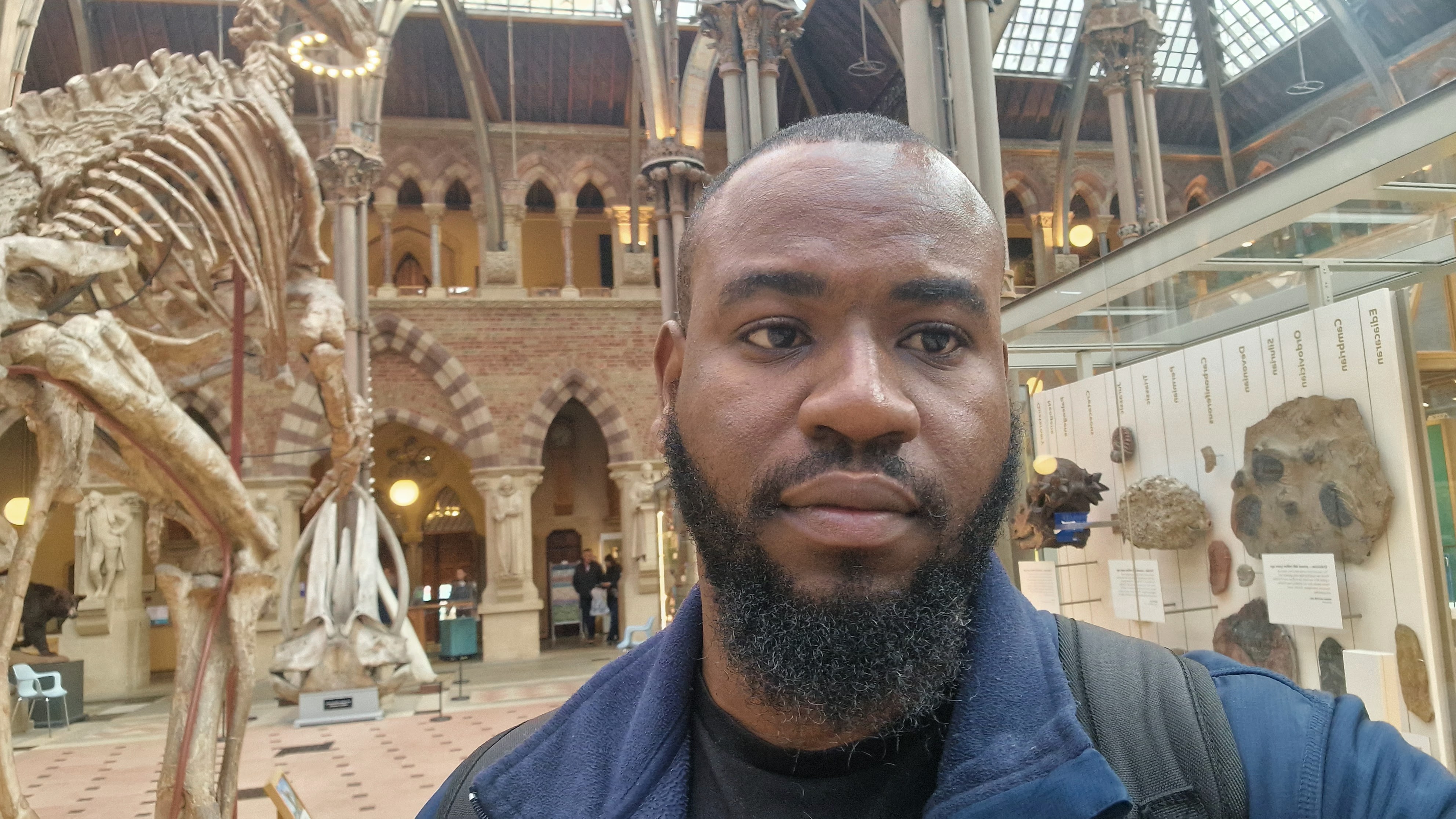
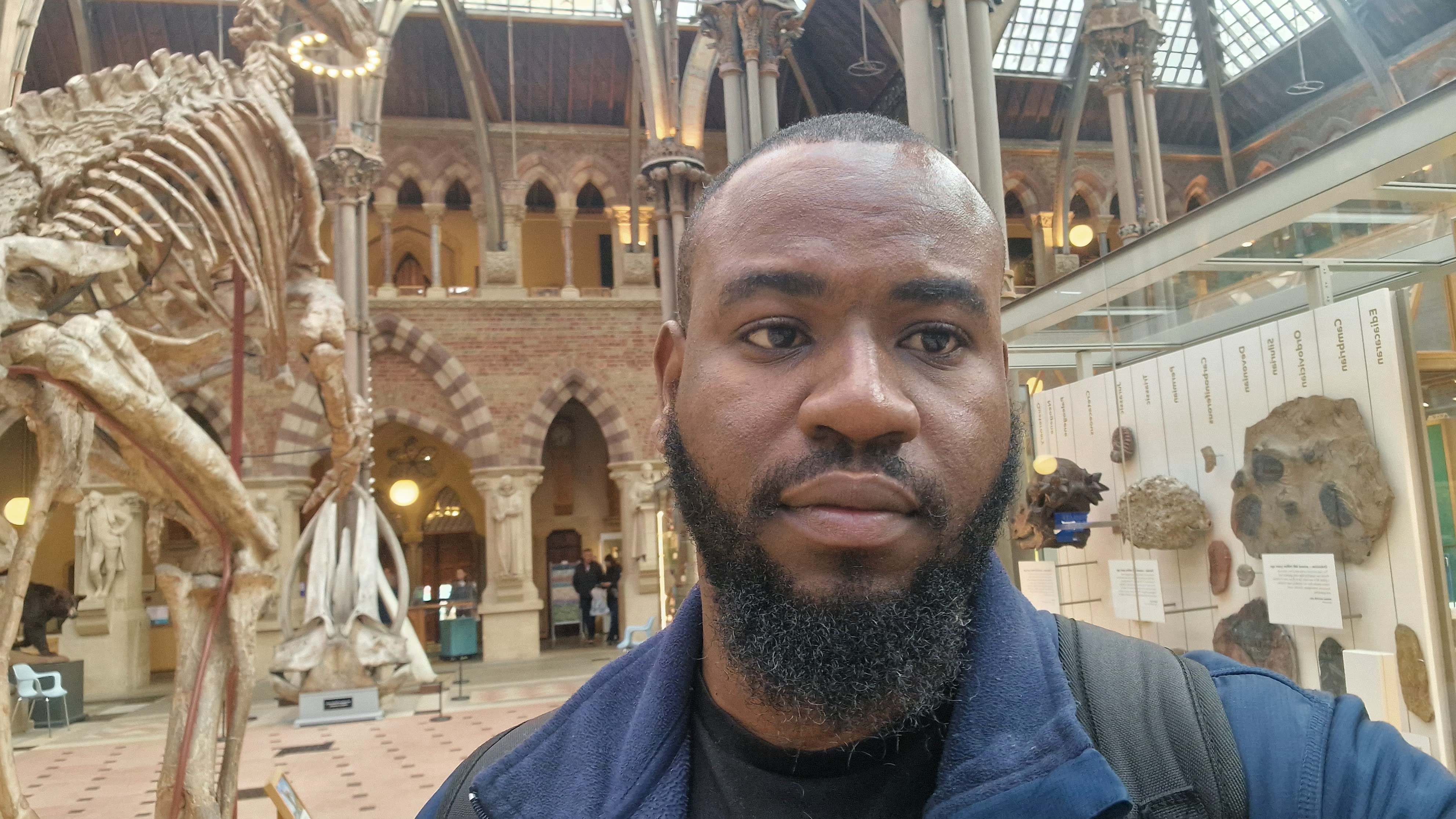
In this edition of Who’s who in the Zoo, meet Oluwatoyosi Oyegoke, a Zooniverse backend developer.
Who: Oluwatoyosi Oyegoke, Backend developer at Zooniverse
Location: University of Oxford
Zooniverse projects: Panoptes API, Panoptes Python Client & CLI, KaDE (Knowledge and Discovery Engine), BaJor (Azure Batch Job Runner), Active Learning Pipelines
What is your research about?
My work focuses on helping scientists manage the huge amount of data created by Zooniverse projects. These projects can produce millions of images from telescopes, wildlife cameras, or research surveys. Volunteers classify these images, and I build the systems that collect this information and make it useful for researchers.
I work on the Panoptes API, which is the core platform that stores project data and volunteer classifications. I also improve the Python client and CLI so researchers can easily access and analyse their data. Another part of my role involves building and maintaining the machine learning pipelines. These pipelines take the volunteer classifications, train models, run predictions, and manage large Azure Batch jobs.
In simple terms: scientists and volunteers create the data, machine learning tries to learn from it, and I build the tools and backend systems that help everything work together smoothly. My work makes it easier for researchers to understand very large datasets by improving the platforms and workflows behind the scenes.
How do Zooniverse volunteers contribute to your research?
Zooniverse volunteers play a central role in how the whole platform functions. They create the classifications that flow through the systems I work on, and their input is what brings each project to life. When a project is created, volunteers are the ones who generate the data that the platform processes, stores, and makes available to researchers.
My work focuses on the core systems behind this experience. I help maintain and improve the Panoptes API, the tools researchers use to access data, and the pipelines that handle classification processing and machine learning.
Everything depends on volunteers contributing high-quality classifications, and their work is what keeps the entire platform active and meaningful. What I find exciting is seeing how thousands of people from around the world can come together and create data that supports real scientific discovery. My role is to make sure the systems behind that process are fast, reliable, and able to handle the huge amount of participation that Zooniverse projects receive.
While I do not work on individual research outputs, the systems I help build and maintain support all the scientific papers, datasets, and discoveries that come from Zooniverse projects. Without volunteers, and without the infrastructure behind them.
What’s a surprising or fun fact about your research field?
For me, one surprising thing is how global the participation is. A project can receive classifications from people in completely different parts of the world within the same minute. It amazes me how many people contribute to science from their sofa, their commute, or wherever they happen to be.
What first got you interested in research?
I love working on systems that have a direct impact, and the mix of technology, community, and science is what keeps it exciting.
What’s something people might not expect about your job or daily routine?
One thing people might not expect is how often small changes make a big impact. Sometimes a single line of code or a small optimisation can improve performance for millions of classifications. It’s a very technical role, but it’s also rewarding to know that quiet, invisible work can support so many people doing science together.
Outside of work, what do you enjoy doing?
Outside of work, I spend my weekends playing football with friends. I also spend a lot of time playing video games like FIFA and GTA. It’s my favourite way to unwind and switch off. I also enjoy watching documentaries, especially ones about historical events, and I love exploring new technologies just out of curiosity. It keeps things fun and gives me something new to learn all the time.
Is there anything else you’d like to share with our readers?
I’d just like to say that being part of Zooniverse has shown me how powerful community-driven science can be. Every contribution, no matter how small, helps move real research forward. It’s a privilege to help build the systems that make that possible, and I’m excited to see what volunteers and researchers will discover next.
We are grateful to Zooniverse volunteer Sallyann Chesson for preparing this updated list of translated projects, and to all our volunteer project translators for their ongoing contributions.
Do you want to become a Zooniverse translator? Are you a research team member looking to translate your project? Here is what you need to know.
In this edition of Who’s who in the Zoo, meet Adam McMaster, a Research Fellow working at the University of Southampton
Who: Adam McMaster, Research Fellow
Location: University of Southampton, UK
Zooniverse projects: Black Hole Hunters, SuperWASP Variable Stars
What is your research about?
I search archives of astronomical observations, looking for patterns which might be caused by interesting types of star or rare astronomical events. I work with so-called “time series” data, which is where measurements are taken repeatedly over time. In my case, I’m looking at how the brightness of stars changes over anything from days to years. In SuperWASP Variable Stars, we’re looking for certain kinds of repeating variability, such as eclipses and pulsations, in data originally collected by the SuperWASP exoplanet search. In Black Hole Hunters, we’re looking for a type of gravitational microlensing, where a black hole briefly magnifies the light from a star, and we’re currently searching the archives of the TESS exoplanet search, with plans to add data from several other surveys in the near future.
How do Zooniverse volunteers contribute to your research?
The volunteers make our projects possible. We’re looking for the things that get missed by automated searches. Computer algorithms are great at finding a lot of things, but no matter how good they are there will always be things that they miss. Slightly odd looking examples, noisy data, and unexpected things that no one knew to program the computer to find. Only people can find these things, and there is simply too much data to look through ourselves.
In SuperWASP Variable Stars, we’re looking for stars that have been missed in previous searches of the data. The SuperWASP data can be particularly noisy, which can make searching it a challenge. We’ve found that people are really good at separating the noise from the real thing. We’ve written up and published some of the results of this project already, and we publish an interactive database of the results at superwasp.org.
In Black Hole Hunters, the microlensing events we’re looking for are expected to be the hardest ones to spot. Even with really high quality data, we expect the most interesting events to barely stand out against the background noise. That’s what makes a manual search so useful.
What’s a surprising or fun fact about your research field?
The Milky Way is predicted to contain millions of black holes, but we only know about roughly 70 of them. Those were almost all spotted because they’re not really black, at least in X-rays. They’re very bright in X-rays because they’re consuming matter, which heats up as it falls into the black hole. The vast majority of black holes are not expected to be feeding and should truly be black. Those are the ones we’re looking for! We can’t see the black holes themselves, but we should be able to see the effects of their gravity. That’s why we think gravitational microlensing is a good way to find them.
What first got you interested in research?
I have always been interested in science and astronomy for as long as I can remember. I had a telescope as a kid, and I remember going outside to look at the comet Hale-Bopp with my dad. I’m afraid I don’t really remember the first time I thought about actually doing research myself, but I took a rather indirect route to get here. Despite being interested in research (and almost doing a computer science PhD), after university I first worked as a web developer for a few years before eventually finding my way to an astronomy PhD.
Outside of work, what do you enjoy doing?
I’d honestly love just to be able to spend a day sitting and reading a book, but these days my children take up most of my spare time (and energy)! Maybe I’ll be able to do that again in a few years. Also, nothing beats a long walk in the country with the dog.
What are you favourite citizen science projects?
It’s been a long time since it was active, but I always had a soft spot for the SETI Live project here on the Zooniverse. It was obviously unlikely to find anything, but there was something exciting about working on data in real time as it came off of the telescope.
What guidance would you give to other researchers considering creating a citizen research project?
If you’ve never done it before, talk to those of us who have! Especially when it comes to the Zooniverse, everyone is very friendly and happy to help, so there’s no need to try and figure everything out on your own.
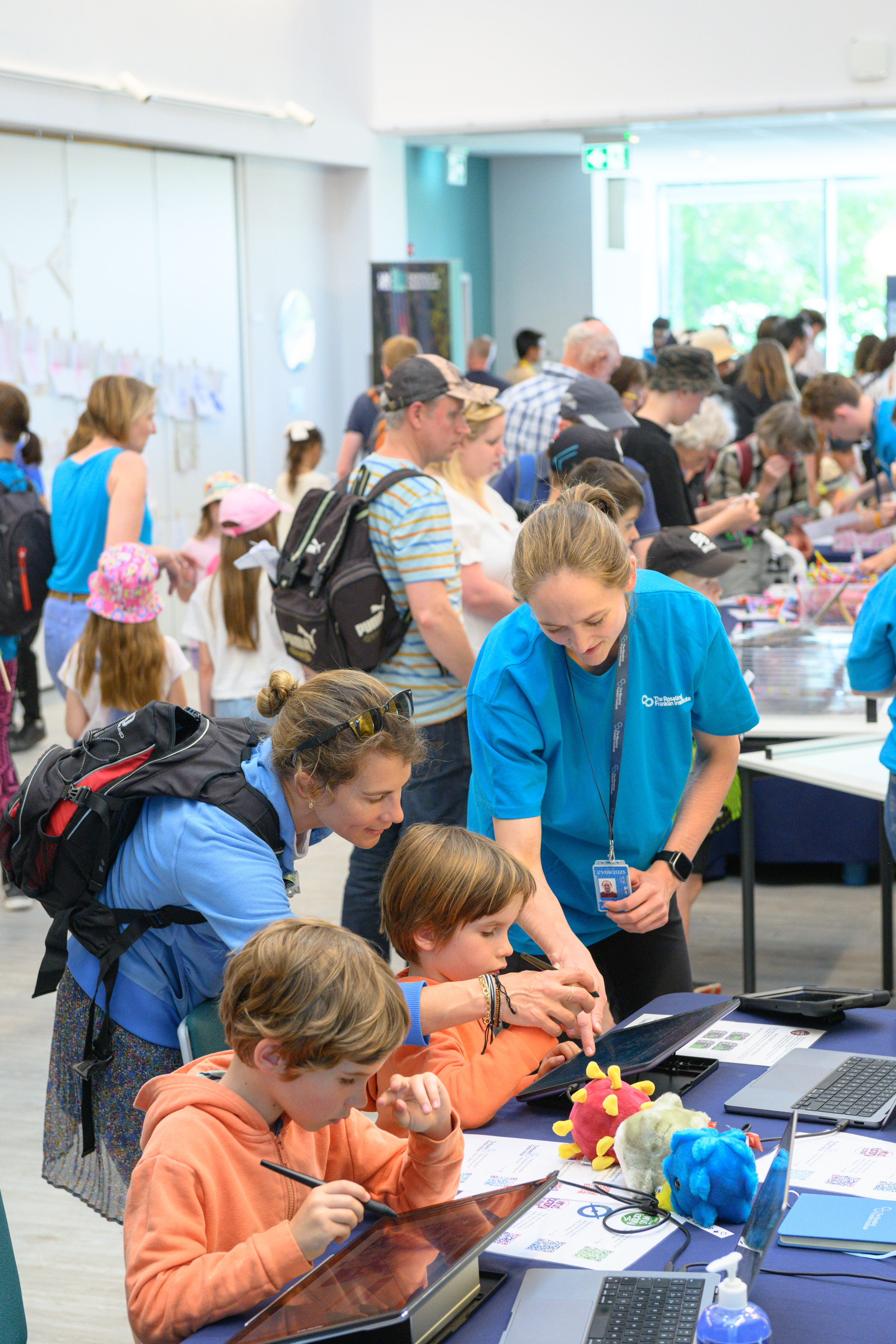
As a community manager, I wear a lot of different hats! My formal background is materials science and biomaterials, but I’m now the ‘citizen science specialist’ in a lot of my day-to-day research. I work alongside imaging specialists, software engineers, and experts in a variety of biosciences to help them design interesting, effective, and worthwhile projects on the Zooniverse. Essentially, I make sure that the experts are asking the right questions, in the right way, for our volunteers to be able to understand and contribute most effectively to our research.
I also spend a lot of time supporting our Science Scribbler community and making sure our volunteers are the first to hear about any project updates or research outcomes. The rest of my time is spent working with teachers to support them in using citizen science in the classroom through our Virus Factory in Schools project, and dabbling in a little bit of my own research too.
How do Zooniverse volunteers contribute to your research?
Most of the Science Scribbler projects launched so far have focused on 3D biological imaging data. When we ask questions about a particular sub-cellular structure or disease, we usually have to go through a process called segmentation: essentially colouring in every pixel that we count as being part of a particular class or label. Automated segmentation methods are constantly improving, but most of the time they still require a lot of expert annotation to either train or finetune the segmentation model. Creating this annotation is a huge bottleneck in processing all the data we collect. As a consequence, we usually have to compromise in some way: looking at a smaller sample size or asking less complicated questions.
Where volunteers help us in our research is in providing the annotations we need to train or refine our segmentation models. Once we have segmentation models that are working well, we can start to ask the really interesting questions – like what differences can we see in the mitochondria of healthy or diseased placenta? And what does that mean for our understanding of that disease?
But using citizen science to train or finetune our models isn’t just about passing the workload from a researcher to the crowd – it’s so much more powerful than that. One thing I’m really interested in is how citizen science can impact the bias in our models. If one expert trains a model, it will ‘see’ what that one individual sees. But if a model is trained on thousands of eyes through citizen science, it has the potential to be less biased than the expert, and who knows what that will bring!
What’s a surprising or fun fact about your research field?
We collect a lot of data at the Rosalind Franklin Institute. Recently we celebrated reaching 1 petabyte of Franklin data with a petabyte party (yes, there was cake). A petabyte is one million gigabytes – a huge amount of data for anyone to analyse – hence why we know citizen science is so valuable in our research. But what astounds me is how biology is at a completely different level; you can store roughly 215 petabytes of data in just 1 gram of DNA. Mind: blown.
What first got you interested in research?
I’m very lucky that I was exposed to a lot of science and engineering from a very early age. I think I decided I’d be a biochemist when I was just 9 years old, but in the end materials science stole my heart! There’s something fundamentally rewarding about being able to look at my everyday environment and ask: “How does this work?”, “What is this made of?” and most importantly “Why????”
In my role I’ve learned a lot about the impact science capital can have on a child’s attitude towards science and STEM careers. It’s part of why I think science communication is so important, and why I chose to work in a position that allows me to share my love of science with so many people.
What’s something people might not expect about your job or daily routine?
I really enjoy hiking and skiing in the alps, DnD, board games, and a good flat white. I also spent a decade dedicating half my time to rowing – when I started this role I was working part-time alongside training as a full-time athlete.
What are you favourite citizen science projects?
Too many to count! I’m always very nosey when a new project launches on the Zooniverse, so I try to submit at least a few classifications for each one. I really like using the Zooniverse app, so Gwitch Hunters comes to mind there. I also really enjoy the Etch A Cell projects, HMS NHS, and Monkey Health Explorer. The first project I contributed to was Civil War Bluejackets. Following the progress on the project over the last 3 years has been really easy thanks to their amazing blog and newsletters. They recently moved from full transcription (which I did a lot of) to correcting the automated transcriptions that were trained on our original work. It’s really cool to see the project progress in real time like that!
What guidance would you give to other researchers considering creating a citizen research project?
Getting a fresh pair of eyes on your data is really important in project design – sometimes you know the data too well and you’ll be blind to some really simple changes that will make your workflows much more straightforward. Remember to provide positive and negative examples – not just what you should do, but what you shouldn’t do as well. Finally, be ready to respond to your community in the early stages of the project. The first few weeks are really where you build out your FAQs and refine your field guide – especially if your volunteers find unusual examples in your dataset!
Is there anything else you would like to share with our readers?
I wanted to say a huge thank you to our Science Scribbler community! Since our first project launched in 2018, you have contributed over 4.4 million classifications to our projects. That’s the equivalent of 10 years of effort from a full-time employee!
Are you looking for a Zooniverse project in a language other than English? Here is the latest update on what is available, as of 1 October 2025. Many thanks to our amazing volunteers – project translators.
Do you want to become a Zooniverse translator? Are you a research team member looking to translate your project? Here is what you need to know.
The following list of translated Zooniverse projects is prepared by the Zooniverse volunteer Sallyann Chesson.
The world's largest and most popular platform for people-powered research. This research is made possible by volunteers—millions of people around the world who come together to assist professional researchers.




 Zooniverse