This is a guest post from the research team behind The American Soldier in WWII.
As challenges press upon all of us in the midst of the pandemic, the team behind The American Soldier in World War II has some good news to share.
When we initially launched our project on Zooniverse on VE Day 2018, our goal was to have all 65,000 pages of commentaries on war and military service written by soldiers in their own hands transcribed and annotated within a 2-year window – in triplicate, for quality-control purposes. We not only hit that milestone in May 2020, but last week we completed an additional 4th round.
Attracting 3,000-plus new contributors, this extension of the transcription drive took only six months. Beyond allowing more people to engage with these unique and revealing wartime documents, the added round is improving our final project output. Within the next week or so, our top Zooniverse transcribers will begin final, manual verification of these transcriptions and annotations, which have been cleaned algorithmically. If you are a consistent project contributor and interested in helping with final validation, please do let us know by signing up here.
As we move forward with the project, we have created a Farewell Talk board. Since we have had so many incredible contributors to The American Soldier, we would love to hear any parting words our volunteers would like to share with the team and with fellow contributors about your experiences or most memorable transcriptions.
We are so incredibly grateful for the international team of researchers, data and computer scientists, designers, educators, and volunteers who have gotten the project to where it is and in spite of the great upheaval. Thanks to their hard work and dedication, the project’s open-access website remains on track for a spring 2021 launch.
We look forward to sharing more news with you soon. Until then, be well and safe.
We’re very happy to announce a new partnership between NASA and our Zooniverse teams at the Adler Planetarium and the University of Minnesota. This new partnership advances and deepens our existing relationship and efforts with NASA. Our team will work together with NASA to create new opportunities for the Zooniverse volunteer community to engage and participate in projects that span the wide range of NASA’s science divisions: astrophysics, heliophysics, planetary science, and earth science.
This new NASA grant will enable new projects as well as provide support for our developers to maintain our research-enabling platform. This support is very welcome, and will help us share our platform with a growing number of scientists who want to unlock data from NASA’s missions, centers, and projects. We’re really looking forward to building and launching these new projects, but don’t worry — nothing else will change. The platform will still be a welcome home to a wide range of research and projects.
It’s been more than a decade now since the Zooniverse launched, and it’s exciting to have reached the point where the Zooniverse platform, research teams, and AMAZING community of volunteers are consistently recognized as valuable contributors and collaborators in research. The Zooniverse team is excited for this partnership and for the future ahead — here’s to lots more adventures to come!
Over the past several months, we’ve welcomed thousands of new volunteers and dozens of new teams into our community.
This is wonderful.
Because there are new people arriving every day, we want to take this opportunity to (re)introduce ourselves, provide an overview of how Zooniverse works, and give you some insight on the folks who maintain the platform and help guide research teams through the process of building and running projects.
Who are we?
The core Zooniverse team is based across three institutions:
Oxford University, Oxford UK
The Adler Planetarium, Chicago IL
The University of Minnesota-Twin Cities, Minneapolis MN
We also have collaborators at many other institutions worldwide. Our team is made up of web developers, research leads, data scientists, and a designer.
How we build projects
Research teams can build Zooniverse projects in two ways.
First, teams can use the Project Builder to create their very own Zooniverse project from scratch, for free. In order to launch publicly and be featured on zooniverse.org/projects, teams must go through beta review, wherein a team of Zooniverse volunteer beta testers give feedback on the project and answer a series of questions that tell us whether the project is 1) appropriate for the platform; and 2) ready to be launched. Anyone can be a beta tester! To sign up, visit https://www.zooniverse.org/settings/email. Note: the timeline from requesting beta review to getting scheduled in the queue to receiving beta feedback is a few weeks. It can then take a few weeks to a few months (depending on the level of changes needed) to improve your project based on beta feedback and be ready to apply for full launch. For more details and best practices around using the Project Builder, see https://help.zooniverse.org/getting-started/.
The second option is for cases where the tools available in the Project Builder aren’t quite right for the research goals of a particular team. In these cases, they can work with us to create new, custom tools. We (the Zooniverse team) work with these external teams to apply for funding to support design, development, project management, and research.
Those of you who have applied for grant funding before will know that this process can take a long time. Once we’ve applied for a grant, it can take 6 months or more to hear back about whether or not our efforts were successful. Funded projects usually require at least 6 months to design, build, and test, depending on the complexity of the features being created. Once new features are created, we then need additional time to generalize (and often revise) them for inclusion in the Project Builder toolkit.
To summarize:
Option 1: Project Builder
Free!
Quick!
Have to work with what’s available (no customization of tools or interface design)
Option 2: Custom Project
Funding required
Can take a longer time
Get the features you need!
Supports future teams who may also benefit from the creation of these new tools!
We hope this helps you to decide which path is best for you and your research goals.
In the beginning of April 2020, we were notified that subjects from one Zooniverse project were appearing in the subject set of a separate project where they did not belong. In our investigation of the issue, our team determined that this behavior was being caused by a Caesar configuration mistake that used an incorrect Subject Set ID. Project owners using Caesar were able to create Subject Rule Effects that added subjects to collections or subject sets, even without proper subject set editing permissions. We have rectified the issue surrounding Subject Rule Effects and eliminated this vulnerability, and would like to share the details for anyone who is interested.
The issue was raised by project lead James Perry (@JamesPerry), who reported that subjects that didn’t belong to his project were appearing in his subject sets. Due to a mistyped subject set ID in a Caesar `add_to_subject_set` effect for an unrelated project, that Subject Rule Effect was sending subjects from that project to one of James’s subject sets instead of the correct target.
Our immediate course of action was to fix the project impacted by the vulnerability, and push out a temporary code fix to prevent the vulnerability from being exploited.
To fix the affected project, we updated the incorrect subject set id for the project that was incorrectly sending subjects to the wrong project and removed the unwanted subjects from the set.
On April 3rd we deployed a temporary code fix to disable Subject Rule Effect creation and modification for all but admin users (see PR #1109). This change was communicated to affected teams that were most impacted by the change, and teams that reached out after seeing our notification banner or encountering a Caesar interface error.
On May 15th we pushed out a permanent fix that checked the user has permissions to send data to the target subject set or collection. Specifically, the updated validation code checks that the user has update permissions on the project the subject set or collection is linked to. (see PRs #1115, #1129 and #1131).
For anyone running their own hosted copy of Caesar, we recommend pulling these changes as soon as you’re able.
The following is an update from the SuperWASP Vairable Stars research team. Enjoy!
Welcome to the Spring 2020 update! In this blog, we will be sharing some updates and discoveries from the SuperWASP Variable Stars project.
What are we aiming to do?
We are trying to discover the weirdest variable stars!
Stars are the building blocks of the Universe, and finding out more about them is a cornerstone of astrophysics. Variable stars (stars which change in brightness) are incredibly important to learning more about the Universe, because their periodic changes allow us to probe the underlying physics of the stars themselves.
We have asked citizen scientists to classify variable stars based on their photometric light curves (the amount of light over time), which helps us to determine what type of variable star we’re observing. Classifying these stars serves two purposes: firstly to create large catalogues of stars of a similar type which allows us to determine characteristics of the population; and secondly, to identify rare objects displaying unusual behaviour, which can offer unique insights into stellar structure and evolution.
We have 1.6 million variable stars detected by the SuperWASP telescope to classify, and we need your help! By getting involved, we can build up a better idea of what types of stars are in the night sky.
What have we discovered so far?
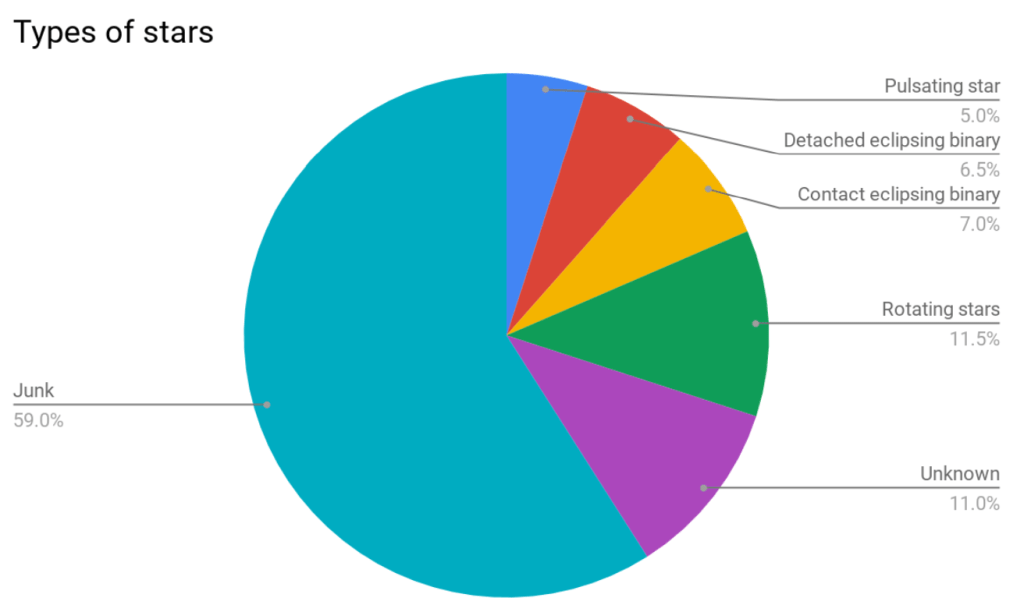
We’ve done some initial analysis on the first 300,000 classifications to get a breakdown of how many of each type of star is in our dataset.
So far it looks like there’s a lot of junk light curves in the dataset, which we expected. The programme written to detect periods in variable stars often picks up exactly a day or a lunar month, which it mistakes for a real period. Importantly though, you’ve classified a huge number of real and exciting light curves!
We’re especially excited to do some digging into what the “unknown” light curves are… are there new discoveries hidden in there? Once we’ve completed the next batch of classifications, we’ll do some more to see whether the breakdown of types of stars changes.
An exciting discovery…
In late 2018, while building this Zooniverse project, we came across an unusual star. This Northern hemisphere object, TYC-3251-903-1, is a relatively bright object (V=11.3) which has previously not been identified as a binary system. Although the light curve is characteristic of an eclipsing contact binary star, the period is ~42 days, notably longer than the characteristic contact binary period of less than 1 day.
Spurred on by this discovery, we identified a further 16 candidate near-contact red giant eclipsing binaries through searches of archival data. We were excited to find that citizen scientists had also discovered 10 more candidates through this project!
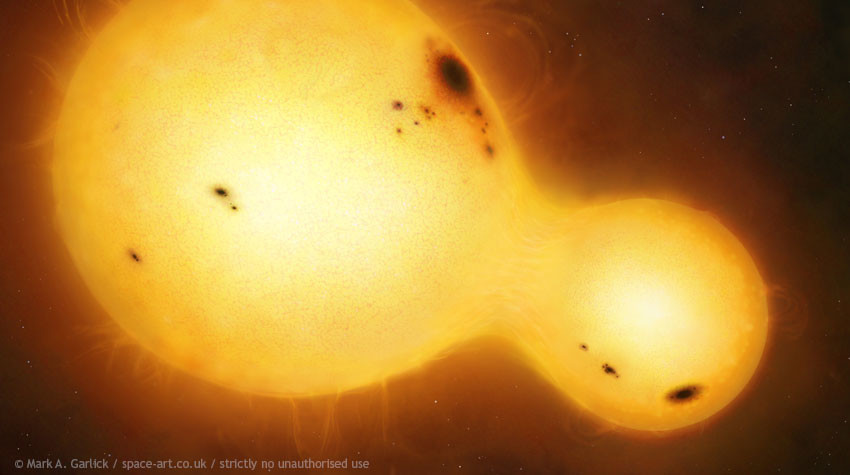
Figure 1: Artist’s impression of a contact binary star [Mark A. Garlick] Over the past 18 months, we’ve carried out an observing campaign of these 27 candidate binaries using telescopes from across the world. We have taken multi-colour photometry using The Open University’s own PIRATE telescope, and the Las Cumbres Observatory robotic telescopes, and spectroscopy of Northern candidates with the Liverpool Telescope, and Southern candidates using SALT. We’ve also spent two weeks in South Africa on the 74-inch telescope to take further spectroscopy.
Of the 10 candidate binaries discovered by citizen scientists, we were happy to be able to take spectroscopic observations for 8 whilst in South Africa, and we have confirmed that at least 2 are, in fact, binaries! Thank you citizen scientists!
Why is this discovery important?
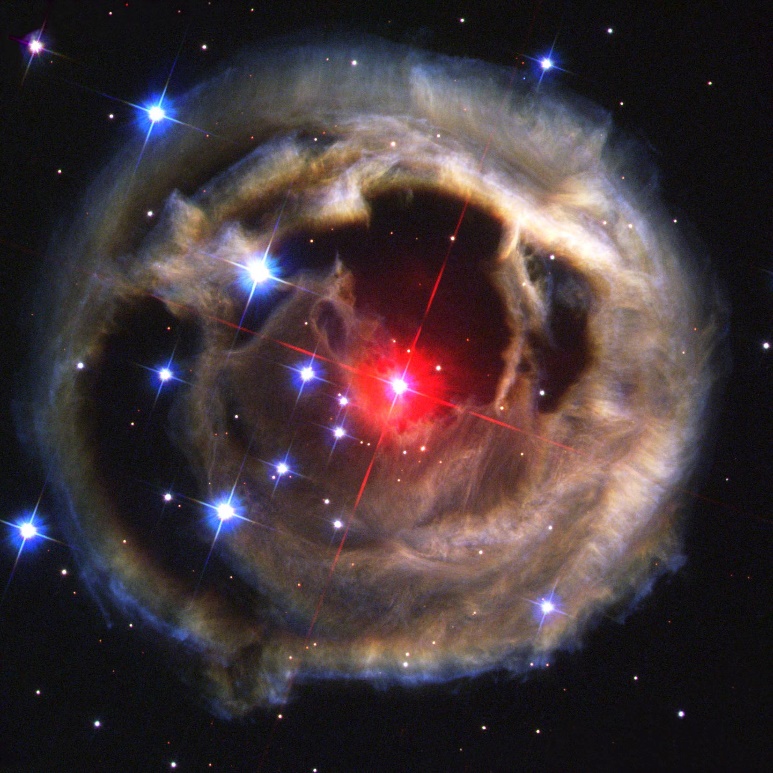
Figure 2: V838 Mon and its light echo [ESA/NASA]
The majority of contact or near-contact binaries consist of small (K/M dwarf) stars in close orbits with periods of less than 1 day. But for stars in a binary in a contact binary to have such long periods requires both the stars to be giant. This is a previously unknown configuration…
Interestingly, a newly identified type of stellar explosion, known as a red nova, is thought to be caused by the merger of a giant binary system, just like the ones we’ve discovered.
Red novae are characterised by a red colour, a slow expansion rate, and a lower luminosity than supernovae. Very little is known about red novae, and only one has been observed pre-nova, V1309 Sco, and that was only discovered through archival data. A famous example of a possible red nova is the 2002 outburst in V838 Mon. Astronomers believe that this was likely to have been a red nova caused by a binary star merger, forming the largest known star for a short period of time after the explosion.
So, by studying these near-contact red giant eclipsing binaries, we have an unrivalled opportunity to identify and understand binary star mergers before the merger event itself, and advance our understanding of red novae.
What changes have we made?
Since the SuperWASP Variable Stars Zooniverse project started, we’ve made a few changes to make the project more enjoyable. We’ve reduced the number of classifications needed to retire a target, and we’ve also reduced the number of classifications of “junk” light curves needed to retire it. This means you should see more interesting, real, light curves.
We’ve also started a Twitter account, where we’ll be sharing updates about the project, the weird and wacky light curves you find, and getting involved in citizen science and astronomy communities. You can follow us here: www.twitter.com/SuperWASP_stars
What’s next?
We still have thousands of stars to classify, so we need your help!
Once we have more classifications, we will be beginning to turn the results into a publicly available, searchable website, a bit like the ASAS-SN Catalogue of Variable Stars (https://asas-sn.osu.edu/variables). Work on this is likely to begin towards the end of 2020, but we’ll keep you updated.
We’re also working on a paper on the near-contact red giant binary stars, which will include some of the discoveries by citizen scientists. Expect that towards the end of 2020, too.
Otherwise, watch this space for more discoveries and updates!
We would like to thank the thousands of citizen scientists who have put time into this Zooniverse project. If you ever have any questions or suggestions, please get in touch.
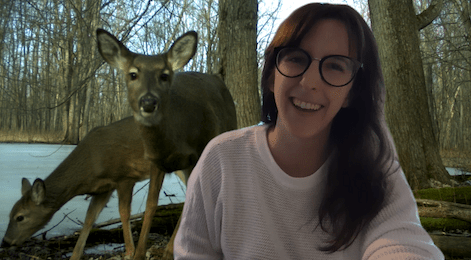
If you, like many of us here at Zooniverse, have found yourself on more Zoom calls than ever these days, you may be looking for suitable images to use as Virtual Backgrounds. Look no further! We’ve compiled some of our favorite images from across the Zooniverse in a Zooniverse Collection.
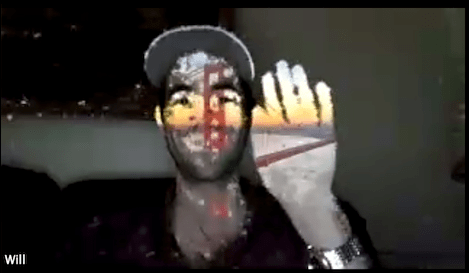
We’ve had fun learning how to enable backgrounds, as demonstrated by developer Will Granger.
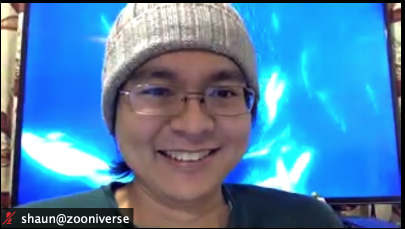
Or, get creative and simulate a Zoom background like developer Shaun Noordin.
Lead Designer Becky Rother had a hard time choosing her favorite image.
How to do it
On Zooniverse During classification on Zooniverse, If you’ve come across a subject image (or video!) that you’d like to use in your Zoom background, finish your classification and choose Done & Talk. You can also add it to your Favorites or a Collection. You cannot save an image directly from the classification interface; images may only be saved from a subject’s Talk page (i.e. https://www.zooniverse.org/projects/michiganzoomin/michigan-zoomin/talk/subjects/9185490), so make sure you’re in the right place. Once there, you can right-click or control-click and choose Save Image As.
On Zoom In Zoom, sign in to your account and open Settings. Click ‘Virtual Background’ from the list on the left side. There, you’ll be able to upload your own images from your computer with the plus icon on the right side of the dialog box. Unless you actually have a green screen, leave the ‘I have a green screen’ tickbox un-ticked. Here’s a document from Zoom in case you’re having trouble.
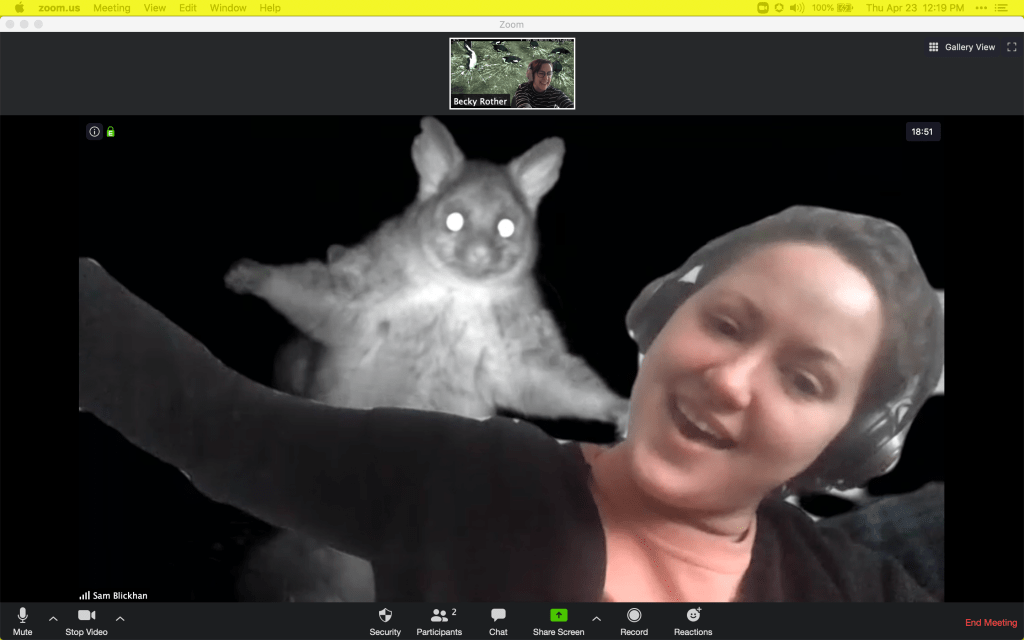
The images range from impressive and educational to downright silly, as demonstrated by Humanities Research Lead Sam Blickhan.
Let us know!
We would love to see your Zooni-Zoom backgrounds in use! Send us an email at contact@zooniverse.org with the subject line ‘Zooni-Zoom!’, or mention us in your photos on Twitter, Facebook, or Instagram.
We have updated our process! For the latest information, new functionality, and exciting new opportunities, please visit our most recent blog post on service learning support.
We’ve been so thankful and appreciative of how many students and organizations participate in Zooniverse to fulfill volunteering/service hour requirements for graduation, scholarships, etc.
If you’re considering doing the same, we recommend that organizations place at the forefront what students/participants get out of these experiences beyond contributing time and classifications. Rather than creating busy work, we favor a model where participants take time to reflect on how their efforts (and the community’s collective efforts) are contributing to our understanding of our world and the broader universe.
Here is one approach for constructing a productive and rewarding volunteer experience for your organization:
Step 1: Share this opportunity with your Organization
Email your organization to see if participation in Zooniverse can be used to fulfill volunteering or other participation requirements. Share this blog post with them so they understand what you would be doing and how you’ll ‘document’ your participation (see Step 8 below).
Step 2: Register at Zooniverse.org
Create a Zooniverse account by clicking ‘Register’ in the upper-right of the Zooniverse.org homepage (only a name and email are required).
Registering is not required to participate in Zooniverse. But it is useful in this case in order to provide a record of participation.
Step 3: Zooniverse background info
Watch this brief animation and video for background/context about the Zooniverse, the world’s largest platform for people-powered research, with 100 active projects and 2 million people around the world participating. Every Zooniverse project is led by a different research team, spanning a wide range of subjects that include: identifying planets around distant stars (PlanetHunters.org), studying the impact of climate change on animals (SnapshotSafari.org) and plants (FloatingForests.org), tracking resistance to antibiotics (Bash the Bug), transcribing handwritten documents (antislaverymanuscripts.org), and more. The collective efforts of Zooniverse projects have resulted in over 200 research publications to date.
Step 4: Choose your project(s)
Choose from the full list of ~100 active Zooniverse projects (see zooniverse.org/projects) or choose from the curated lists of projects below that tend to work well with different age groups, as selected by the Zooniverse team:
Sometimes projects temporarily run out of data sets before a volunteer has completed the hours-requirements they are working toward, so having more than one project in mind is a good idea.
Step 5: Learn a bit about the project before diving in
Consider these Reflection Questions, or other similar questions. The questions explore the ‘why’ behind this experience. Why do the researchers need your help? How might the results help science? Are you interested in participating in other projects of this type, and why or why not?
For Organizations: Consider sending these via a Google Form or other survey tool for participants to submit responses to these questions. Note: before using the example form above, make a copy of the Google form and send the survey from your own account to make sure you can access the responses.
Extension opportunities:
Each project has a ‘Talk’ discussion forum associated with it (e.g., https://www.zooniverse.org/projects/mrniaboc/bash-the-bug/talk). This is where the researchers and participants from around the world chat with each other — asking questions about the science, weird things people see while classifying, new discoveries, & more. First, explore the discussion threads and check out some of the questions other people have asked. If you’re feeling comfortable, ask the researchers a question about the science, being a scientist, etc. You might start with a question you asked as part of the ‘Reflection Questions’ activity above. The researchers are keen to hear your questions and engage with you. Check back later to see the response, or watch for Talk email notifications, if you’ve enabled them.
Post-experience (a lifetime of engagement): Check out other Zooniverse projects and check out NASA’s Citizen Science project list and SciStarter for other citizen science opportunities. And please do share about citizen science with family and friends (peer networks make a BIG difference in what people try).
Step 8: Document your participation to fulfill your requirements
Once signed in at Zooniverse.org, you’ll see your display name and your total classification count. (If you hover over the doughnut-ribbon in the center top of the page, you’ll see the classification counts for each specific project you’ve participated in.)
Please note that there is no built-in time-tracker within Zooniverse. Many organizations encourage participants to use the number of classifications they’ve contributed as a proxy for time spent on the site. On average, a person contributes 20-75 classifications/hour on most projects (this ranges widely depending on the difficulty of the tasks, the number of tasks for a given classification, etc.).
For example, if someone has done 100 classifications, you can estimate that they’ve spent ~2 hours classifying on Zooniverse; e.g., 2 hours x 50 classifications / hour = 100 classifications. The Organization should add ~45 minutes to this time estimate for the time it takes to carry out the additional ‘meta’ elements of the experience outlined above.
Please note – because we are a small organization and 1000s of students each week are participating in Zooniverse as volunteers, we (the internal Zooniverse team) are not able to sign individual’s ‘certificates of completion’ or other records of that type for volunteer hours. Instead, organizations encourage their participants to take a screenshot of their signed-in Zooniverse.org page showing their personal stats. This screenshot serves as a proxy for documentation of your effort.
Another option is to participate in the following specific Zooniverse projects. The research teams leading those efforts have the capacity to provide certificates.
Note: Best practice is to allow at least two weeks between requesting the required information and any deadlines you may have. It may take longer if the research team is in the field or dealing with other tasks.
For Organizations: Consider using a Google Form or other survey instrument for participants to submit their classification count and a screenshot of their Zooniverse.org page. Note: make a copy of the Google form and send it from your account so you can access the responses.
Other Information
If you need to reference a 501(c)(3):
While Chicago’s Adler Planetarium, one of the hosts of the Zooniverse web development team, is a 501(c)(3), the Zooniverse is not. Organizations that need to link explicitly to a 501(c)(3) for their volunteering efforts use the Adler Planetarium as the reference. Documentation of the Adler Planetarium’s 501(c)(3) status is provided here.
Future Work:
We recognize it would be helpful to have an easier way to share participation information with organizations for these purposes (though this will need to be done in a very thoughtful way). Please note that because we are a grant-funded web development team, enhancements of this type take time to design, build and implement. If you or your organization have suggestions for how best to share this information, or are interested in helping to support this effort via collaborative grant-writing or otherwise, please let us know.
THANK YOU!
As always, please don’t hesitate to reach out to contact@zooniverse.org if you have any questions or suggestions.
These are strange times we live in. With many people ill or worried, and communities all over the world in lockdown or cutting out social contact in order to try and control the spread of the novel coronavirus, it’s hard to work out what the future holds.
The Zooniverse team – including our teams in Oxford and in Chicago – are all working from home, and we’re struggling to master how to communicate and work in this odd situation. So far we’ve encountered all sorts of weird glitches while trying to keep in touch.
Zoom backgrounds can be weird and terrifying, as demonstrated here by Sam.Why am I the only one with a profile picture?
But we are still here! As we know lots of you are turning to Zooniverse for a distraction while your lives are disrupted, we’ve asked our research teams to pay particular attention to their projects and to be even more present online during this time. We’ll try and bring you more news from them over the next few weeks.
Anyway, if any of you would like to distract yourselves by taking part and contributing to one of our projects, we’ve made it easier to find a new project to dive into. The top of our projects page now highlights selected projects – they will change frequently, and might be topical, timely, particularly in need of your help – or just our favourites!
Zooniverse projects succeed because they’re the collective work of many thousands of you who come together to collaborate with our research teams – and a little bit of collective action in the world right now feels pretty good.
Look after yourselves, and see you in the Zooniverse.
Today’s cross-post is from ChelseaTroy.com, blog site of one of our Zooniverse developers. Chelsea writes codes for open source projects like our Zooniverse Citizen Science Mobile App and NASA Landsat Image Processing Pipeline. She also teaches Mobile Software Development at the Master’s Program in Computer Science at the University of Chicago.
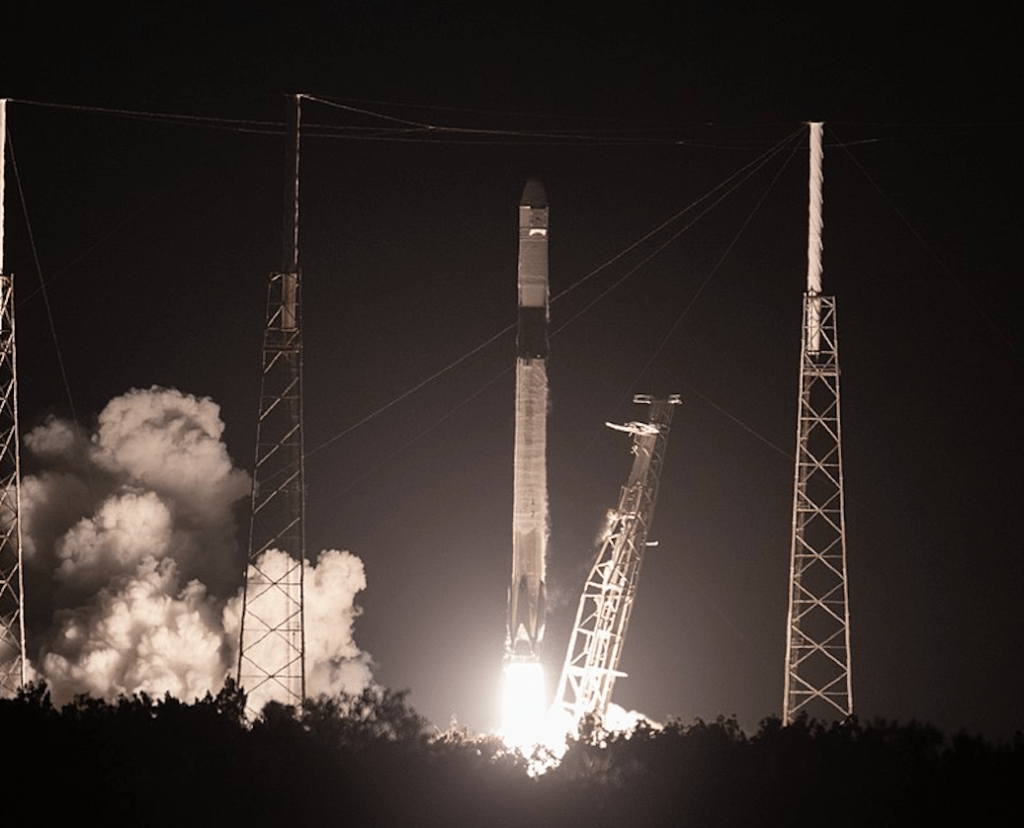
A SpaceX Falcon 9 rocket lifts off from Space Launch Complex 40 at Cape Canaveral Air Force Station in Florida at 11:50 p.m. EST on March 6, 2020, carrying the uncrewed cargo Dragon spacecraft on its journey to the International Space Station for NASA and SpaceX’s 20th Commercial Resupply Services (CRS-20) mission. Dragon will deliver more than 5,600 pounds of science investigations and cargo to the orbiting laboratory. Credit: NASA and https://en.wikipedia.org/wiki/File:CRS-20_launch.jpg
Chelsea was selected as a NASA Social appointee to attend the launch of last week’s CRS-20 cargo resupply mission to the International Space Station (this included attending the launch of the SpaceX Falcon 9 rocket and Dragon spacecraft, meeting w/ NASA’s social media team, touring NASA facilities at Kennedy, meeting with experts, and more). Check out all her posts on instagram, twitter, and chelseatroy.com.
This post of Chelsea’s, on why the launch was delayed, resonated in particular with us as a web development team. Across many fields, the lessons and insights around the role of deadlines, the value of redundancy, learning from past experiences/mistakes to make better predictions and mitigate risk, etc. apply.
How do Zooniverse volunteers contribute to your research?
The Zooniverse volunteers look for lesions on the fundus images, caused by Diabetic Retinopathy.
What have been the biggest challenges in setting up your project?
It was challenging to design our project to enable everyone to perform the challenging labelling task of finding the lesions caused by Diabetic Retinopathy. We took a number of approaches to make this possible, including writing a good tutorial, a training module and augmenting our images.
What discoveries, and other outputs, has your project led to so far?
The volunteer labels have led to an improvement in our algorithm for automatically detecting lesions. Our project has also had a lot of media coverage in Flanders.
Once you’ve finished collecting data, what research questions do you hope to be able to answer?
The new data labels will enable the creation of better computer models for the automatic detection of lesions caused by Diabetic Retinopathy. We hope that these models will enable a more consistent diagnoses of Diabetic Retinopathy by ophthalmologists, and a better follow-up of the disease progress.
What’s in store for your project in the future?
In the future, there will be more labeled data, the creation of a better computer model for the automated detection of Diabetic Retinopathy lesions, and the release of the newly created label dataset to the research community.
What are your favourite other citizen research projects and why?
The “Radio Meteor Zoo” project on Zooniverse. Speaking to the creators of this project convinced us to choose the Zooniverse platform for our own citizen science project.
What guidance would you give to other researchers considering creating a citizen research project?
Contact the teams running existing citizen science projects. You will learn a lot from their experiences.
And finally, when not at work, where are we most likely to find you?
I like go running, follow MOOCS, play board games, and watch tv.
You can learn more about Eye for Diabetes here (note, this website is in Dutch)
The world's largest and most popular platform for people-powered research. This research is made possible by volunteers—millions of people around the world who come together to assist professional researchers.