Helping the California Condor with ‘Condor Watch’

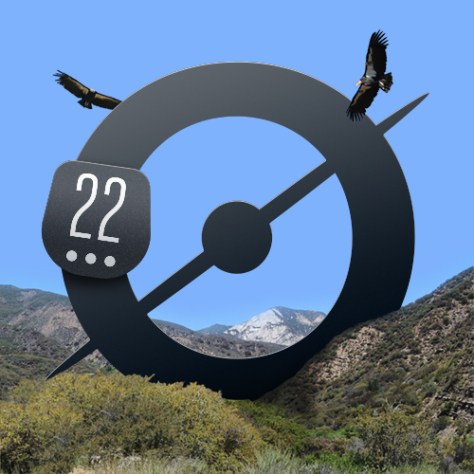
Today we’re launching a new, and hugely important Zooniverse project: Condor Watch. The are only around 200 California Condors living in the wild and they are in serious danger from lead poisoning, which they get by eating carcasses shot with lead bullets. Getting a better idea of how they interact and socialise is crucial to ongoing conservation efforts.

avatar_condors

Using camera traps, ecologists in the US have been observing them in the wild. However the sheer volume of images is now overwhelming. Starting today we need your help to look through the first set of data: 264,000 images of condors eating, socialising, and nesting. Ecologists need everyone’s help to identify the individual birds from their numbered tags. Your efforts on this project will help preserve an endangered species – and we think that’s really special.

Try it now at www.condorwatch.org

The Heartbleed Bug and the Zooniverse

On Monday Internet security researches discovered a critical vulnerability in a piece of of software called OpenSSL. The so-called Heartbleed vulnerability affected numerous sites on the Internet that rely on OpenSSL to provide encrypted connections over HTTPS. This bug has been present in the library since March of 2012 and allows malicious users to gain direct access to the memory of a server terminating an HTTPS connection.

We want to let our users know that we were among almost 66% of sites on the Internet vulnerable to this bug, and your data (including your Zooniverse password) might have been compromised due to this exploit. As of now, all our infrastructure has been updated to secure against the Heartbleed vulnerability, and our SSL certificates have been changed.

Unfortunately given the nature of the vulnerability we cannot know what, if anything, may have been obtained, but as a precaution we are recommending that our users change their passwords on the Zooniverse just in case.


Cosmic Curves: Investigating Gravitational Lensing at the Adler Planetarium

Today’s post comes from Kyle Sater, Senior Educator for Public Program Development at the Adler Planetarium. Kyle’s enjoys making STEM fun and relevant for everyone, especially when it involves Star Wars and legos. He lives in Chicago with his wife, who is also an educator, and his lovable cat Boots. 

It’s a funny thing: Einstein was usually right. His General Theory of Relativity predicted that gravitational masses can alter the direction of light, creating strange lensing effects in deep space. In short, light can be bent and we can see those effects—sometimes arcs, sometimes full-on rings, in far-away galaxies.

In 2013, the Adler premiered Cosmic Wonder, full-dome sky that takes guests on a journey to the far reaches of space—to places like enormous galaxy clusters, some which are acting as gravitational lenses because of their gravitational mass (with the help of elusive dark matter). To further the experience for guests after the show, the Public Programs department developed a cart program that attempted to make lensing more…tangible.

As you can imagine, the challenge was taking a relatively abstract concept, like gravitational lensing, and creating a museum program suitable for guests with different background knowledge. At the Adler we engage in “backward design,” meaning we develop 1 or 2 large learning goals and work backwards to find instructional methods that will work on the floor. But we also value inquiry-based exploration and want guests to have fun! So we started with a basic premise, “How can we detect the invisible?” and “How can light be bent?” and create experiments to explore these concepts. In this case, we utilize a quilting frame with taught fabric interwoven with a battery-powered light strand, and placed a heavy object (billiard ball) on the fabric. This helps illustrate that, even if we can’t see an object, its mass “warps” space-time and can bend light. As a follow up, we challenge guests to use a special acrylic lens and a laser to create their own “lensed objects” on the exhibit wall.

Adler Planetarium floor interpretation volunteers ready to engage museum guests with Cosmic Curves.

Our in-house team of facilitators, Mission Specialists, are crucial to the success of floor programs like Cosmic Curves. This program, more than others, requires a comfortability with the content, especially since they’re talking about cutting-edge topics in cosmology. And even then, guests can always surprise you! After all, a 1st grader and a grad student studying physics are coming from vastly different places.

Zooniverse projects, like Space Warps, and apps like GravLens only further the experience for our guests. So get classifying on spacewarps.org or learn more by coming to the Adler!

Wrap-Up from the Workshop on Citizen Science in Astronomy

Last week was a productive and busy week in Taipei for the attendees of the workshop on Citizen Science in Astronomy at the Institute of Astronomy & Astrophysics at Academia Sinica (ASIAA).

In case you missed the live webcast, all the slides from the invited talks on the first day as well as video recordings are archived online at http://csiaworkshop.zooniverse.org/

At the workshop dinner, with the help of an iPhone and a Lazy Susan, Chris took a video of all the participants. You might spot some familiar faces from the Zooniverse and various project science teams:

Members of the Galaxy Zoo team also held a short hangout later in the week:

All and all, I think I can speak for everyone who attended by saying it was a successful workshop with the general consensus being, that funding permitting, in a few years everyone would like for a similar workshop to happen again.I look forward to hearing about the results and papers produced from the efforts to better combine classifications  started at the workshop over the coming months and year. Keep tuned to the Zooniverse blog and project blogs for updates.

This workshop was possible due to the support of the Zooniverse and the financial support from the Ministry of Science & Technology and ASIAA in Taiwan. Other co-organizers on the Science Organizing Committee were Chris, Rob, Stuart, and Arfon and on the Local Organizing Committee: Shiang-Yu Wang.

Thoughts From the Classroom: Kat

Kat is sharing her impressions of Galaxy Zoo and Radio Galaxy Zoo as the fifth post in our Thoughts From the Classroom series.  

My name is Kat and I attend a school called GATE Academy.  Let me tell you a story about my experience with Galaxy Zoo.

Two months ago, my teacher discovered Galaxy Zoo.  She thought it would be a good class activity, so she had us read some articles as background information for what we were about to be doing on Galaxy Zoo.  These articles included information about the different characteristics of the different galaxy types and how this galactic information ties into the evolution of our Universe.  It hadn’t occurred to me before that galaxies tie into the Universe as a whole, but it made sense once I read it and I thought it was fascinating.  Then we started actually classifying galaxies as our class assignment.

In retrospect, I should have been amazed and acknowledged how incredible looking at these far-off galaxies was, but I just didn’t see it at the time.  I overlooked it because my mind was set on it being a class assignment and how I just needed to do it to get a good grade.

When I started, all that came up on my screen were pictures of blobs of clumpy blurry things.  I wasn’t very impressed.  Everyone around me, though, started seeing beautiful, wonderful images of incredible galaxies.

This is when I understood what a privilege it was to be participating in this new, cutting edge, amazing research.  On my screen showed actual galaxies from outer space.  It struck me how little we know about the universe around us, because nobody really knows what’s out there.  We have hypotheses, but, honestly, anything could be out there. I became proud of the blobs I classified, because you really needed to look and observe the characteristics, unlike perfect, sharp, clear galaxies (but these were really quite beautiful).  There was more mystery in the blobs for me, so classifying them correctly (or as close as I could get) became my challenge.

I learned a lot about classifying these galaxies along the way. The Zooniverse taught me about how galaxies can be spiral, irregular, or smooth, with bars, clumps, and varying sizes of central bulges.  I learned about how black holes are visible in radio telescopes but not in infrared.  I also learned the different types of black holes, such as compact, extended, and multiple.

After seven weeks of classifying these galaxies, my classmates and I had classified over 9,000 galaxies.  We were all proud of our accomplishment and of all we had learned along the way. I definitely recommend you at least try classifying on Galaxy Zoo, whether its galaxies or black holes or what have you.  Why not?  Don’t you want to say you’ve had the experience?  Would you like to contribute to our knowledge of the universe, or even do your OWN original research about the wonders around us?  If you have any of those interests, or just want to check it out because it sounds cool (and trust me, it is), definitely go to Galaxy Zoo and start classifying.
Workshop on Citizen Science in Astronomy

banner20140303

This weekend several members of the Zooniverse development team and many representatives from the science teams of Galaxy Zoo, Planet Hunters, Space Warps, Moon Zoo, Radio Galaxy Zoo, Planet Four, and the Andromeda Project are traveling to Taipei, Taiwan for the workshop on Citizen Science in Astronomy. I wrote about this workshop last November when it was announced. The Institute of Astronomy and Astrophysics at Academia Sinica (ASIAA)  in Taipei, Taiwan (with support from the National Science Council) along with the Zooniverse are organizing this workshop.

The aim is to bring together for a week  computer scientists, machine learning experts, and the scientists from astronomy and planetary science based citizen science projects with the goal of taking the first steps towards addressing the critical questions and issues that citizen science will need to solve in order to cope with the petabtye data deluge from the the next generation observatories and space missions like the Square Kilometer Array (SKA) and the Large Synoptic Survey Telescope (LSST). I think it’s fair to say this is the largest gathering of Zooniverse astronomy and planetary science project teams assembled in one place. I’m looking forward to what new algorithms to better combine and assess your classifications will be developed during the week and to all the interesting results that will come out of this workshop.

In addition to the main workshop, there will be a teacher workshop held on March 2nd for local teachers in Taiwan co-organized by Lauren Huang (ASIAA), Mei-Yin Chou (ASIAA), Stuart Lynn (Adler Planetarium/Zooniverse), Kelly Borden (Adler Planetarium/Zooniverse), and myself . In preparation for the workshop, the ASIAA Education and Public Outreach (EPO) Office translated Planet Four into traditional character Chinese. You can find out more about the translation effort here. At the teacher workshop, we’ll be introducing citizen science and how it can be used in the classroom along with presenting the traditional character Chinese translations of Planet Four and Galaxy Zoo.

The first day of the main workshop will be a series of introductory talks aimed at getting everyone thinking for the working sessions later in the week. If you’re interested in watching the workshop talks,  we’re going to try webcasting the first day’s sessions on Google+ starting on March 3rd 9:30am in Taiwan (March 2nd at 8:30pm EST ). The schedule for Monday can be found here. You can find the links for the morning and afternoon video live streams here. If you can’t watch live, the video will be archived and available on youtube through the same link.

You can follow along for the rest of the week on Twitter with the hashtag #csatro.

Zooniverse Translations Update

Screenshot 2014-02-27 12.15.25

Last week I put out a request for translators and the response has been fantastic! There are now 9 different Zooniverse projects being worked on in more than 11 languages (more are being added every day). Specifically the response from Germany and Spain has been enthusiastic and a team of volunteer translators have now completed work, or nearly completed it, on several projects.

Planet Four is now available in Traditional Chinese. The Milky Way Project, Disk Detective, and Sunspotter are now available in German. Disk Detective and Sunspotter are also available in Spanish.

Sunspotter only launched today – and we’re super excited that it can go live in three languages at once! A big thank goes to volunteer translators Katharina Doll from Munich, Germany; Fernanda Piñeiro from Mar del Plata, Argentina; Eva Bunge from Germany; Maite Alonso from Talavera, Spain;  Jasmin Hau from Fulda, Germany; and user Hanibal94. Thank you so much everyone!

Translations are still underway in many more languages and projects. For example we will soon have Spanish and German Radio Galaxy Zoo, Hungarian Disk Detective and Farsi (Persian) Galaxy Zoo.

Screenshot 2014-02-27 12.18.36

To access different languages in projects – look for the globe icon in the top-right of the site – as shown above. On Galaxy Zoo, projects are listed in he ‘Languages’ menu – though we hope to convert this to the globe icon to bring it inline with other projects.

We hope that these new languages will widen participation in citizen science, and help light up new parts of the globe on our live.zooniverse.org map of classifications.

Screenshot 2014-02-27 12.27.26

If you’re interested in translating one of our projects, please email rob@zooniverse.org with your Zooniverse username, the language you want to translate into, and the project you’d like to translate.

Introducing VOLCROWE – Volunteer and Crowdsourcing Economics

volcrowe

Hi everyone, I’d like to let you know about a cool new project we are involved with. VOLCROWE is a three year research project funded by the Engineering and Physical Sciences Research Council in the UK, bringing together a team of researchers (some of which are already involved with the Zooniverse, like Karen Masters) from the Universities of Portsmouth, Oxford, Manchester and Leeds. The PI of the project Joe Cox says “Broadly speaking, the team wants to understand more about the economics of the Zooniverse, including how and why it works in the way that it does. Our goal is to demonstrate to the community of economics and management scholars the increasingly amazing things that groups of people can achieve when they work together with a little help from technology. We believe that Zooniverse projects represent a specialised form of volunteering, although the existing literature on the economics of altruism hasn’t yet taken into account these new ways in which people can give their time and energy towards not-for-profit endeavours. Working together with Zooniverse volunteers, we intend to demonstrate how the digital economy is making it possible for people from all over the world to come together in vast numbers and make a contribution towards tackling major scientific problems such as understanding the nature of the Universe, climate change and even cancer.

These new forms of volunteering exemplified by the Zooniverse fundamentally alter the voluntary process as it is currently understood. The most obvious change relates to the ways in which people are able to give their time more flexibly and conveniently; such as contributing during their daily commute using a smart phone! It also opens new possibilities for the social and community aspects of volunteering in terms of creating a digitally integrated worldwide network of contributors. It may also be the case that commonly held motivations and associations with volunteering don’t hold or work differently in this context. For example, religious affiliations and memberships may or may not be as prevalent as they are with more traditional or recognised forms of volunteering. With the help of Zooniverse volunteers, the VOLCROWE team are exploring all of these issues (and more) with the view to establishing new economic models of digital volunteering.

To achieve this aim, we are going to be interacting with the Zooniverse community in a number of ways. First, we’ll be conducting a large scale survey to find out more about its contributors (don’t worry – you do not have to take part in the survey or give any personal information if you do not want to!). The survey data will be used to test the extent to which assumptions made by existing models of volunteering apply and, if necessary, to formulate new ones. We’ll also be taking a detailed look at usage statistics from a variety of projects and will test for trends in the patterns of contributions across the million (and counting) registered Zooniverse volunteers. This larger-scale analysis will be supplemented with a number of smaller sessions with groups of volunteers to help develop a more nuanced understanding of people’s relationships with and within the Zooniverse. Finally, we’ll be using our expertise from the economic and management sciences to study the organisation of the Zooniverse team themselves and analyse the ways and channels they use to communicate and to make decisions. In short, with the help of its volunteers, we want to find out what makes the Zooniverse tick!

In the survey analysis, no information will be collected that could be used to identify you personally. The only thing we will ask for is a Zooniverse ID so that we can match up your responses to your actual participation data; this will help us address some of the project’s most important research questions. The smaller group and one-to-one sessions will be less anonymous by their very nature, but participation will be on an entirely voluntary basis and we will only ever use the information we gather in a way in which you’re comfortable. The team would really appreciate your support and cooperation in helping us to better understand the processes and relationships that drive the Zooniverse. If we can achieve our goals, we may even be able to help to make it even better!”

Keep an eye out for VOLCROWE over the coming weeks and months; they’d love you to visit their website and follow them on Twitter.

Grant and the Zooniverse Team

Thoughts From the Classroom: Riley & Harrison

This fourth post in our Thoughts From the Classroom series comes from Riley and Harrision.  Riley and Harrison are 8th grade students at Gate Academy and are both Galaxy Zoo volunteers.

Riley:

Galaxy Zoo is a great program. It was brought to my attention when we began using Galaxy Zoo in class. It was extremely interesting because I had never seen pictures of our universe like the ones I am able to see on Galaxy Zoo. On one picture, we found an amazing spiral galaxy with such a huge level of clarity, you could even see individual stars. It just blew me away.

Galaxy Zoo is enlightening about the true scale and beauty of our universe. In the background of these immense galaxies you can see dozens of smaller galaxies, which are really just as huge as the one you’re getting a close up of. How cool is that? The structures are so massive but detailed down to the tiniest level, as demonstrated on Earth. I think that everyone should give themselves a chance to appreciate our Universe.

Galaxy Zoo really provided me with food for thought, and I recommend it strongly to anyone with the vaguest curiosity about what’s up there.

Harrison

I’m Harrison, and I used Galaxy Zoo in my middle school class. We instantly loved it because, it’s the perfect combination of learning about the different types of galaxies and having fun while doing it.  Using Galaxy Zoo also gives you a feeling of helping scientific research, by helping progress our scientific understanding of the Universe. The website is user friendly allowing you to classify galaxies, check your personal account, and see other information with a click of a button. The website is interactive and awesome showing you breath-taking pictures that you get to classify. There is so much to do and you can easily be lost for hours. I would recommend Galaxy Zoo to anyone.

Two more jobs at the Zooniverse

As part of our ongoing expansion of the Oxford Zooniverse team, I’m delighted to announce that there are two new jobs available at Zooniverse HQ in Oxford. We’re looking for developers and scientists who are excited at the prospect of helping us find more planets, keep an eye on more animals and generally make the Zooniverse more awesome.

5202453944_ed67b41917_b

We’re looking for the following kinds of people:

Data Scientist/Hadoopist to help us build up the processing power of the Zooniverse infrastructure

Postdoc in the statistics of citizen science – this might be a scientist with an interest or experience in citizen science, or someone with statistical expertise. In any case we’re looking to take a proper crack at the generic problem of combining classifications to produce consensus.

Both jobs are two year positions, and we’re really excited about expanding the team in Oxford. If you’d like to know more, you can contact me on cjl AT astro.ox.ac.uk or 07808 167288.

Chris

The world's largest and most popular platform for people-powered research. This research is made possible by volunteers—millions of people around the world who come together to assist professional researchers.