We’re pleased to announce a new kind of partnership, with a group led by old friend and collaborator Mike Walmsley at the University of Toronto. Mike is part of the Galaxy Zoo and Space Warps research teams, among others.
As you know, we take great care in testing any project which appears here on Zooniverse – thanks to expert review and our valuable volunteer panel of beta reviewers — to make sure that it works for a broad range of volunteers and our supported browsers. We believe in this process and remain committed to supporting and advancing the Zooniverse platform and its projects. But sometimes there’s a need for a more experimental approach – for trying out new modes of interaction, for complex projects that integrate machine learning, or just for doing something new. So we’re partnering with Mike’s *Experiment* to provide Zooniverse volunteers with the chance to take part in projects beyond the core Zooniverse platform. Such projects will be run by people we trust, and the goals of any project we link to will be the same as any other Zooniverse project – to provide insight through working with a distributed crowd of volunteers. But it may be that the tech is a little less robust or the projects look less polished than you’re used to. Projects may also come and go much more rapidly than is common in the Zooniverse. Wherever we mention such a project on the Zooniverse site, we’ll clearly tell you that we’re linking to an Experiment Project outside of the Zooniverse platform.
So, welcome Experiment. They have four small projects up already, where you can use a new brush tool to mark features of galaxies from the Euclid space telescope, and there’s more to come. We hope you’ll enjoy this new way of participating in projects.
FAQ
Who built Experiment and who runs and maintains Experiment? Mike Walmsley and his team at the University of Toronto.
What data will Zooniverse share with Experiment? We’re enabling log in with your Zooniverse account. If you choose to use the Zooniverse login this will share only your Zooniverse username and email address with the Experiment project team. You’ll be asked explicitly to approve this before this happens.
Does Experiment share data with the Zooniverse platform? All data submitted via Experiment is outside the Zooniverse platform, is not shared with Zooniverse, and is not subject to the Zooniverse user agreement and privacy policy. You can see the terms of service and privacy policy for Experiment here: Experiment Terms of Service and Privacy Policy
Can I track my classifications? Because data is stored outside the Zooniverse platform, participation in Experiment projects is not captured in Zooniverse’s database and will not be included in your Zooniverse stats.
How do I give feedback? For these initial Experiment projects, please share your thoughts on the Talk pages for Galaxy Zoo and Stellar Streams, and the researchers leading each Experiment project will respond. For anything else, you’re always welcome to get in touch with the Zooniverse team: contact@zooniverse.org.
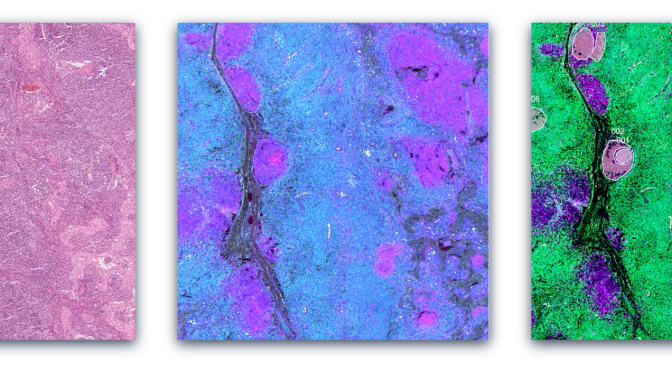
My research involves integrative analyses of image and genomic profiling data to investigate metastatic development in lymph nodes.
How do Zooniverse volunteers contribute to your research?
Zooniverse volunteers generated an amazing number of high-quality segmentations which we are working on to train models to assist our pathologists when locating the immune features we’re interested in.
What’s a surprising or fun fact about your research field?
More and more researchers are taking notice of these immune features, especially germinal centres in the lymph nodes.
What first got you interested in research?
The feeling when I solved or explained something with my own research makes me feel good.
What’s something people might not expect about your job or daily routine?
People never expect that there are researchers who don’t go to the lab, but instead sit in front of computers for the entire working day.
Outside of work, what do you enjoy doing?
Finding some interesting things to do and interesting places to go near to London at weekends. Buying beautiful dresses and doing research on makeup when I am on vacation. Video games, manga, cosplay and planning my next trip to Japan, when I have spare time!
What guidance would you give to other researchers considering creating a citizen research project?
Try to think from the volunteers perspective; what will interest them? It is very helpful to discuss your project with non-experts to improve your project design and the wording for a more general audience.
Is there anything else you’d like to share with our readers?
Scientific research is fun, there are always some interesting shapes or patterns to be discovered!
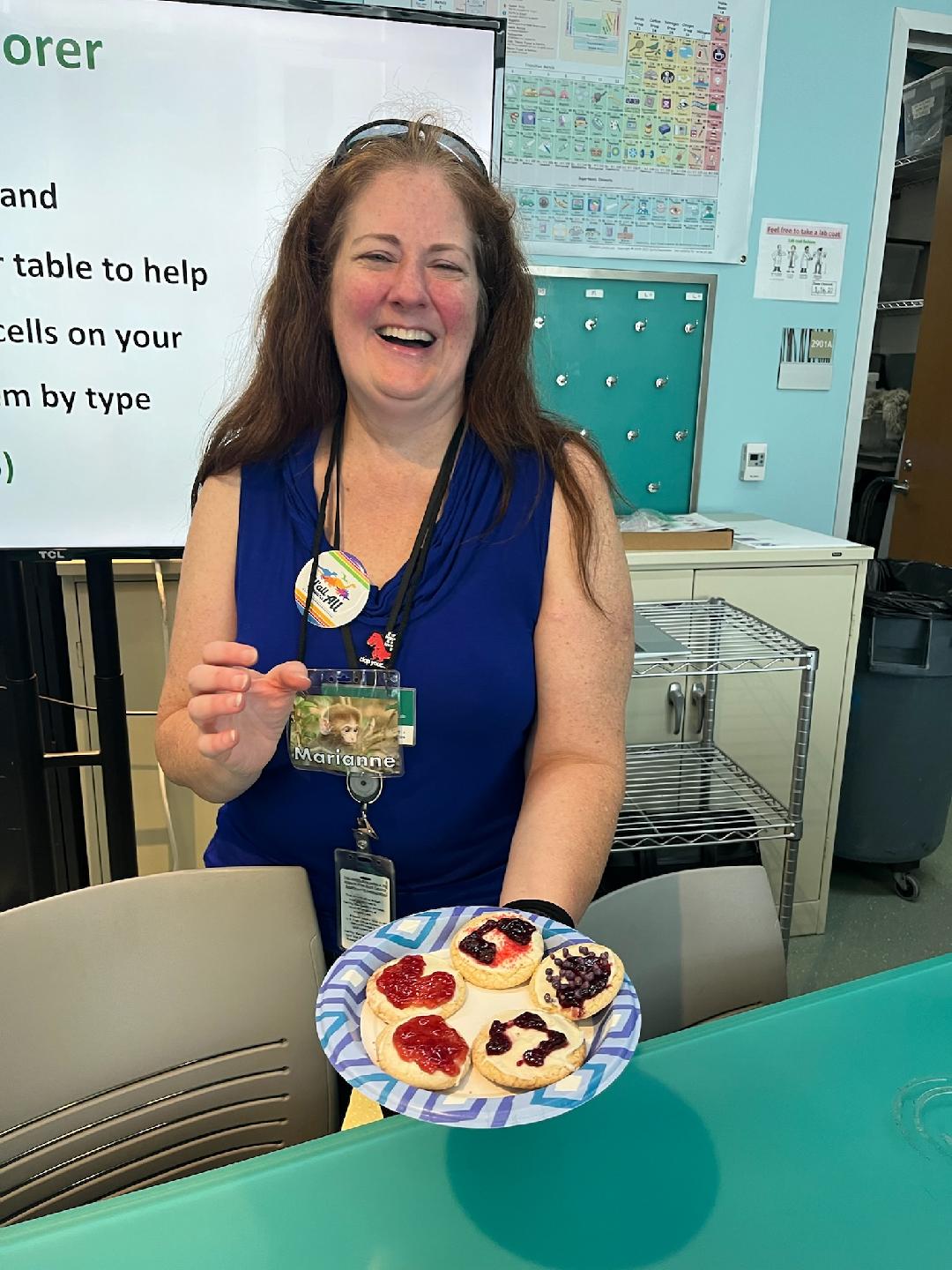
I’m actually trained in genetics and using DNA as a tool, so I’ve had to expand my knowledge to other areas as we set up our Monkey Health Explorer project. This project is one piece of a larger puzzle being assembled by a collaborative group of scientists all studying different aspects of a colony of Rhesus macaque monkeys living on an island off the coast of Puerto Rico. Our piece involves examining the blood of these monkeys to get a snapshot of their health, just like when we have our blood drawn at a doctor’s office. The data we collect about the blood cells is then examined alongside data from other researchers, such as behavioral or gene expression data, to tell more about each monkey.
How do Zooniverse volunteers contribute to your research?
The primary focus of our project is to count the 5 types of white blood cells in blood smears in order to determine if these numbers are in the “normal” ranges for a healthy monkey or if they might indicate the monkey is sick. Our volunteers learn about the visual features of each type of white blood cell and contribute to our research by identifying the white blood cells in blood smear images from our monkeys. We then summarize the results from all volunteers to give us the white blood cell counts for each monkey sample.
In addition to helping us identify these cells, we have several volunteers who are trained cell professionals or medical or veterinary students who have given us additional insights into our monkeys. They have pointed out unique patterns in the cells that indicate specific illnesses, such as parasitic infections.
What’s a surprising or fun fact about your research field?
Rhesus macaque blood cells look very similar to human blood cells. I learned how to identify the cells in our project using training materials for human blood.
The “positive” and “negative” part of our blood types is called the “Rh factor” because that particular type of blood protein was first identified in Rhesus macaque monkeys.
What first got you interested in research?
I’ve always loved learning how things work and was a big fan of the TV show MacGyver because he could figure out how to resolve a problem by using items he had around him. This inspired me to think about how to approach a problem from multiple views and come up with potential solutions using standard and non-standard methods.
What’s something people might not expect about your job or daily routine?
The lab I work in is inside of a Museum and has glass walls, so visitors can watch us work. Sometimes when I step outside the lab, I end up talking with visitors about what we’re doing and answering their questions about what they can see, such as our DNA sequencers and liquid handling robot. We also have special events at the Museum where I have the opportunity to share about our Monkey Health Explorer project to visitors and also host teacher training workshops to show them how to incorporate our project into their classroom with the educational materials we’ve developed.
Outside of work, what do you enjoy doing?
My love of learning extends to everything – I read/listen to audiobooks (mysteries lately), have 3 languages going on Duolingo (French, Spanish, German), rotate between crafty hobbies (painting, drawing, knitting, 3D print design), play multiple instruments (learning drums now), and recently added 2 bee hives to our garden.
What are you favourite citizen science projects?
I do love adding photos to iNaturalist as I come across new (to me) creatures and plants as I explore outside.
What guidance would you give to other researchers considering creating a citizen research project?
I would suggest spending time exploring several projects that have similarities to what you’re thinking of designing and use these as guides to consider what type of information you want to get from your project and how best to design training to make it interesting and accessible to volunteers. Also, make use of the Zooniverse Talk to interact with other project researchers to gain insights and learn from them. It’s a great community with a wealth of knowledge and experience!
This post is part of our Kavli Foundation-funded series, Ethical Considerations for Machine Learning in Public-Engaged Research. Read our project announcement blog post here.
We’d like to thank everyone who participated in the first of four surveys to help shape the future of AI and public-engaged research. We received over 1000 responses to the first survey, which informed priorities for the first workshop and helped Zooniverse leadership understand some of your interests, concerns, and ideas around this important topic.
Our second survey is launching today, and will be accepting responses through July 18th. We hope you will participate!
In case you missed it, check out the project announcement blog post to learn more about Zooniverse’s effort to develop recommendations for running AI-engaged projects on the Zooniverse platform.
Who is running this study? The Project Director is Dr. Samantha Blickhan, Zooniverse Co-Director and Digital Humanities Lead.
Who is funding this research? This research is funded by The Kavli Foundation.
How can I contact the team? Questions can be addressed to hillary@zooniverse.org or samantha@zooniverse.org
Are you looking for a Zooniverse project in a language other than English? Here is the latest update on what is available, as of 1 July 2025. Many thanks to our amazing volunteers who contributed.
By the way, anyone can become a translator on Zooniverse. Here is how.
All Zooniverse projects are created in English. But many of them are available in different languages – from Armenian and Chinese to Korean and Hungarian. Here is the latest list of translated projects.
The truth is, everyone can become a translator on Zooniverse! But how do you do that? We talked with some of our amazing volunteers who helped various research teams to translate their projects, and here is what we’ve learned.
Zooniverse translators come from all walks of life
Jiří Podhorecký (@trendspotter) lives in Cesky Krumov, a small beautiful town in the Czech Republic. He works in tourism and spends most of his free time supporting various IT projects focusing on ecology, nature conservation and virtual volunteering. Translating the Zooniverse platform and projects into Czech is one of these projects.
InoSenpai (イノ先輩) is a citizen scientist in her 20s in Japan. She studied astronomy in college, but now has another job. She has translated more than 30 Zooniverse space projects into Japanese and she even created a blog in order to introduce them to the Japanese people.
Aarush Naskar (@Sunray_2013) from India is the youngest translator on Zooniverse! He is an amateur astronomer. Story writing, sky watching, reading and coding are his main interests.
Jason Richye is an international student from Indonesia. He is 18 years old and is a business major student. His hobbies are playing basketball, listening to music and watching movies, especially action, comedy and horror.
Louis Verhaeghe (@veragon) is a young French electrical technician passionate about astronomy and astrophysics. As an amateur astronomer, he loves immersing himself in the vastness of the universe and gaining a deeper understanding of what surrounds us. In September 2024, he reached a major milestone: more than 50 projects fully translated into French!
Aarush Naskar (@Sunray_2013) from India is the youngest Zooniverse translator
They translate to help more people discover Zooniverse
Jiří: “I wish that once in the future the whole Zooniverse was available to people in my language. I think that there is a huge and untapped potential in people of all ages, but especially in young people, to build a positive relationship with the world around us and to contribute to it in some way. Citizen science can be an enjoyable and unencumbered contribution to the community that will eventually process this citizen science into real science.”
イノ先輩: “Since Zooniverse is not well known in Japan, I am currently working as a Japanese translator for a number of projects to create a foundation for Japanese users to participate in Zooniverse without feeling any barriers.”
Aarush: ”I was attending a citizen science seminar hosted by the Kolkata Astronomy Club, which my father is the co-founder of, so naturally, I was also a part of it, when I heard about a boy who translated Einstein@Home: Pulsar Seekers to Bengali, so I decided to translate projects to Hindi. I know both Hindi and Bengali, but I am more comfortable with Hindi in terms of writing. It also motivated me that if I translated projects, more people would be able to do them. I also did it thinking I would know more Hindi words.”
Jason: “I’ve always wanted to be part of a research project and contribute in a meaningful way, even in a small role. When I saw one of the translation projects last winter in 2024, I remember feeling genuinely excited. I thought, “This is something I could actually help with.” So when I had the chance to volunteer, I was happy to be involved. Translating made me feel like I was part of something bigger, helping bridge gaps and support the research in a real, practical way.”
Louis (@veragon): “I have been contributing to the Zooniverse platform for almost nine years now. Initially, between 2017 and 2019, I focused exclusively on classifying images and scientific data. In fact, I have surpassed 12,900 classifications! But in late 2019, as my English improved, I asked myself: why not translate projects into French? This would allow more French speakers to get involved in citizen science and contribute to various research initiatives.
It is an immense source of pride for me to contribute, in my own way, to making science more accessible. It is important for me to translate these projects because science should be open to everyone. Many research projects rely on public participation, but the language barrier can be a major obstacle. By translating these projects, I enable thousands of people who are not fluent in English to contribute to scientific research. And the more participants there are, the more high-quality data researchers can gather. It’s a virtuous cycle!”
Louis Verhaeghe (@veragon) translated more than 50 Zooniverse projects into French
Translation expands your knowledge
Aarush: “It is funny that I make a lot (not that many!) mistakes when writing Hindi in real life but I make only some mistakes while translating.”
Jiří: “Fortunately for me, the process is already quite easy, not least because information technology helps us all to get in touch today. The enriching part is always the beginning, when you need to dig into the philosophy of the project and understand how best to use language to express yourself accurately.”
イノ先輩: “I love astronomy, but it has been difficult to love and have knowledge of all of this entire broad field equally. I have always been interested in the classification of light curves of variable stars and how to read radar observation data of meteors, but I had avoided them because they seemed difficult, but I was able to learn them in one week through translation.
The process of grasping all of that content in one’s own brain, reconstructing it in one’s native language, and outputting it is far more effective than simply reading and learning.”
And it makes you realise that your efforts really matter!
イノ先輩: “It is not only the light side of the researcher that we see when we do translations. Unfortunately, we also encounter projects that have been abandoned due to lack of bearers.
Behind this may be issues such as the reality of researchers being chronically overworked and the instability of their posts. But it is not only the beautiful and exciting top part, but also the glimpse into a part of the research project that makes us realize that we are not customers or students, but co-members of the project.”
Jiří: “Citizen science knows no boundaries! You can be all over the world. And it will give you back a strong sense of meaningful help, usefulness, confidence and joy.”
Jason: “You don’t need to be an expert to make a difference.”
Louis: “Together, we can make science more accessible and understandable for everyone. Every contribution matters, and the more of us there are, the greater our impact!”
Jiří Podhorecký (@trendspotter) wishes that once in the future the whole Zooniverse was available to people in Czech.
We asked if they had any advice for aspiring translators
Jason: “Take your time, ask questions, and focus on clarity. It’s a fun way to learn and be part of something meaningful.”
イノ先輩: “Add a bit of playfulness to your project title when you rewrite it in your native language! Mix in parodies and phrases that are unique to the respective cultures of each linguistic area, but only to the extent that they do not detract from the essence of the project. The title of the project may be the reason why some people are interested in it.”
Louis: “If you believe you have a good enough understanding of the languages you’re translating, then go for it! Reach out to various projects that haven’t been translated into your language and offer to translate them. Help us make science more accessible to the entire world!”
Jiří: “Your translation will make it easier for people who may know a foreign language, but whose native language is still closest to them. Without it, they would hardly, if ever, know about the Zooniverse. Oddly enough, language and territorial barriers sometimes serve more as a tool to better divide society. Don’t give up and bring foreign ideas, experience and science to people who need to learn about it in their own language.”
It is easy to start!
Louis: “I started my first translations by directly reaching out to project leaders and offering to translate their projects into French. Over time, I learned how to use Zooniverse’s translation tool, which turned out to be quite intuitive. This approach allowed me to better understand the process and refine my working method.”
Are you interested in volunteering as a Zooniverse translator?
Then you should definitely try it! Here is how:
1. Choose the project you would like to translate
2. Send a message to one of the research team members (privately or on their Talk)*
5. When you are done, let the team know and they will activate your translation to be visible for everyone on Zooniverse!
*An example of a message: “Hello! I’ve enjoyed working on your project (title) and would love to help translate it into (language). Do you think it could be useful? If so, please assign me the Translator role and I will give it a try!”
Are you a researcher looking to set up translations for your project? Please read these instructions. Contact us at contact@zooniverse.org if you need additional support. Please note that the Zooniverse team cannot recommend volunteers translators for your project.
The Vera C. Rubin Observatory is a powerful new facility high in the dry Chilean mountains. Today, on 23 June 2025, for the first time, it is releasing images from its Legacy Survey of Space and Time camera. At 3200 megapixels, this largest camera ever built will allow us to see the universe in a new way. And with Zooniverse, everyone can join and help with discoveries!
Read on to learn more.
NSF-DOE Rubin Trifid and Lagoon Nebulas. Image credit: NSF-DOE Vera C. Rubin Observatory
The “First Look”: The new way of viewing the sky
The first images from the NSF–DOE Vera C Rubin Observatory, our new eye on the sky based high in the Chilean desert, have been released today. The culmination of more than a decade of effort by a team of engineers and scientists, these glimpses of what this new instrument is capable of mark the start of a new way of viewing the sky – and Zooniverse will be a significant part of it. The Observatory’s Legacy Survey of Space and Time (LSST) will start soon, producing data at a scale that means the efforts of volunteers to sort through it and make discoveries will be invaluable.
The images featured in today’s ‘First look’ event were taken by the observatory’s mighty LSSTCam, the instrument which will be the observatory’s workhorse for the next decade and at 3200 megapixels the largest ever built, will manage. They provide a glimpse into the new survey’s ability to catch the changing sky, tracking millions of new asteroids and discovering thousands of supernovae, as well as more exotic and hopefully unexpected events.
NSF-DOE Rubin Virgo cluster 2. Image credit: NSF-DOE Vera C. Rubin Observatory
Vera Rubin Observatory images on Zooniverse
These images are a significant milestone, and all of us at Zooniverse congratulate our partners in the international LSST collaboration on getting here. In the near future – hopefully in just a few days – scientists will get their hands on a first tranche of testing data and, because Zooniverse is a core part of their plans, we should expect to see the first citizen science projects launch shortly thereafter. Once the survey itself gets going later in the year, and when the first of the annual data releases happens next year, we should see a steady flow of Rubin data in Zooniverse projects old or new.
NSF-DOE Rubin Virgo cluster 1. Image credit: NSF-DOE Vera C. Rubin Observatory
Be part of discovery
Whenever astronomers have found a new way of looking at the sky, and thereby opened up a new window on the Universe, we’ve been surprised. A survey of the whole sky, carried out with a telescope that’s the equal of any in the world, and with an immensely sophisticated camera and software pipeline to match, definitely counts. Join us in this first look at the Rubin Observatory sky – and then hang on. We’re all on what looks set to be a fantastic, decade long voyage of discovery.
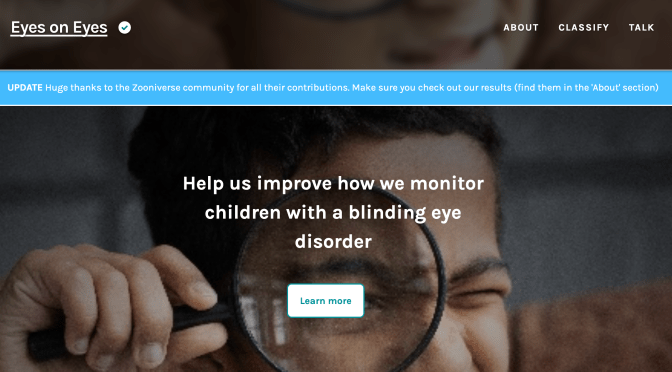
In this edition of Who’s who in the Zoo, meet Ameenat Lola Solebo who leads Eyes on Eyes ; a Zooniverse project that aims to improve how we monitor children with a blinding eye disorder.
Who: Ameenat Lola Solebo, Clinician Scientist (Paediatric Ophthalmology / Epidemiology & Health Data Science)
Location: UCL GOS Institute of Child Health and Great Ormond Street Hospital
We’re asking Zooniverse volunteers to label eye images of children with or at risk of a blinding disease called uveitis. Early detection of uveitis means less chance of blindness, but it is becoming increasingly difficult for children to access the specialised experts they need to detect uveitis at an early stage (before the uveitis has caused damage in side the eye). New ‘OCT’ (eye cameras) may provide detailed enough images of the eye to allow even non specialists to detect uveitis at the early stages. Our research studies develop and evaluate OCT methods for uveitis detection and monitoring in children, and during these studies we collect a lot of data from children’s eyes – sometimes several hundred scans in different positions just from one child. We are hoping that we don’t need to keep on collecting this many images in the long run, but we have to know where and how best to look for problems.
How do Zooniverse volunteers contribute to your research?
Zooniverse volunteers are asked to label scans in different ways. They can tell us what they think of the quality of an individual scan – is it good enough to be useful? They can point out which features of the scan are making it poorer quality so that we can judge how useful it might be. They can draw regions of interest on the scan, helping to focus attention. They can also pick up the signs of uveitis – inflammatory cells floating around in the usually dark space inside the eye, looking like bright stars in a dark sky. They can tell us if they can see cells, how many cells they can see, and they can locate each cell for us. The quality judgements submitted by the volunteers have compared favourably to expert judgement, which is great. We have since developed a quality assessment algorithm based on labels from the Zooniverse volunteers. We are now looking to just how accurate the volunteer assessments of the images are compared to the clinical diagnosis of the child.
What’s a surprising fact about your research field?
Uveitis is often autoimmune, meaning your body turns against the delicate tissues in your eye — especially the uvea, a highly vascular layer that includes the iris. It’s like friendly fire… which is such an awful term, isn’t it?
What first got you interested in research?
I was tired of answering “we don’t know” when parents asked us questions about their child’s eye disease.
What’s something people might not expect about your job or daily routine?
Someone asked me how I put back the eye after doing eye surgery – ophthalmic surgeons do not, I repeat do not remove the eye from patients to operate on them! Also – I think that people may be surprised about how beautiful the eye looks when viewed at high mag. Ophthalmologists use a microscope called a slit lamp to look at and into a patient’s eye. The globe is such a fragile, well constructed, almost mystical body part, and vision is practically magic!
Outside of work, what do you enjoy doing?
I recently started karate. I am by far the oldest white belt and I am really loving making the KIAI! noises.
What are you favourite citizen science projects?
The Etch A Cell projects, because I learnt so much how to run my own project from that team and Black hole hunters, because they are great at describing what they have done with volunteer data.
What guidance would you give to other researchers considering creating a citizen research project?
Do it! And do it on Zooniverse, because the community is super engaged and the back of house team are so supportive. Stay active on talk boards to engage volunteers. And test, refine, test, refine your project until you start seeing it in your sleep.
And finally…
Thank you to all the volunteers who have been helping us!
From June 2025 through January 2026, we will facilitate an online working group of neurodivergent citizen scientists and allies. Together, we will brainstorm, create and publish accessibility guidelines to empower people with all kinds of brains to participate more comfortably in crowdsourced research.
We encourage you to join this new online working group if you:
have experience with online citizen science,
consider yourself neurodivergent or are a neurodiversity ally,
are 18 years old or older,
can communicate in basic written English,
interested in improving accessibility of citizen science for people with mental health and neurological conditions and differences,
can volunteer at least 2 hours of your time (online, flexible) before 16 January 2026.
Please note that, for this call, we welcome participants from all online citizen science projects, not only Zooniverse. All active contributors will be acknowledged in the resulting publication.
No special knowledge is needed. All work is virtual and asynchronous. We are looking forward to working with you all on this important cause!
With support from the Kavli Foundation, the Zooniverse team is launching a project to help us develop a set of recommendations for running Machine Learning (ML) and Artificial Intelligence (AI)-engaged projects on the Zooniverse platform.
The project will bring together subject matter experts, Zooniverse leadership, and platform participants in a series of workshops and working sessions.
The project deepens partnerships among Zooniverse and its participant community, as well as the Kavli Institute for Cosmological Physics, UC-Berkeley Kavli Center for Ethics, Science, and the Public, and the SkAI AI Astro Institute.
Zooniverse participants have an opportunity to get involved and follow along in a number of ways!
Developing recommendations for ML/AI projects on Zooniverse
As ML/AI has become more prevalent—now in about ⅓ of Zooniverse projects—it has sparked a range of reactions on the Talk message boards within the participant community, reflecting broader societal discourse. Zooniverse participants have surfaced concerns and insights on issues like ownership, agency, transparency, and trust. It is crucial to address the risks, opportunities, challenges, and broader ethical questions.
In response, we developed a project to create a set of recommendations for running ML/AI-engaged projects on the Zooniverse platform. In this project we will explore the tensions of integrating ML/AI within online public-engaged research. We hope that these recommendations will also be useful for related fields incorporating ML/AI in public-engaged research processes.
Collaborative workshops
With funding from The Kavli Foundation, this project will bring together Zooniverse leadership, platform participants, researchers, and experts in topics like communications, ethics, law, and ML/AI in a series of workshops and working sessions. The project deepens partnerships among Zooniverse and its participant community, as well as the Kavli Institute for Cosmological Physics, UC-Berkeley Kavli Center for Ethics, Science, and the Public, and the SkAI AI Astro Institute.
Workshop themes cover topics raised by Zooniverse participants and project research teams as well as gaps in existing knowledge, resources, and guidance.
Workshop 1 (June) will focus on Transparency and Communication Best Practices. It will inform guidelines that will support researchers in effectively communicating with participants when integrating ML/AI into their public-engaged research projects.
Workshop 2 (July) will cover Ethical Approaches to ML/AI. It will invite discussions that explore and identify foundational elements of an ethical approach to ML/AI-focused public-engaged research, addressing risks while leveraging opportunities.
Workshop 3 (August) will focus on Deepening Contextual Understanding. It will expand on the ethical considerations raised in Workshop 2 by examining a matrix of factors including disciplinary differences, task type affordances, and the varied needs of stakeholders (e.g., researchers, participants, platform maintainers). We anticipate that ethical principles may at times conflict within this matrix, making it essential to foster a shared understanding of how, why, and when we will draw from different elements as we develop these recommendations.
Workshop 4 (September) will consider Downstream Data Protection. It will inform recommendations for licensing frameworks to use with public-engaged research data outputs that align with platform values, particularly in relation to projects that incorporate ML/AI.
Call to action: We want you to participate!
Zooniverse participants have an opportunity to get involved and follow along in a number of ways:
1. Help shape the future of ML/AI and public-engaged research. Options include:
Complete four short surveys throughout the duration of the project, starting with this one.
Survey responses will be considered as we draft the recommendations for running ML/AI-engaged projects on the Zooniverse platform.
We’ll also be reaching out to a subset of our community about participating in the workshops.
2. Follow along:
We’ll be posting updates on Talk and on our Zooniverse blog during the process, and project results will be shared broadly.
Who is running this study? The Project Director is Dr. Samantha Blickhan, Zooniverse Co-Director and Digital Humanities Lead.
Who is funding this research? This research is funded by the Kavli Foundation.
How can I contact the team? Questions can be addressed to hillary@zooniverse.org or samantha@zooniverse.org
The world's largest and most popular platform for people-powered research. This research is made possible by volunteers—millions of people around the world who come together to assist professional researchers.











 Zooniverse