We are happy to share that our new study, Framework for Neuro-inclusive Digital Citizen Science: Results From the Neuro(Minorities)Science Collaboration, has been published in Citizen Science: Theory and Practice. This is an open access publication, meaning you do not need to register or pay to read it.
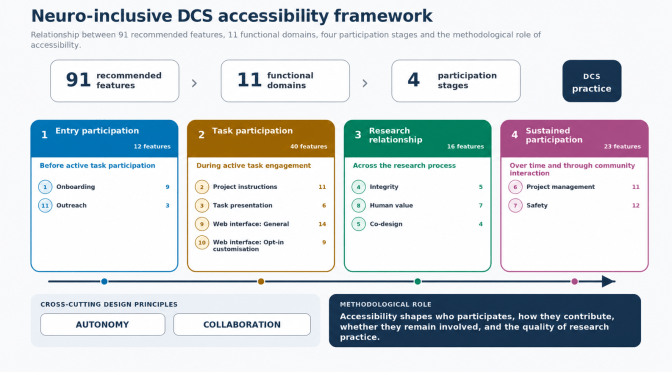
The framework was created to make digital citizen science (DCS) platforms like Zooniverse, iNaturalist, the European Citizen Science Platform, CitSci and SciStarter more accessible for neurodivergent people. It contains 91 accessibility recommendations for platform teams, research project teams and science communicators.
This publication is the result of a collaboration between 89 neurodivergent citizen scientists and allies from around the world, led by Dr Alisa Apreleva (Zooniverse Communications Lead, University of Oxford).
Neurodiversity and citizen science
In 2024, we carried out a Zooniverse Neurodiversity Survey of 7,873 platform users. From the responses to this survey, we know that neurominorities – autistic people, people with attention deficit hyperactivity disorder (ADHD), Parkinson’s disease, anxiety, motor neuron disease, chronic fatigue syndrome, traumatic brain injuries and other mental health and neurological differences and conditions – actively participate in online citizen science.
Doing citizen science online can remove barriers to taking part in research, including travel, social pressure, rigid schedules and sensory overload.
But it also brings accessibility challenges, some specific to digital environments and others shared with traditional research: navigating complex interfaces, coping with sensory overload, understanding instructions, staying focused, dealing with uncertainty, managing repetitive tasks and communicating online.
Based on lived experience
The Neuro(Minorities)Science collaboration was part of the IMPETUS 2025 accelerator funded by the European Union’s Horizon Europe research and innovation programme.
The collaboration brought together a working group of 89 neurodivergent citizen scientists and allies from Brazil, France, Israel, Japan, Germany, Mexico, Norway, Serbia, Spain, the UK and the USA.
Members contributed their own knowledge, analysed data, reviewed existing accessibility practices and co-developed the resulting publication.
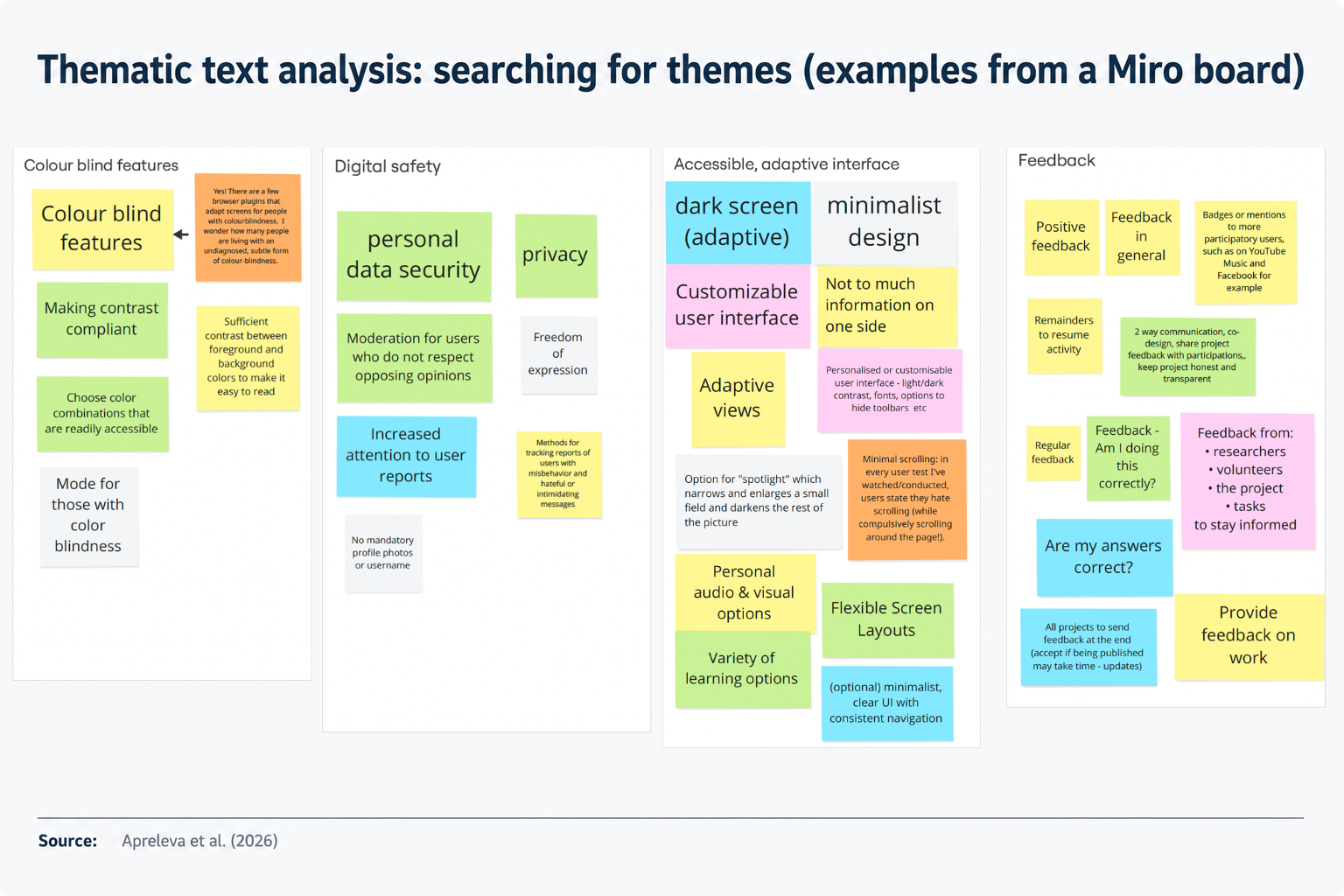
The short video below introduces the Neuro(Minorities)Science collaboration, its participants, research process and main outcomes.
To our knowledge, Neuro(Minorities)Science is the first lived-experience collaboration focused on neuro-inclusive digital citizen science accessibility.
List of neuro-inclusive accessibility features
The practical outcome of the research is the List of Accessibility Features for Neuro-inclusive Digital Citizen Science, containing 91 recommendations organised into 11 areas of accessibility. These cover the whole participation lifecycle for digital citizen science: from first encountering a project and understanding its task to communicating with researchers, participating in community spaces and remaining involved over time.
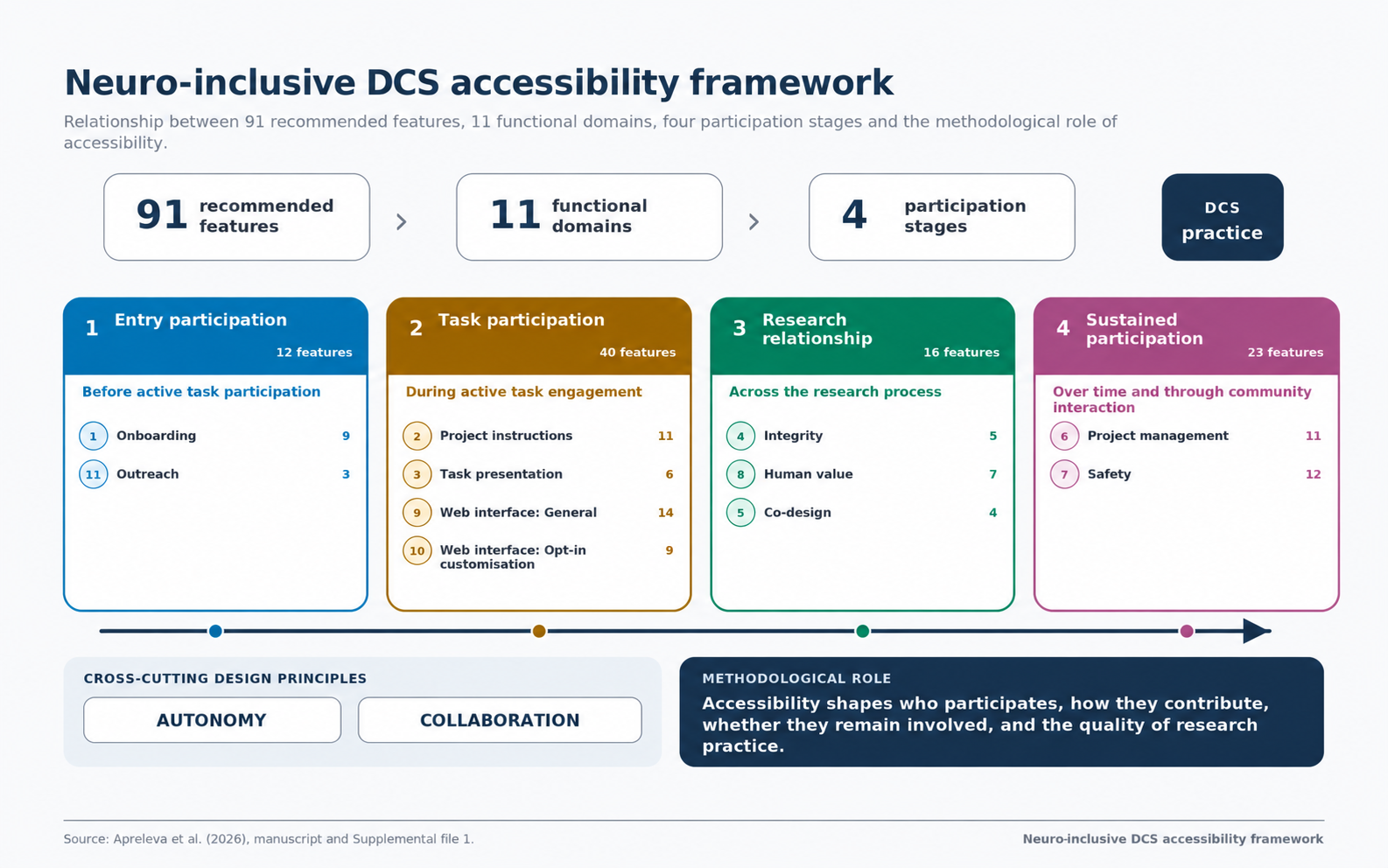
The 11 accessibility domains identified by the framework are:
Onboarding: Project previews, clear expectations, multilingual access and informed choice.
Project instructions: Plain language, multimodal guidance, examples and reassurance about errors.
Task presentation: Manageable workflows, gradual progression and options to skip or flag tasks.
Integrity: Research transparency, responsible AI use, sharing results and acknowledging contributors.
Co-design: Neurodivergent testing, ongoing dialogue and participation in research decisions.
Project management: Responsive support, accessible communication, moderated communities and participation incentives.
Safety: Privacy, neurodiversity-informed conflict mediation, sensory safeguards and burnout prevention.
Human value: Respectful feedback, appreciation, recognition and visible scientific impact.
Web interface: WCAG compliance, assistive technology compatibility, intuitive navigation and flexible input methods.
Interface customisation: Optional adjustments to layout, fonts, colours, visual complexity and session limits.
Outreach: Targeted engagement and empowering, inclusive communication.
Accessibility as research methodology
These recommendations come directly from volunteers’ experiences.
For example, participants in the 2024 survey described the anxiety of making mistakes and the importance of knowing that their contributions were useful:
“For me, I have a problem with making sure what I do is correct. I don’t want to make a mistake and I look for feedback because I want the work I do to matter and not affect a study”
“One remark springs to mind: never put important information in parentheses in the guidelines (my autistic mind overlooked one such piece of information on my first attempt at classifying, and when I realized my mistake, and its consequences, I had a meltdown that prevented me from trying anything again on Zooniverse for a couple of months)”
The framework treats accessibility not only as a matter of inclusion, but as part of research methodology. How scientific tasks are designed, how volunteers are supported and how their contributions are recognised can affect who participates, how they contribute and whether they remain involved.
Customisation
Neurodivergent people have highly individual cognitive, sensory and motor profiles. What helps one person may be distracting or difficult for another.
While established accessibility standards, such as the Web Content Accessibility Guidelines (WCAG), provide an essential foundation, no single interface design can accommodate everyone’s needs. This is why customisation and personal choice are central to neuro-inclusive accessibility.
For example, one survey participant explained why optional break reminders could help:
“Having a timer on the session could help people know just how much time they are devoting to this, and could remind them to take breaks if they work for hours without respite”
Modular and adaptable implementation
The framework is modular and adaptable. Platform developers and research teams can select and implement recommendations in stages, according to their existing resources and priorities. Some require technical development, while others can be introduced through relatively simple changes to project instructions, communication and management.
Read the paper and stay involved
The paper in open access:
Apreleva et al. (2026), Framework for Neuro-inclusive Digital Citizen Science: Results From the Neuro(Minorities)Science Collaboration
https://theoryandpractice.citizenscienceassociation.org/articles/10.5334/cstp.1004
The work was supported by the IMPETUS Accelerator, funded by the European Union’s Horizon Europe research and innovation programme under Grant Agreement No. 101058677.
If you are interested in neurodiversity and citizen science and would like to hear about future research, collaborations and opportunities to contribute, join the Zooniverse Neurodiversity Task Force at https://groups.google.com/a/zooniverse.org/g/neurodiversity