Tag Archives: Education

Who’s who in the Zoo – Patricia Smith

In this edition of Who’s who in the Zoo, meet Patricia, Community Manager of the Science Scribbler organisation.
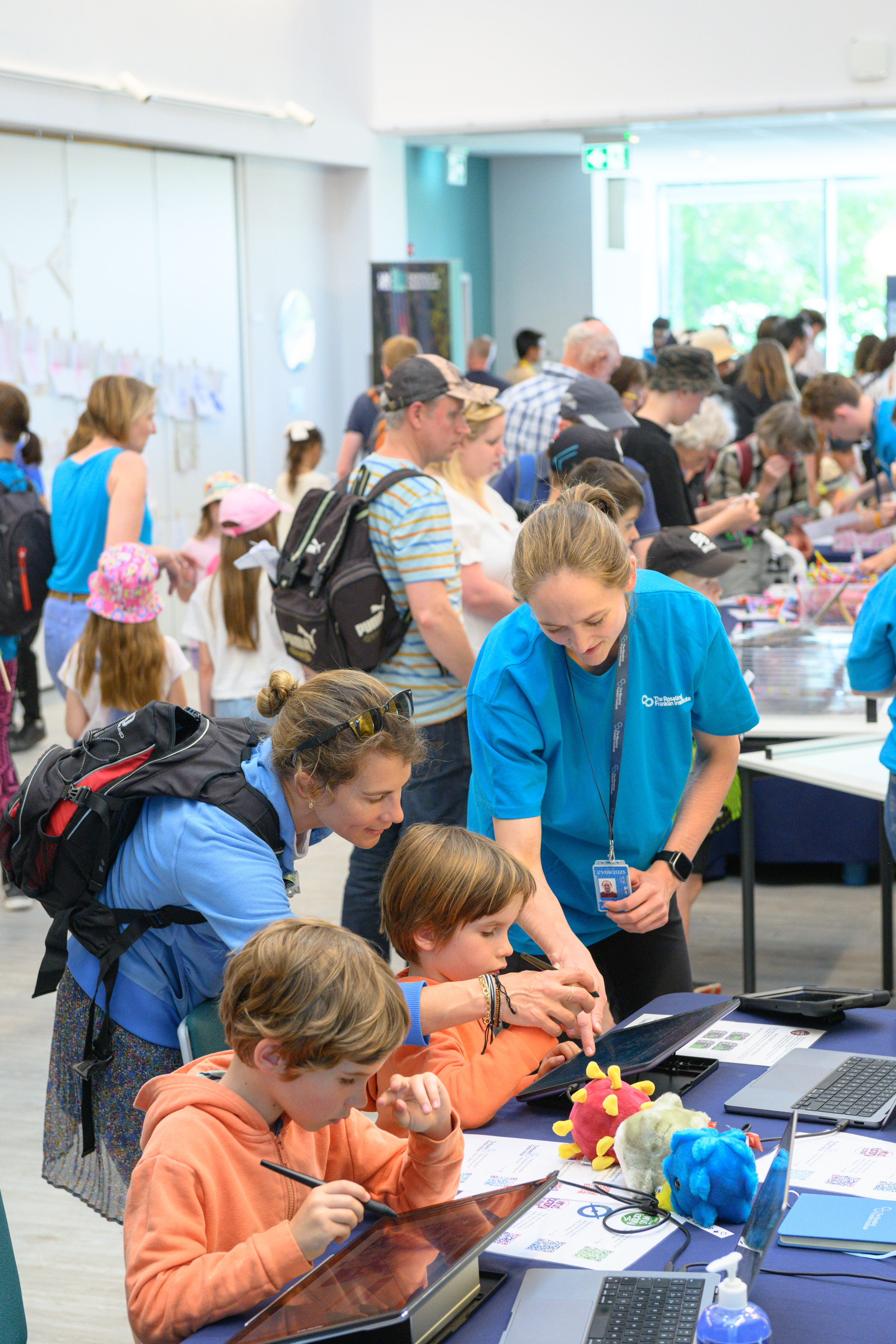

Who: Patricia Smith, Community Manager

Location: The Rosalind Franklin Institute, Harwell Campus, Oxfordshire, UK

Zooniverse project: The Science Scribbler organisation

(photo credit: Ryan Cowan)

What is your research about?

As a community manager, I wear a lot of different hats! My formal background is materials science and biomaterials, but I’m now the ‘citizen science specialist’ in a lot of my day-to-day research. I work alongside imaging specialists, software engineers, and experts in a variety of biosciences to help them design interesting, effective, and worthwhile projects on the Zooniverse. Essentially, I make sure that the experts are asking the right questions, in the right way, for our volunteers to be able to understand and contribute most effectively to our research.

I also spend a lot of time supporting our Science Scribbler community and making sure our volunteers are the first to hear about any project updates or research outcomes. The rest of my time is spent working with teachers to support them in using citizen science in the classroom through our Virus Factory in Schools project, and dabbling in a little bit of my own research too.

How do Zooniverse volunteers contribute to your research?

Most of the Science Scribbler projects launched so far have focused on 3D biological imaging data. When we ask questions about a particular sub-cellular structure or disease, we usually have to go through a process called segmentation: essentially colouring in every pixel that we count as being part of a particular class or label. Automated segmentation methods are constantly improving, but most of the time they still require a lot of expert annotation to either train or finetune the segmentation model. Creating this annotation is a huge bottleneck in processing all the data we collect. As a consequence, we usually have to compromise in some way: looking at a smaller sample size or asking less complicated questions.

Where volunteers help us in our research is in providing the annotations we need to train or refine our segmentation models. Once we have segmentation models that are working well, we can start to ask the really interesting questions – like what differences can we see in the mitochondria of healthy or diseased placenta? And what does that mean for our understanding of that disease?

But using citizen science to train or finetune our models isn’t just about passing the workload from a researcher to the crowd – it’s so much more powerful than that. One thing I’m really interested in is how citizen science can impact the bias in our models. If one expert trains a model, it will ‘see’ what that one individual sees. But if a model is trained on thousands of eyes through citizen science, it has the potential to be less biased than the expert, and who knows what that will bring!

What’s a surprising or fun fact about your research field?

We collect a lot of data at the Rosalind Franklin Institute. Recently we celebrated reaching 1 petabyte of Franklin data with a petabyte party (yes, there was cake). A petabyte is one million gigabytes – a huge amount of data for anyone to analyse – hence why we know citizen science is so valuable in our research. But what astounds me is how biology is at a completely different level; you can store roughly 215 petabytes of data in just 1 gram of DNA. Mind: blown.

What first got you interested in research?

I’m very lucky that I was exposed to a lot of science and engineering from a very early age. I think I decided I’d be a biochemist when I was just 9 years old, but in the end materials science stole my heart! There’s something fundamentally rewarding about being able to look at my everyday environment and ask: “How does this work?”, “What is this made of?” and most importantly “Why????”

In my role I’ve learned a lot about the impact science capital can have on a child’s attitude towards science and STEM careers. It’s part of why I think science communication is so important, and why I chose to work in a position that allows me to share my love of science with so many people.

What’s something people might not expect about your job or daily routine?

We livestream citizen science on Twitch!

Outside of work, what do you enjoy doing?

I really enjoy hiking and skiing in the alps, DnD, board games, and a good flat white. I also spent a decade dedicating half my time to rowing – when I started this role I was working part-time alongside training as a full-time athlete.

What are you favourite citizen science projects?

Too many to count! I’m always very nosey when a new project launches on the Zooniverse, so I try to submit at least a few classifications for each one. I really like using the Zooniverse app, so Gwitch Hunters comes to mind there. I also really enjoy the Etch A Cell projects, HMS NHS, and Monkey Health Explorer. The first project I contributed to was Civil War Bluejackets. Following the progress on the project over the last 3 years has been really easy thanks to their amazing blog and newsletters. They recently moved from full transcription (which I did a lot of) to correcting the automated transcriptions that were trained on our original work. It’s really cool to see the project progress in real time like that!

What guidance would you give to other researchers considering creating a citizen research project?

Getting a fresh pair of eyes on your data is really important in project design – sometimes you know the data too well and you’ll be blind to some really simple changes that will make your workflows much more straightforward. Remember to provide positive and negative examples – not just what you should do, but what you shouldn’t do as well. Finally, be ready to respond to your community in the early stages of the project. The first few weeks are really where you build out your FAQs and refine your field guide – especially if your volunteers find unusual examples in your dataset!

Is there anything else you would like to share with our readers?

I wanted to say a huge thank you to our Science Scribbler community! Since our first project launched in 2018, you have contributed over 4.4 million classifications to our projects. That’s the equivalent of 10 years of effort from a full-time employee!

Who’s who in the Zoo – Hillary Burgess

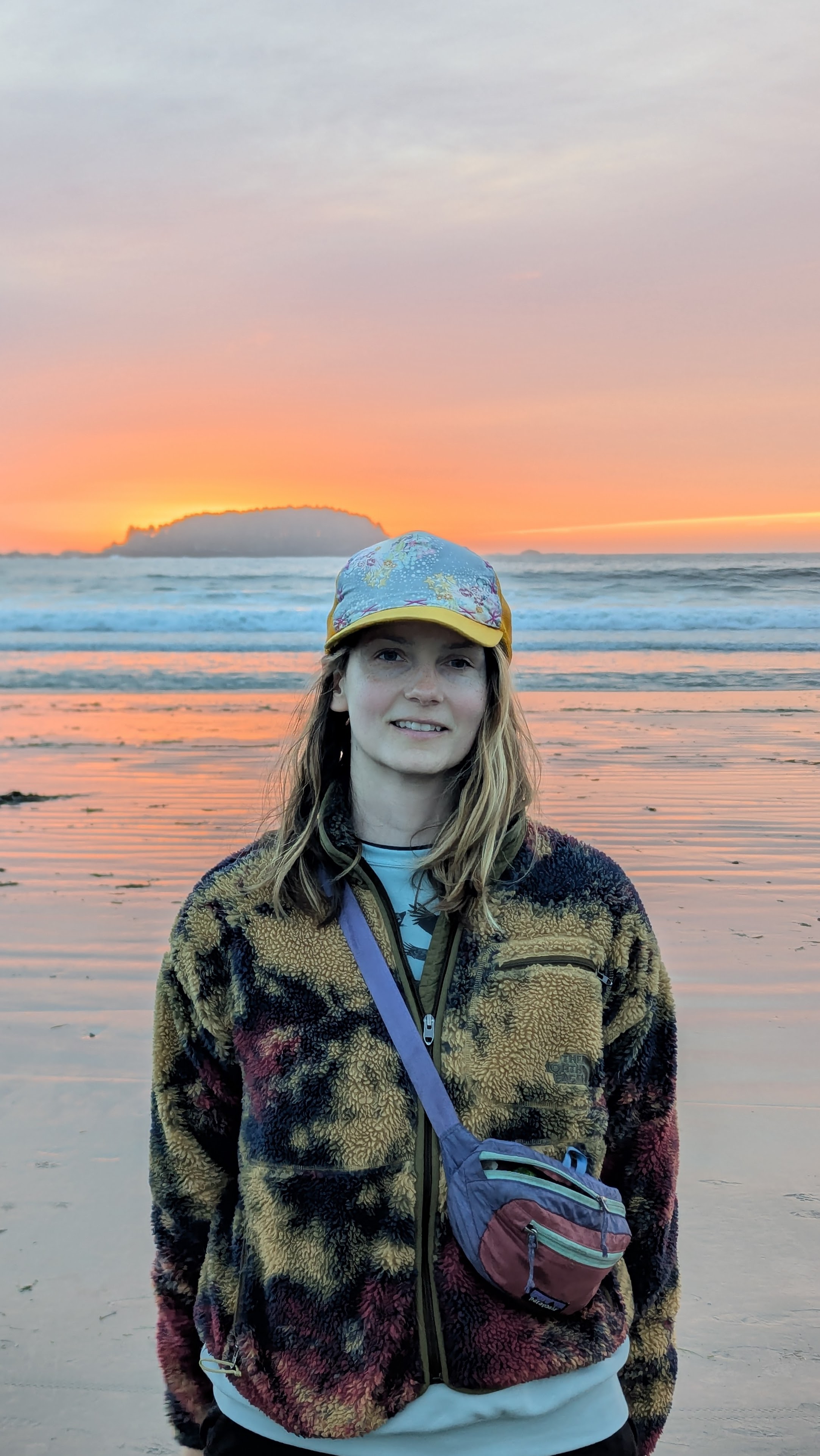
In this edition of Who’s who in the Zoo, meet Hillary, a member of our team who is involved in our work exploring the ethics of machine learning in public-engaged research.


Who: Hillary Burgess

Zooniverse project: Ethical Considerations for Machine Learning in Public-Engaged Research

What is your research about?

I am a longtime enthusiast of participatory science. This enthusiasm has led me to wear many different hats in this space – from project designer and lead, to volunteer, to researcher studying theory and practice of public engaged science. I’m currently supporting an effort to develop recommendations for running AI-engaged projects on the Zooniverse platform. As A.I., particularly machine learning, becomes more prevalent as a research tool and in other aspects of society, there is a mix of worry and excitement among the Zooniverse community. The recommendations will be responsive to the interests and concerns raised by Zooniverse stakeholders and will integrate best practices and learnings from the broader community. This involves engaging with experts in communications and ethical use of technology, Zooniverse leadership, and Zooniverse volunteers.

How do Zooniverse volunteers contribute to your research?

Zooniverse volunteers are the reason for Zooniverse. We want to hear from as many volunteers as possible, so we can move forward in a way that reflects the diverse experiences and perspectives of this community. In fact, this initiative was born out of concerns about the use of A.I. on the Zooniverse platform. The funding Zooniverse received from the Kavli Foundation allows us to convene a series of four workshops to hear from a variety of stakeholders, including a few volunteers. But because the capacity for those workshops is small and not everyone wants to engage in a workshop format, we’re also sending out four short surveys for volunteers. Survey responses are feeding directly into our planning, and will be a key inspiration for the final recommendations for A.I. engaged projects on the Zooniverse platform. We need input every step of the way. Volunteers are also invited to share their perspective on Talk. We have had a phenomenal response to the first two surveys from over 1000 volunteers. Some of the questions are open-ended and I am fascinated and inspired by the diversity of opinion in these responses! Some people are really excited by the thought that they could contribute to machine learning, and a higher pace of progress toward research outcomes they care about. Others are deeply concerned about the potential for data quality issues and the environmental impacts associated with energy demand from running big models. Some express both, and all are valid and important to hear as we navigate this new frontier. As a relative newcomer to the Zooniverse community, reading the replies have given me many AHA! moments about what motivates people to participate in Zooniverse projects, and enormous appreciation for the passion and expertise among volunteers.

What’s a surprising or fun fact about your research field?

As a graduate student I worked with volunteers to study pollinator use of home gardens. After our training one of the volunteers discovered a bumblebee in her garden that was thought to be extinct.

What first got you interested in research?

I have always been a curious person who enjoys discovering patterns and connections and diving deep into topics that interest me. Around the age of 10, my teachers nominated me to attend a regional “women in science” day. I was one of just two students who got to go from my school and hear from career scientists. I came home with so much excitement about what felt like the adventure of science.

What’s something people might not expect about your job or daily routine?

I work from home and my two cats (Bubs and Little One), and dog (Mango), are constantly interrupting whatever I am doing with requests to play, eat, go to the bathroom, or sit on my lap.

Outside of work, what do you enjoy doing?

Outside of work I love spending time either at sea level on the coast – tidepooling, beach walking etc. or up high hiking in the alpine zone of the Cascade mountains. I love learning and trying new things, and dabble a number of creative outlets from pottery and gardening to DIY house projects. Lately I have also gotten into weightlifting, and sometimes playing cooperative video games.

What are you favourite citizen science projects?

I first got hooked on Zooniverse through Snapshot Serengeti and AmazonCam Tambopata. Participating in the latter actually inspired a trip to Tambopata with my family in 2017. I also have strong tides to rigorous hands on outdoor projects like the University of Washington’s Coastal Observation and Seabird Survey Team (COASST) and the U.S. National Oceanic and Atmospheric Administration’s Marine Debris Monitoring and Assessment Project (MDMAP).

What guidance would you give to other researchers considering creating a citizen research project?

Don’t assume that your best volunteer audience thinks like or is motivated by the same things as you. Design for your intended data use and commit to a return on volunteers’ investment. Get feedback early and often.

AI Ethics Workshop Series: Update #1

This post is part of our Kavli Foundation-funded series, Ethical Considerations for Machine Learning in Public-Engaged Research. Read our project announcement blog post here.

We’d like to thank everyone who participated in the first of four surveys to help shape the future of AI and public-engaged research. We received over 1000 responses to the first survey, which informed priorities for the first workshop and helped Zooniverse leadership understand some of your interests, concerns, and ideas around this important topic.

Our second survey is launching today, and will be accepting responses through July 18th. We hope you will participate!

In case you missed it, check out the project announcement blog post to learn more about Zooniverse’s effort to develop recommendations for running AI-engaged projects on the Zooniverse platform.

Who is running this study? The Project Director is Dr. Samantha Blickhan, Zooniverse Co-Director and Digital Humanities Lead.

Who is funding this research? This research is funded by The Kavli Foundation.

How can I contact the team? Questions can be addressed to hillary@zooniverse.org or samantha@zooniverse.org

​​Ethical Considerations for Machine Learning in Public-Engaged Research

Highlights

  • With support from the Kavli Foundation, the Zooniverse team is launching a project to help us develop a set of recommendations for running Machine Learning (ML) and Artificial Intelligence (AI)-engaged projects on the Zooniverse platform.
  • The project will bring together subject matter experts, Zooniverse leadership, and platform participants in a series of workshops and working sessions.
  • The project deepens partnerships among Zooniverse and its participant community, as well as the Kavli Institute for Cosmological Physics, UC-Berkeley Kavli Center for Ethics, Science, and the Public, and the SkAI AI Astro Institute. 
  • Zooniverse participants have an opportunity to get involved and follow along in a number of ways!

Developing recommendations for ML/AI projects on Zooniverse

As ML/AI has become more prevalent—now in about ⅓ of Zooniverse projects—it has sparked a range of reactions on the Talk message boards within the participant community, reflecting broader societal discourse. Zooniverse participants have surfaced concerns and insights on issues like ownership, agency, transparency, and trust. It is crucial to address the risks, opportunities, challenges, and broader ethical questions. 

In response, we developed a project to create a set of recommendations for running ML/AI-engaged projects on the Zooniverse platform. In this project we will explore the tensions of integrating ML/AI within online public-engaged research. We hope that these recommendations will also be useful for related fields incorporating ML/AI in public-engaged research processes. 

Collaborative workshops

With funding from The Kavli Foundation, this project will bring together Zooniverse leadership, platform participants, researchers, and experts in topics like communications, ethics, law, and ML/AI in a series of workshops and working sessions. The project deepens partnerships among Zooniverse and its participant community, as well as the Kavli Institute for Cosmological Physics, UC-Berkeley Kavli Center for Ethics, Science, and the Public, and the SkAI AI Astro Institute.

Workshop themes cover topics raised by Zooniverse participants and project research teams as well as gaps in existing knowledge, resources, and guidance. 

  • Workshop 1 (June) will focus on Transparency and Communication Best Practices. It will inform guidelines that will support researchers in effectively communicating with participants when integrating ML/AI into their public-engaged research projects. 
  • Workshop 2 (July) will cover Ethical Approaches to ML/AI. It will invite discussions that explore and identify foundational elements of an ethical approach to ML/AI-focused public-engaged research, addressing risks while leveraging opportunities. 
  • Workshop 3 (August) will focus on Deepening Contextual Understanding. It will expand on the ethical considerations raised in Workshop 2 by examining a matrix of factors including disciplinary differences, task type affordances, and the varied needs of stakeholders (e.g., researchers, participants, platform maintainers). We anticipate that ethical principles may at times conflict within this matrix, making it essential to foster a shared understanding of how, why, and when we will draw from different elements as we develop these recommendations. 
  • Workshop 4 (September) will consider Downstream Data Protection. It will inform recommendations for licensing frameworks to use with public-engaged research data outputs that align with platform values, particularly in relation to projects that incorporate ML/AI. 

Call to action: We want you to participate!

Zooniverse participants have an opportunity to get involved and follow along in a number of ways:

1. Help shape the future of ML/AI and public-engaged research. Options include:

  • Complete four short surveys throughout the duration of the project, starting with this one.
  • Survey responses will be considered as we draft the recommendations for running ML/AI-engaged projects on the Zooniverse platform.
  • We’ll also be reaching out to a subset of our community about participating in the workshops.

2. Follow along:

  • We’ll be posting updates on Talk and on our Zooniverse blog during the process, and project results will be shared broadly.
  • You can opt in to receive project updates by completing the first survey here.


Who is running this study? The Project Director is Dr. Samantha Blickhan, Zooniverse Co-Director and Digital Humanities Lead.

Who is funding this research? This research is funded by the Kavli Foundation.

How can I contact the team? Questions can be addressed to hillary@zooniverse.org or samantha@zooniverse.org

Skies, Stories and Participatory Science: My Adler & Zooniverse NSF INTERN experience

I hadn’t even walked in the door yet, and walking up to my first day working at Adler Planetarium/Zooniverse was already one of the coolest places I’ve ever worked. The bus dropped me off, and because of the schedule, I arrived about 15 minutes early. I was extremely eager to begin this summer but decided to take a moment and sit on a bench close by to take in the beautiful view of Lake Michigan and the Chicago skyline. I had no idea what the summer was about to hold. 

Why science communication?

I took a long, winding road to get to Adler/Zooniverse this summer, but the timing was perfect. I have always prioritized public engagement and science communication in my work, and it began in undergrad, where I was a tour guide and a teaching assistant. After graduation, I started working as a high school math teacher and presenting live science shows at the planetarium on the weekends. This combination of positions taught me how to do the seemingly impossible – get high schoolers excited about math. I brought my science communication training and the use of demos from the planetarium into the classroom to create an engaging environment. This led me to work as an instructor at a community college where I faced a different challenge – working with many varying backgrounds because most students came to my night class after working a long day job. I was teaching a math course with a supplemental lab where my focus was to get my students to build growth mindset skills, empowering them to succeed in my class. All these experiences led me to return to graduate school, where I continued to prioritize outreach, and I began the NASA-Zooniverse participatory science project Dark Energy Explorers. As project lead, this challenged me differently, acting as a liaison between highly specialized researchers and the general public. 


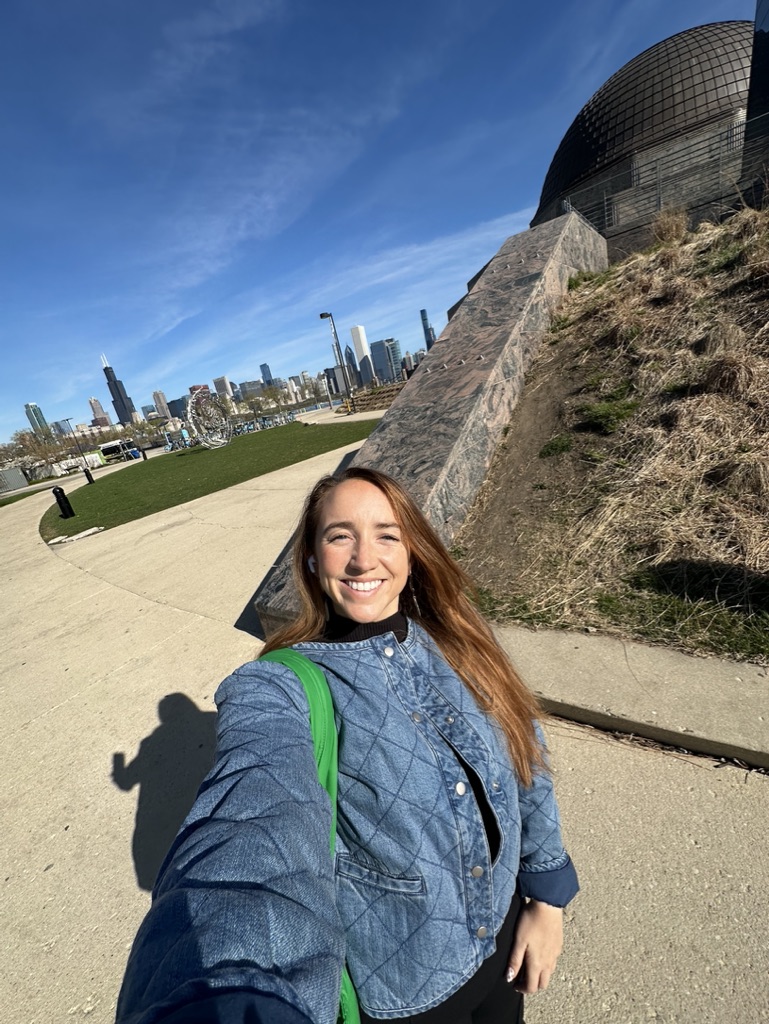
While waiting to enter the building for the first time I took a walk around the whole planetarium only to be surprised with a glimpse of the Doane Observatory. Here, I paused for a first day picture to send to my family!

I say all of this because, before this summer, I felt like I was building all these skills out of sync and never in tandem. This summer at Adler/Zooniverse was the first time I truly had the opportunity to intertwine all these skills I’ve built over the years in one position while also gaining new skills from the experts here. I came to Adler/Zooniverse through the NSF Non-Academic Research Internships for Graduate Students (INTERN) for graduate students looking to grow a complementary skill set outside of an academic setting. Being a Zooniverse project lead and someone with an informal education background, coming to Adler/Zooniverse to focus on science communication skills was a perfect fit. Zooniverse PI, Laura Trouille, was my main mentor throughout the experience.

This summer, all of the projects I took on fell into the following modes of communication– written (articles, storybooks), spoken (talks, explanations), and visual (video, graphics, social media).

Networking and gaining skills

My first week, I was thrown right into filming for Adler’s social media’s ‘Ask an Astronomer’ segment. This might have been some of the most fun I had. I worked with other Adler astronomers, Mike Zevin and Geza Gyuk, to write answers to some of the most frequently asked questions in astronomy with an extra challenge of it could only be one minute long. We filmed with the marketing team Bella, Audrey, and Colleen, seen here, where we spent most of the filming perfecting a swivel chair spin. In addition to these videos for Adler social media, I also worked on a few posts for NASA Citizen Science and explored the Zooniverse social media revamp with Alisa Apreleva at Oxford University.

Continuing to work with Mike Zevin, I took on a project to develop a new way to incorporate Zooniverse into the Astronomy Conversations program at Adler. Astronomy Conversations is a program that hosts researchers and visiting scientists to engage with museum guests about their research. We discovered a way to use the space visualization lab to project a Zooniverse project and then use a project as a take-home activity for visitors. For instance, if a guest was particularly interested in asteroids, they classify on Asteroid Hunters in the SVL and then continue learning at home on their own on Zooniverse.

Before this summer, I had no video editing skills and barely knew how to use iMovie. With a tutorial from Laura, and design help from Zooniverse Designer Sean Miller, I put together a video for educators using the new Zooniverse Groups features. This video helps educators of all kinds (teachers, camp counselors, museum leads, librarians, etc.) to feel comfortable and confident using the new features in their education setting. 

Becoming a ‘consultant astronomer’

My most novel experience was working with Adam Fotos (professor at Chicago State University) as a ‘consultant astronomer’ (I just made that title up). Adam contacted the team for advice for his new children’s book, Growing to the Moon. He wanted to ensure some of the book was rooted in actual astronomy concepts while still maintaining a fantastical, fun story. I agreed to help him tackle this task and then attended one of the planetarium shows at Adler, Imagine the Moon. Following this, we discussed incorporating those ideas into the plot line and how it could appeal to kids of varying ages. Look out for his book to be published soon! 


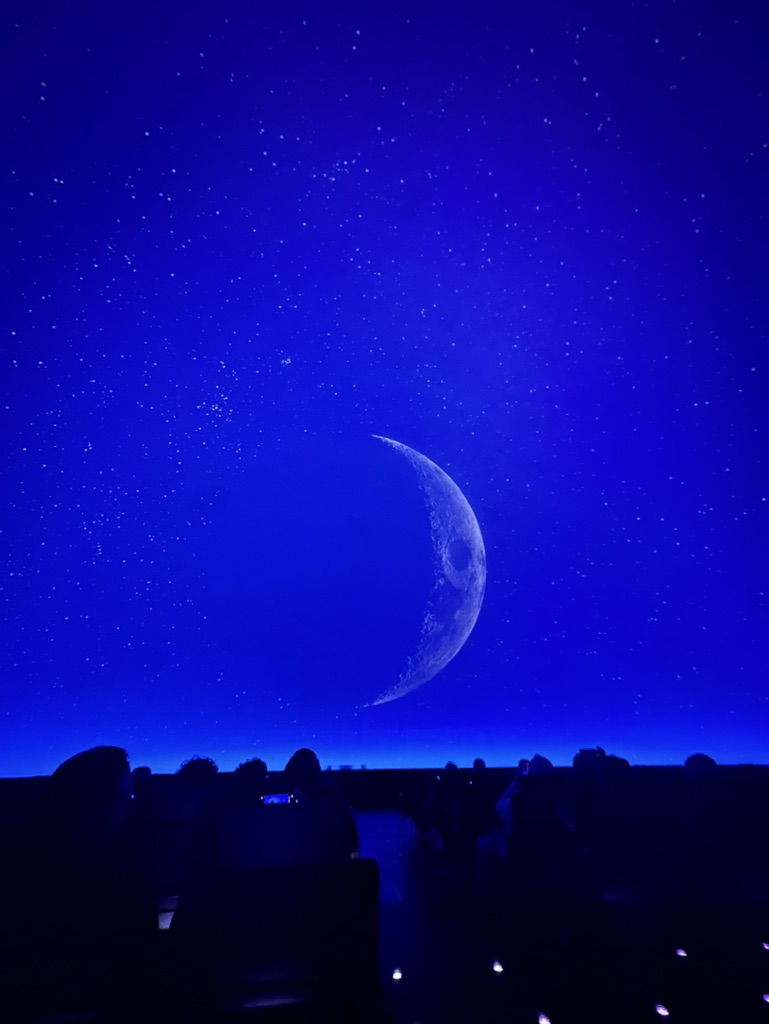
Meeting with Adam to consult for the storybook, we watched the Imagine the Moon planetarium show amongst many other excited Adler visitors.

Communicating science accessibly

One of my most significant points of personal growth this summer has been in my science writing. My love for writing has taken a new perspective as I’ve been able to learn how to communicate my research on very niche astronomy topics, like dark energy or machine learning, for the general public. I was able to share part of my journey of choosing astronomy in the ‘working life’ section of Science Magazine, which culminated with my presentation of three posters and a talk at the International Astronomical Union Meeting in Cape Town, South Africa! 


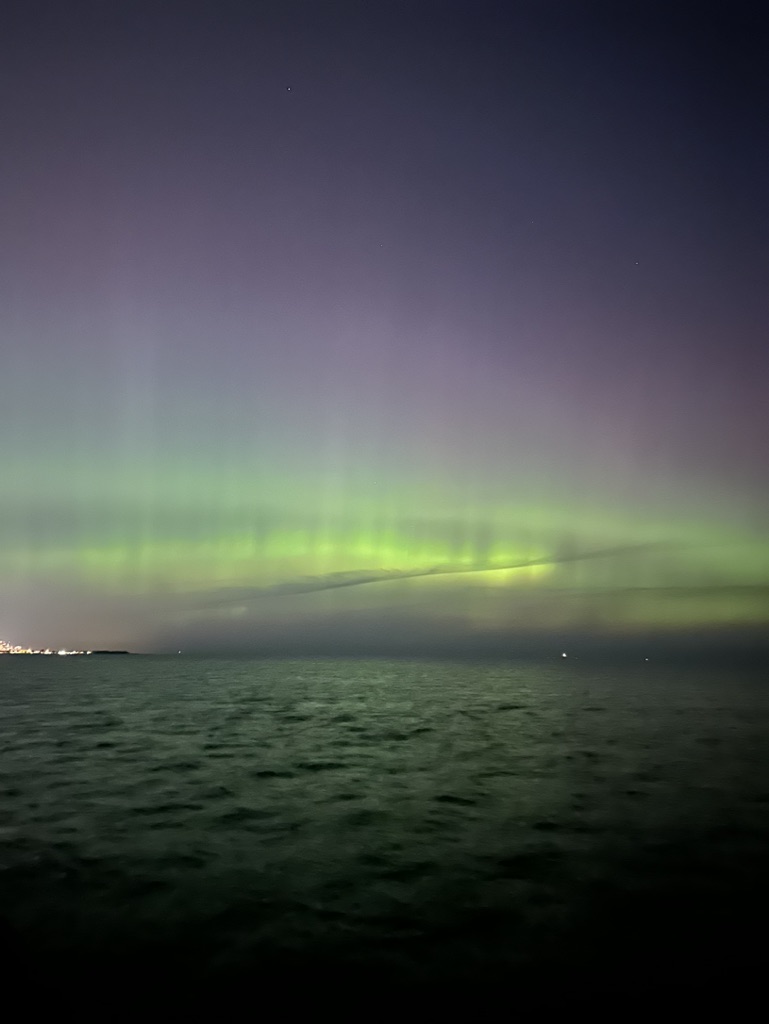
In addition to all the inspirational things that happened at work, I witnessed the auroras in the middle of Chicago off of North Ave pier, reflecting off Lake Michigan!

Place to learn and grow

After one of the most fullfilling summers of my life, I can reflect back to that first day after I walked through the door and Laura began showing me around the building. Along the way we ran into Adler President, Michelle Larson. The three of us had a lovely chat about how excited we were about what the summer would hold and how quickly it would go by. That was an understatement. In hindsight, that conversation was representative of the next few months. I witnessed the exceptional work environment these ladies (and the whole team!) have created here. They have made Adler and Zooniverse places where people come to learn and grow, not only as science enthusiasts but as people. In my experience, this is very rare to find. From the projects, to the people, to the place of Chicago, I spent this summer learning, laughing, and growing as a science communicator and a human. I’m grateful for the opportunity to be a part of this community through the NSF INTERN program, and I hope to continue collaborating with the Adler/Zooniverse team into the future! 

The guest post was written by Lindsay R. House, a Science Communicator with Adler Planetarium and Zooniverse in Chicago from April to August 2024. Lindsay is the project lead for the NASA-Zooniverse participatory science project, Dark Energy Explorers. Lindsay spent this time at Adler on a supplemental National Science Foundation INTERN grant, which allowed her to gain valuable science communication skills that complement her studies as a 5th-year Astronomy Ph.D. student at the University of Texas Austin. 

Celebrating Earth Day

Zooniverse team members based at Chicago’s Adler Planetarium celebrated Earth Day this weekend at Earthfest, a two-day-long celebration of the planet we call home.

Visitors to the Adler Planetarium participate in a Zooniverse hands-on activity during Earthfest

In addition to many activities for all ages throughout the museum, museum visitors were able to speak with Zooniverse team members to learn about the many earth-related projects available online and on the app. Visitors could also participate in a real-life version of Floating Forests, in which they used tracing paper to illustrate areas of kelp forests on a satellite image. The activity demonstrated how Zooniverse researchers use aggregation to combine many classifications into one very accurate result. Stay tuned for the results of those tracings, coming soon!

Check out a few more photos from the event here.

Zooniverse team members also had some help from our friends at the Field Museum, who stopped by to talk about Microplants, a Zooniverse project studying some of the earliest land plants in the liverwort genus Frullania.

We love speaking with museum visitors and sharing the excitement of participating in real citizen science projects. If you’re in the Chicago area and missed us last weekend, keep an eye out for more information about the Adler Planetarium’s spring Members’ Night, when we’ll have even more fun Zooniverse-related activities for you!

Introducing the Planet Hunters Educators Guide

Julie A. Feldt is one of the educators behind Zooniverse.org. She first came to us in Summer 2013 as an intern at the Adler Planetarium to develop and test out Skype in the Classroom lessons and ended up joining the team the following winter. Julie was the lead educator in the development of the Planet Hunters Educators Guide.  Here she shares some information on the development and contents of this resource.

Screenshot 2015-07-06 14.49.53

In collaboration with NASA JPL, we have developed the Planet Hunters Educators Guide, which is 9 lessons aimed for use in middle school classrooms. This guide was developed for each lesson to build upon each other while also providing all the information needed  to do them alone. Teacher can choose to do one lesson on its own or the entire collection. Each lesson was planned out using the 5E method and to be accomplishable in a single 45 to 60 minute class period with some Evaluate sections as take home assignments. In development we focused on the science behind Planet Hunters and utilized JPL’s Exoplanet Exploration program and tools from PlanetQuest in order to connect with our partners in this field.

Through this guide, we want to introduce teachers and their classrooms to citizen science, exoplanet discovery, and how the science behind the Planet Hunters project is conducted. Lesson 1 starts by acquainting the class with what citizen science is and looking at several  projects, mostly outside of the Zooniverse. This lesson is great for teachers who just want to talk about citizen science in general and therefore it encompassesmany different types of citizen science projects. The rest of the lessons go into the understanding of exoplanets and using Planet Hunters in a classroom setting.

We wanted to give teachers the lessons they may need to build student understanding of the research and science done in Planet Hunters. Therefore, Lessons 2 through 5 focus on developing knowledge of possible life outside our solar system, the methods used to discover new worlds, and what makes those worlds habitable. For instance, in Lesson 2 students explore our own solar system with consideration of where life as we know it, directing them to the idea that there may be a habitable zone in our solar system. The students are asked to break up into groups to discuss how each of the planets compare with consideration of their location . We provided solar system information cards, see an example below, for students to be able to determine the conditions necessary for life as we know it to develop and survive.

Screenshot 2015-07-06 14.49.31Screenshot 2015-07-06 14.57.12

Lesson 6 is purely about getting students acquainted with Planet Hunters, specifically how to use it and navigate the website for information. This lesson can be great for the teachers that just want to show their students how they can be a part of real scientific research. After, students use the project data to find their own results and visuals on exoplanets found in Planet Hunters. Something to note, lesson 7 and 8 are pretty similar, but Lesson 8 incorporates a higher level of math for the more adventurous or older classrooms. Lesson 9 either wraps up the guide nicely or can be a fun activity to add to your science class where the students creativity and imagination comes out through designing what they believe a real exoplanet looks like, see summary from first page below.

Screenshot 2015-07-06 14.51.16

We hope our teachers enjoy using this product! We would love you hear how you have used it and any feedback that could be used in any future development of teacher guides for other projects.

Meet the Team – Kelly Sutphin-Borden


Kelly is one of the Zooniverse educators based at the Adler Planetarium in Chicago. Today is her birthday, so we decided to get her to do a special edition of ‘Meet the Team’ for the advent calendar. In the video she talks about Zoo Teach, which is an educational tool provided by the Zooniverse. Check it out here http://www.zooteach.org/

Zooniverse Groups

Today we let loose a new feature called Zooniverse Groups. We’re always being told how our projects are used by schools, open evenings and other groups of people. This is great, and we encourage the use of our projects in education. We are often asked by teachers if it is possible for them to manage a group of students and keep track of their classifications. Today’s release is the first step in allowing this type of management by educators and others who want to share the Zooniverse.

Groups Screenshot

You can access Groups from your account settings on Zooniverse Home. By default you will see the options to create a group. You do this by by giving the group a name and quick description. Once a group has been created (you will be the first member) you can then invite others to join in. You do this by viewing the group’s settings page (the cog icon next the group’s name). Here you can invite people, either by knowing their Zooniverse user ID, or by sending them a unique group link.

As an example, if you follow this link – http://www.zooniverse.org/account/new?group=ab55cbbd – you’ll join my example group called ‘Rob’s Example Group’. If you already have a Zooniverse ID you can then sign in and join the group, or you can create an account and join as a new Zooniverse user.

My Test Group

As the owner of a group you can see how many classifications each user has made since joining the group – and we have provided a couple of charts showing this data. We’d really like to hear from you about the other features you’d like to see included as a group owner. As a group member you get to see who else is in the group and the contact details of the group owner. Note to group owners: your email address is shared with members of the group.

Groups currently only tracks your Galaxy Zoo activity. We had to start somewhere and we get the most requests for groups from schools using Galaxy Zoo. We plan to add in support for other projects as time goes by. Group members can leave a group at any time, and group owners can remove members at any time. Group owners can delete a group at any time and this will delete all membership records – we don’t store your group activity after deletion.

Groups is in an early stage and we’re keen to hear what else you’d like to use it for. If you have feedback please get in touch via team@zooniverse.org.