Putting the ‘citizen’ in ‘citizen science’

I was slightly surprised to see my twitter feed this morning filling up with comments about how the term ‘citizen’ appears in writing about science, and about public engagement with science. This seems to be coming from Roland Jackson’s post in response to the publication of a report called ‘What publics? When?’ from Sciencewise, an organisation that gives advice on science policy to government. Roland’s point is that perhaps the reason we get ourselves in a tangle when talking about public engagement is the word ‘public’, thinking that ‘citizen’ does a better job of breaking down the divide between ‘us’ doing the engagement and the ‘public’ being engaged. (There’s another engaging comparison on Nottingham’s ‘Making Science Public’ blog.)

In such contexts, I reckon ‘citizen’ comes up most often in ‘citizen science’, and I thought it might be interesting to say something about our use of the term. It’s how we describe our projects in papers, and we chose it mostly because we didn’t like the term ‘crowdsourcing’, which never seem adequate for projects which very quickly demonstrated that they could grow way beyond simple requests for a community to complete a task. We quickly realised we wanted people to make discoveries, to follow them up themselves and to chase down their own research questions and crowdsourcing just doesn’t describe that. I also liked the fact that anyone – professional or amateur, project designer or participant – could be a citizen scientist.

We clearly weren’t that confident, though. Although the core collaboration that builds and runs the Zooniverse is the Citizen Science Alliance, we’ve mostly reserved that term for grant applications rather than using in the real word. (Let along the problems of being a citizen science group which produces humanities projects either deliberately or accidentally.) This reticence isn’t misplaced; it reflects my firm belief that noone in the history of the world has ever set down at a computer, opened their web browser and thought ‘I’m a citizen scientist. Let’s do some citizen science’. Zooniverse participants are fans of one or more of our projects, and they tend to have stumbled in and then found a comfortable environment where they can do exciting things, rather than started off by looking for a science project. (This is also, I think, reflected in the lack of traffic we get from citizen science portals like SciStarter.)

‘Citizen’ science, from this perspective isn’t any more inclusive than talking about ‘public engagement’. The most common alternative (‘PPSR’ or Public Participation in Scientific Research) doesn’t help either. If names are important, we need a new one for this thing that we’re doing, but as the person who has been most consistently wrong about naming Zooniverse projects (I voted against Galaxy Zoo, for starters!) I’m the last person to ask. Maybe we should crowdsource a solution….

Chris

PS I’m reminded of this slide deck from Arfon which proposes CBSR (Community Based Scientific Research) and PPFCSM (Public Participation as a Fundamental Component of the Scientific Method), although I think he’s kidding on the last one.

Live from ZooCon

Hello for the Martin Wood Lecture Theatre in Oxford’s Department of Physics which is playing host to a crowd of Zooniverse volunteers and project members for ZooCon13. We’re recording the talks for later broadcast, but as a sneak preview I thought I’d liveblog the event.

Talk 1 – SpaceWarps

We’re kicking off with Aprajita Verma from Oxford and from Space Warps, the newest Zooniverse astronomy project. As is traditional when talking about gravitational lensing – the bending of light by matter, she’s using Phil Marshall’s Galaxy in a Wine Glass video.

Galaxy In a Wine Glass

SpaceWarps is much needed – LSST, the next generation of survey telescope, will produce something like 10000 galaxy scale lenses. It’s designed to map a very wide area of sky, which is perfect for finding rare things like lenses – and this will produce a lot of work as traditional lens hunting is very labour intensive. Not only do they need to be found, but they then need to be modeled.

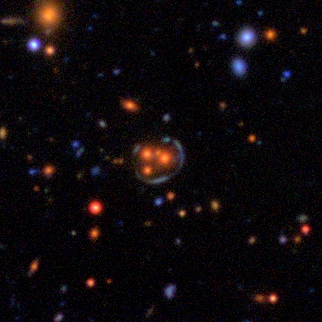
There are three lenses in this image - one real, and two simulated. Spotting the difference is hard...
There are three lenses in this image – one real, and two simulated. Spotting the difference is hard…

Luckily – we have effort! 2 million 6 million classifications have been recorded already from over 8000 people. Particularly pleasing for me is that 40% of those people are discussing things on Talk – this is essential as lenses are complicated things and the interesting ones are going to be found through discussion. The team are doing dynamic assessment of the results, retiring images that no longer need classification – I especially liked their division of classifiers into ‘Optimists’ – who get lenses right but also get excited about lots of things that aren’t lenses – ‘Pessimists’ – who correctly dismiss non-lenses but get rid of lenses too – the ‘Astute’, who get everything right and the ‘Obtuse’, those who get everything wrong. Luckily, we have lots of astute classifiers and almost none who are obtuse, as evidenced by a sneak preview of the first few discoveries (more on those next week).

Talk 2 – Cosmic Evolution from Galaxy Zoo

Next up is Karen Masters of Portsmouth and Galaxy Zoo, talking about science results from the Zooniverse’s oldest project. It’s already clear there is lots of ground to cover in this conference and Karen’s bounding through a brief history of observational astronomy, noting the conceptual leap required to go from thinking about the Milky Way, our galaxy, and an expanding Universe filled with billions of the blighters. Karen just showed a cool movie showing the parts of the sky that have been mapped by the Sloan Digital Sky Survey, which provided images for the early incarnations of Galaxy Zoo.

A Galaxy in need of classifications.

In going through the history of Galaxy Zoo, Karen reminds me that the original BBC news story on Galaxy Zoo claims that we hope that 30,000 people will eventually take part. We smashed that on day one if I remember correctly. (There’s also a factual error in that news story – if anyone tells me what it is via Twitter (@chrislintott) or in person they can have a pint). While I relieve ancient history, Karen’s talking about her work on red spirals: most spirals are blue, but Galaxy Zoo helped us find lots of red ones and Karen says that the Milky Way may even be on its way to becoming one. The work on the red spirals was part of a serious shift in how we think about galaxy formation – a few years back that story was all about mergers but now it’s thought that lots of galaxies form and evolve (including fading from being a blue spiral to a red spiral) in slower, less spectacular ways.

Of course, one of the advantages of citizen science that Galaxy Zoo demonstrated was the ability of classifiers to discover the weird and wonderful. Recent examples include the bulgeless galaxies – spirals which are guaranteed not to have had a merger within the last few billion years – and a set of galaxies (mostly red spirals!) with massive bars at their centre. In even better news, we have time on the Very Large Array (I REPEAT – WE HAVE TIME ON THE VERY LARGE ARRAY!) to follow up on these things.

WE GOT TIME ON THE VERY LARGE ARRAY (this is a picture of some of it)

I’m really quite excited about the VLA. I’ve always wanted to use it.

Talk 3 – New Uses for Old Weather

We’re taking a break from astronomy with Philip Brohan from the Old Weather project – he’s explaining that scientists need historical observations to constrain their models of how the climate behaves. Lacking the ability to stick a weather satellite in the Tardis and head back in time, we need to scrabble around for old records, an idea that dates back to Beaufort of wind scale fame.

Philip in the gloaming, beneath an Old Weather slide.

This is great, but the supercomputers can’t read the 73 million logbook pages we’d like to sort through – hence the need for volunteers. So far more than a million logbook pages have been processed by the project – a small fraction of the total needed but a very useful quantity! Most of these volunteers are attracted by the historical information that the logs fortuitously contain – Philip is currently beneath a slide showing a log book containing both the information that the ship’s company are fitted with seal-skin boots, and that 23 dogs are received on board. (Why? Surely not for food…).

It’s all got a bit gruesome now – six dead bodies are being placed in alcohol. Luckily we’re swiftly on to HMS Tarantula, where their anemometer is infested with ants. The current set of logbooks have more famous events; in particular, the logbooks of the Jeannette show the discovery of the Arctic island now named after it (upon which nothing but ice sheets grow). The fact that we have these logbooks at all is a miracle; the ship was crushed by the ice and the crew (most of whom perished) chose to carry the scientific records with them as they struggled to safety.

Images from and about the Jeanette, including in the bottom left an artist's impression of the chest of logbooks being saved.
Images from and about the Jeanette, including in the bottom left an artist’s impression of the chest of logbooks being saved.

As well as the climate and the history, Phil says, the third important aspect of Old Weather is the people. The project’s made particularly good use of the forum, which has steered the project in new directions and provided a home for discussion of things we never thought to look for, as well as art and verse. The latter was particularly inspired by the tragic loss of the chocolate aboard the HMS Manuta. Before rolling the credits listing his more than 17,000 collaborators, Philip ended these tales by noting that to make a serious dent on the archives we need to speed up by a factor of ten, a challenge the Zooniverse is happy to accept.

Talk 4 – The Future of Galaxy Zoo

Back to the Universe now, and Oxford’s Brooke Simmons is able to start her talk on what’s coming up for Galaxy Zoo by reminding the crowd that the data release paper for the second version of Galaxy Zoo is now with the referee. At about 30 pages, it’s as short as it could possibly be, showing the amount of effort that goes into dealing with classifications received via a large citizen science project.

Brooke’s now explaining the need – with Galaxy Zoo trying to reach back to a time not that long after the Big Bang – for us to use all sorts of tests to understand how our classifications work. Showing images of the same galaxies shifted to higher and higher redshifts (further and further away) it’s clear that classifications will change just because it’s harder to see what’s going on when galaxies get further away. We’re also playing with supercomputer simulations of the evolution of galaxies which shows how things change over time.

It’s not all about simulations, though – we’re thinking about moving beyond the optical range of the spectrum and looking at galaxies in the ultraviolet and infrared. The former, from a satellite called GALEX, shows only the youngest starts, the latter, from a survey called UKIDSS which covers about a third of the Sloan area, the dust and older stars. Also on the agenda are more advanced tools, like those which power the Galaxy Zoo Navigator which allows primarily school groups to look at the statistics of their classifications.

Correction I wasn’t listening properly to Aprajita; Spacewarps got 2 million classifications in the first week, and at the time of ZooCon was over 6 million. I’ve corrected the post. 1st July 2013.

Got An Idea for a Zooniverse Project? Propose One

For more than a year, we’ve been openly accepting proposals for new Zooniverse projects and this has brought to life projects such as Seafloor Explorer, Snapshot Serengeti, Notes from Nature and Space Warps.

Yesterday, five Zooniverse projects were featured in The Biologist’s 10 Great Citizen Science Projects – several of them were ideas proposed by researchers we had never met before they came to us and said ‘hey, I have a cool idea for a project‘. We’ve also recently seen articles about how the Zooniverse might be able to help in a crisis and how we provide an excellent avenue for proactive procrastination. Citizen science projects are wide and varied and lots of researchers have great ideas.

So this is a good time to remind everyone that we want to hear from researchers with ideas for Zooniverse projects. If that’s you: propose a project! We have funding from the Alfred P. Sloan Foundation to build your great ideas and work with you to further science. We also have an incredibly talented team of designers, developers, educators and researchers who want to make your idea into an awesome new Zooniverse project.

If you want to know more about this, you can get in touch with any of the team or via our general email address or on Twitter @the_zooniverse. We’re currently working on projects that were proposed earlier this year and we’ll be announcing them soon. Maybe yours will be next?

How the Zooniverse Works: The Domain Model

We talk a lot in the Zooniverse about research, whether it’s interesting stories from the community, a new paper based upon the combined efforts of the volunteers and the science teams or conferences we might be going to.

One thing we don’t spend much time talking about is the technology solutions we use to build the Zooniverse sites, the lessons we’ve learned as a team building more than twenty five citizen science projects over the past five years and where we think the technical challenges still remain in building out the Zooniverse into something bigger and better.

There’s a lot to write here so I’m going to break this into three separate blog posts. The first is going to be entirely about the domain model that we use to describe what we do. When it seems relevant I’ll talk a little more about implementation details of these domain entities in our code too. The second will be about technologies and the infrastructure we run the Zooniverse atop of and the third will be about making smarter systems.

Why bother with a domain model?

Firstly it’s worth spending a little time talking about why we need a domain model. In my mind the primary reason for having a domain model is that it gives the team, whether it’s the developers, scientists, educators or designers working on a new project a shared vocabulary to talk about the system we’re building together. It means that when I use the term ‘Classification’ everyone in the team understands that I’m talking about the thing we store in the database that represents a single analysis/interaction of a Zooniverse volunteer with a piece of data (such as a picture of a galaxy), which by the way we call a ‘Subject’.

Technology wise the Zooniverse is split into a core set of web services (or Application Programming Interface, API) that serve up data and collect it back (more about that later) and some web applications (the Zooniverse projects) that talk to these services. The domain model we use is almost entirely a description of the internals of the core Zooniverse API called Ouroboros and this is an application that is designed to support all of the Zooniverse projects which means that some of the terms we use might sound overly generic. That’s the point.

The core entities

The domain model is actually pretty simple. We typically think most about the following entities:

User

People are core to the Zooniverse. When talking publically about the Zooniverse I almost always use the term ‘citizen scientist’ or ‘volunteer’ because it feels like an appropriate term for someone who donates their time to one of our projects. When writing code however, the shortest descriptive term that makes sense is usually selected so in our domain model the term we use is User.

A User is exactly what you’d expect, it’s a person, it has a bunch of information associated with it such as a username, an email address, information about which projects they’ve helped with and a host of other bits and bobs. Crucially though for us, a User is the same regardless of which project they’re working – that is Users are pan-Zooniverse. Whether you’re classiying galaxies over at Galaxy Zoo or identifying animals on Snapshot Serengeti we’re associating your efforts with the same User record each time which turns out to be useful for a whole bunch of reasons (more later).

Subject

Just as people are core, as are the things that they’re analysing to help us do research. In Old Weather it’s a scanned image of a ship log book, in Planet Hunters it’s a light curve but regardless of the project internally we call all of these things Subjects. A Subject is the thing that we present to a User when we want to them to do something.

Subjects are one of the core entities that we want to behave differently in our system depending upon their particular flavour. A log book in Old Weather is only viewed three times before being retired whereas an image in Galaxy Zoo is shown more than 30 times before retiring. This means that for each project we have a specific Subject class (e.g. GalaxyZooSubject) that inherits its core functionality from a parent Subject class but then extends the functionality with the custom behaviour we need for a particular project.

Subjects are then stored in our database with a collection of extra information a particular Subject sub-class can use for each different project. For example in Galaxy Zoo we might store some metadata associated with the survey telescope that imaged the galaxy and in Cyclone Center we store information about the date, time and position the image was recorded.

Workflow/Task

These two entities are grouped together as they’re often used to mean broadly the same thing. When a User is presented with a Subject on one of our projects we ask them to do something. This something is called the Task. These Tasks can be grouped together into a Workflow which is essentially just a grouping entity. To be honest we don’t use it very much as most projects just have a single Workflow but in theory it allows us to group a collection of Tasks into a logical unit. In Notes from Nature each step of the transcription (such as ‘What is the location?’) is a separate Task, in Galaxy Zoo, each step of the decision tree is a Task too.

Classification

It’s no accident that I’ve introduced these three entities, User, Subject and Task first as a combination of these is what we call a Classification. The Classification is the core unit of human effort produced by the Zooniverse community as it represents what a person saw and what they said about it. We collect a lot of these – across all of the Zooniverse projects to date we must be getting close to 500 million Classifications recorded.

I’ll talk more about what we store in a Classification in a followup the next post about technologies suffice to say now that they store a full description of what the User said about the object. In previous versions of the Zoonivese API software we tried to break these records out into smaller units called Annotations but we don’t do that any more – it was an unnecessary step.

Screen Shot 2013-06-20 at 2.36.12 PM

Group

Sometimes we need to group Subjects together for some higher level function. Perhaps it’s to represent a season’s worth of images in Snapshot Serengeti or a particular cell dye staining in Cell Slider. Whatever the reason for grouping, the entity we use to describe this is ‘Group’.

Grouping records is both one of the most useful features Ouroboros offers but also one of the things it took the longest for us to find the right level of abstraction. While a Group can represent an astronomical survey in Galaxy Zoo (such as the Hubble CANDELS survey) or a Ship in Old Weather, it isn’t just enough for a bunch of Subjects to all be associated with each other. There’s often a lots of functionality that goes along with a Group or the Subjects within that is custom for each Zooniverse project. Ultimately we’ve solved this in a similar fashion to Subject – by having per-project subclasses of Groups (i.e. there is a SerengetiGroup that inherits from Group) that can set custom behaviour as required.

Project

Ouroboros (the Zooniverse API) hosts a whole bunch of different Zooniverse projects so it’s probably no surprise that we represent the actual citizen science project within our domain model. No prize for guessing the name of this entity – it’s called Project.

A Project is really just the overarching named entity that Subjects, Classifications and Groups are associated with. Project in Ouroboros does some other cool stuff for us though. It’s the Project that knows about the Groups, its current status (such as how many Subjects are complete) and other adminstrative functions. We also sometimes deliver a slightly different user experience to different Users in what are known as A/B splits – it’s the Project that manages these too.

So that’s about it. There are a few more entities routinely in discussion in the Zooniverse team such as Favourite (something a User favourites when they’re on one of our projects) but they’re really not core to the main operation of a project.

The domain description we’re using today is informed by everthing we’ve learnt over the past five years of building proejcts. It’s also a consequence of how the Zooniverse has been functioning – we try lots of projects in lots of different research domains and so we need a domain model that’s flexible enough to support something like Notes from Nature, Planet Four and Snapshot Seregeti but not so generic that we can’t build rich user experiences.

We’ve also realised that the vast majority of what’s differenct about each project is the user experience and classification interface. We’re always likely to want to put significant effort into developing the best user experience possible and so having an API that abstracts lots of the complexity away and allows us to focus on what’s different about each project is a big win.

Our domain model has also been heavily influenced by the patterns that have emerged working with science teams. In the early years we spent a lot of time abstracting out each step of the User interaction with a Subject into distinct descriptive entities called Annotations. While in theory these were a more ‘complete’ description of what a User did, the science teams rarely used them and almost never in realtime operations. The vast majority of Zooniverse projects to date collect large numbers of Classifications that are write once, read very much later. Realising this has allowed us to worry less about exactly what we’re storing at a given time and focus on storing data structures that are a convenient for the scientists to work with.

Overall the Zooniverse domain model has been a big success. When designing for the Zooniverse we really were developing a new system unlike anything else we knew of. It’s terminology is pervasive in the collaboration and makes conversations much more focussed and efficient which can only be a good thing.

Zooniverse Teacher Ambassadors Workshop

Where: Adler Planetarium, Chicago, IL
When: August 8-9, 2013

Join us in advocating for citizen science in the classroom. Citizen science is an emerging tool for teachers – it provides an opportunity for students to participate in real research, analyse real data, at home or in school. The Zooniverse and the Adler Planetarium want to find US Middle or High School teachers who can help bring citizen science on the web, into the classroom. We need your expertise and we want to bring you to Chicago to talk to us!”

We would like to invite US middle and high school teachers, to apply for a 2 day workshop at the Adler Planetarium in Chicago on the 8th and 9th of August 2013. Travel, hotels and working meals will be paid for and a generous $1000 stipend should cover any additional costs. The first $500 installment will be paid at the end of the workshop.

During the workshop participants will be introduced to the array of Zooniverse projects and the existing educational resources available to help bring them into the classroom. Members of the development team will provide insight into the process of project selection, design and development that allows a scientific dataset to be transformed into an interactive citizen science project. In addition, there will be live virtual presentations from at least five science teams, giving the participants the opportunity to ask questions and interact with researchers from a variety of disciplines.

Participants will have the opportunity to share any experience they have of using Zooniverse projects in the classroom and will begin developing a lesson plan for the project of their choice. This lesson will need to be completed and submitted within 4 weeks of the workshop, along with a blog post for publication on the our blog describing their experience in promoting the Zooniverse. After this the second $500 installment of the stipend will be paid. The lesson should also be tested in their classroom, by the end of the 2013-2014 school year and a simple evaluation questionnaire submitted.

Teachers who are interested in attending this workshop should apply by the 7th of June 2013, they will need to include 500-word summary explaining why they would like to participate and how they plan to spread the word about the Zooniverse to their colleagues and local communities. Successful applicants will be informed by the 12th of June 2013.


UPDATE:

Applications for the Zooniverse Teacher Ambassadors Workshop are now closed.  Thanks very much for your interest.  We’ll be reviewing applications next week.

Zooniverse and the Next Generation Science Standards

Zooniverse held it’s second annual conference for new project scientists a couple of weeks ago, where we introduced them to the process of building a successful online citizen science projects. This intense two-day event bombarded new recruits with a ton of information relating to data reduction, web development technology, design and of course education.

Zooniverse projects have immense outreach potential, the expertise and experience that the team has collected over the years lead to complex and often intimidating science being simplified for a general audience. If you have yet to be convinced by this process, check out SpaceWarps. The hunt for the warping effects on the light from distant galaxies, caused by huge foreground galaxies acting as lenses, has been transformed into a two minute tutorial and a couple of clicks.

The projects become a tool for science teams to share their research with the public, their funders: The Tax Payers. Better still, beyond sharing their research they can ask people to participate and what better way is there to engage the public? Taking this a step further though, many science teams do wonder what, if anything, they have to offer for more formal education settings?

Formal science education in the US is about to undergo some changes with the impending adoption of the Next Generation Science Standards (NGSS). Twenty-six states were involved in the development of these standards, which have a heavy focus on inquiry based learning, and more have signed up to implement the use of them. Their recent release has cause some excitement in the Chicago Zooniverse HQ, as they very specifically call out large data sets online.

“Students need opportunities to analyze large data sets and identify correlations. Increasingly, such data sets—involving temperature, pollution levels, and other scientific measurements—are available on the Internet. “

There is also a move away from the outdated and laughable idea of a linear scientific method, towards a far more realistic concept of three spheres of activity for scientists and engineers. When using Zooniverse projects in an educational setting it is a struggle to fit them into the pigeon-hole boxes of the linear scientific method. Perhaps because they are in fact real science projects and not simplified lab experiments designed to train children in the so-called scientific method.

The spheres of activity are much more representative of the circular, back and forth process that most researchers recognize as science. Particularly, in the modern world of large data-sets and massive international collaborations, where many researchers only work on a small pieces of large puzzles, not unlike Zooniverse volunteers. Their piece of the puzzle is just a bit smaller!

Zooniverse projects already ask volunteers to take part in several of the practices identified in the spheres of activity. They observe, they measure, they analyze. In our discussion tools and forums they ask questions, argue, imagine, reason and often critique! The recent addition of the Navigator classroom tool to Galaxy Zoo will provide more opportunity for students to undertake more of the practices from ‘Evaluating’ and ‘Developing Explanations and Solutions’ spheres.

The most exciting of these little boxes though has to be the one in the top of the “Investigating” sphere. This little box calls out “The Real World”, students should be investigating the real world, using real data. So to summarize, the NGSS wants students to investigate the real world using large data sets online…

They’ll be stealing our tagline next.

http://www.zooniverse.org
real science online

Busy Month

April was a very busy month is the world of Zooniverse education.   Here are a few highlights and photos.

NSTA

We attended and presented at the annual National Science Teachers Association Conference in San Antonio April 11-14.  Most conversations focused on the recent release of the new US Next Generation Science Standards (NGSS).  Educators from all walks of life took some time to learn all about this exciting new development in science education.  Getting up to speed on these new standards is definitely on our list of summer to-dos.

We spent most of the conference at our booth in the exhibit hall having great conversations with teachers about current Zooniverse projects, ZooTeach, the Galaxy Zoo Navigator, and the upcoming Planet Hunters Educators Guide.  While not mingling with science teachers you can bet we took advantage of Texas-sized desserts (yes, that cinnamon roll was delicious).

Our little corner of the exhibit hall at NSTA


The NSTA Exhibit Hall San Antonio 2013
The NSTA Exhibit Hall San Antonio 2013       
Largest Cinnamon Roll in the USA.


New Office!

The Chicago branch of the Zooniverse development team outgrew its office.  We’ve recently moved into new digs on the museum floor.  Not only is there more room, but we’re across from the classroom where field trip programs happen at the Adler!  Seeing students engaged in science learning is a great motivator here at Zooniverse HQ.

Zooniverse HQ at the Adler

Zoo Workshop 2

April 29th-30th saw fifty-five scientists, developers, educators, designers, moderators, and citizens science enthusiasts gatherat the Adler Planetarium to discuss all things Zooniverse. This meeting serves multiple purposes,  first and foremost it’s a terrific opportunity to have face-to-face conversations with people usually dispersed around the globe.   Even with Skype and Google Hang-Outs, sometimes you can’t beat sitting down and talking over a coffee.

Secondly, this meeting is a great opportunity to bring science team members behind upcoming projects into the Zooniverse fold.  In his talk entitled Lifecycle of a Zooniverse Project, Rob Simpson gave the science teams behind upcoming projects a crash-course in what to expect over the lifetime of their project.  The development team used this meeting to begin conversations with these science team members about the design and implementation of their projects.  Not to give too much away, but there are some AMAZING projects in the pipeline).


Kyle Willet giving a case study of Galaxy Zoo and at  Zoo Workshop 2.
Kyle Willet giving a case study of Galaxy Zoo and at Zoo Workshop 2.

Stay tuned for more from Zoo Workshop 2….

New Project: Join the Search for ‘Space Warps’

Gravitational lenses – or ‘space warps’ – are created when massive galaxies cause light to bend around them such that they act rather like giant lenses in space. By looking through data that has never been seen by human eyes, our new Space Warps project is asking citizen scientists to help discover some of these incredibly rare objects. We need your help to spot these chance-alignments of galaxies in a huge survey of the night sky. To take part visit www.spacewarps.org.

A Gravitational Lens

Gravitational lenses help us to answer all kinds of questions about galaxies, including how many very low mass stars such as brown dwarfs – which aren’t bright enough to detect directly in many observations – are lurking in distant galaxies. The Zooniverse has always been about connecting people with the biggest questions and now, with Space Warps, we’re taking our first trip to the early Universe. We’re excited to let people be the first to see some of the rarest astronomical objects of all!

The Space Warps project is a lens discovery engine. Joining the search is easy: when you visit the website you are given examples of what space warps look like and are shown how to mark potential candidates on each image. The first set of images to be inspected in this project is from the CFHT (Canada-France-Hawaii Telescope) legacy survey.

Computer algorithms have already scanned the images, but there are likely to be many more space warps that the algorithms have missed. We think that only with human help will we find them all. Realistic simulated lenses are dropped into some images to help you learn how to spot them, and reassure you that you’re on the right track. Previous studies have shown that the human brain is better at identifying complex lenses than computers are, and we know at the Zooniverse that members of the public can be at least as good at spotting astronomical objects as experts! We’re going to use the data from citizen scientists to continuously train computers to become better space warp spotters.

This is a really exciting project and you can read more on the Space Warps blog. As with our other projects it can also be found on Twitter (@SpaceWarps), on Facebook and you can discuss any interesting objects you find on Space Warps Talk. We’re really excited about this project and think you’ll be able to make some amazing discoveries through it.

National Volunteer Week

Stateside, April  21-27 is National Volunteer week.  Thanks to the collective efforts of 826,026 people scattered around the world, a heck of a lot of scientific research has occurred that otherwise would not have been undertaken.  don’t know about you, but I think that’s pretty mind-boggling.

Whether you make one classification or 10,000 classifications, each Zooniverse volunteer furthers the cause of getting science done.  It’s nice to know that we’re all in this together.

Well, I’m feeling inspired.  To celebrate National Volunteer Week,I’m going to do some classifications on one of my favorite projects, Cyclone Center.

Thanks again for your efforts.  Keep clicking!

Awesome!  Since I started writing this post the number of Zooniverse volunteers has hit 826,049.  

Galaxy Zoo is Open Source

It’s always a good feeling a be making a codebase open and today it’s time to push the latest version of Galaxy Zoo into the open. As I talked about in my blog post a couple of months ago, making open source code the default for Zooniverse is good for everyone involved with the project.

One significant benefit of making code open is that from here on out it’s going to be much easier to have Zooniverse projects translated into your favourite language. When we build a new project we typically extract the content into something called a localisation file (or localization if you prefer your en_US) which is basically just a plain text file that our application uses. You can view that file for our (US) English translation file here and it looks a little like this:

En

So how do I translate Galaxy Zoo?

I’m glad you asked… It turns out there’s a feature built into the code-hosting platform we’re using (called GitHub) which allows you to basically make your own copy of the Galaxy Zoo codebase. It’s called ‘forking’ and you can read much more about it here but all you need to do to contribute is fork the Galaxy Zoo code repository, add in your new translation file and (there’s a handy script that will generate a template file based on the English version), translate the English values into the new language and send the changes back up to GitHub.

Once you’re happy with the new translation and you’d like us to try it out you can send us a ‘pull request’ (details here). If everything looks good then we can review the changes and pull the new translation into the main Galaxy Zoo codebase. You can see an example of a pull request from Robert Simpson that’s been merged in here.

So what next?

This method of translating projects is pretty new for us and so we’re still finding our way a little here. As a bunch of developers it feels great to be using the awesome collaborative toolset that the GitHub platform offers to open up code and translations to you all.

Cheers

Arfon

The world's largest and most popular platform for people-powered research. This research is made possible by volunteers—millions of people around the world who come together to assist professional researchers.