Feedback from Maine Professional Development Workshops – Things to Think About for Classroom Teachers

Today’s post comer from Phil Brookhouse, a participant in last summer’s Zooniverse Teacher Ambassadors Workshop.  Phil is a Professional Development specialist with the Maine Learning Technology Initiative where all middle schools have 1;1 and half the high schools do. He taught middle school science for 30 years and is adjunct faculty for University of Southern Maine. He is the proud grandparent of 6 month old twins, Jaxon and Annabella.

I’ve been lucky to deliver workshops about Next Generation Science Standards (NGSS) and Zooniverse all over the state of Maine to teachers of many grade levels and specific disciplines. Invariably, they have recognized the value and authenticity of citizen science, and the Zooniverse projects in particular. In addition, they see the links between the 8 Practices of Science and Engineering from Appendix F of NGSS, and participation in the projects.

Of course, teachers are interested in the practicality of including these projects in their curriculum. With that in mind, folks in my workshops had a number of questions and suggestions.  With all the competition for time in class, teachers are concerned with the return on time investment directly related to student accountability. Understandably, this is due to the pressures of evaluation and assessments. In other words, what lesson time do I trade away to include taking part in Zooniverse projects? This concern with use of time was expressed in every one of the 8 workshops I conducted.

For a number of teachers, the Galaxy Zoo Navigator provided a good example of where learning could go with a project. Sure, taking part in any of the projects would help students to practice analysis of data, but how could they interact with those data collected? How accessible is the data set? As it stands now, Galaxy Zoo Navigator is the model that allows any group to “play” with data collected. The other entries to interacting with data in the projects are the blogs and discussions, but some teachers are wary of students out on the wild, wild web. So, teachers wanted a Navigator type activity to be developed for other projects.

Teachers felt that Zooteach was a good beginning to collecting lessons and units related to Zooniverse projects, but more lessons are needed, and some of the lessons needed more quality control. In today’s classroom, lessons need to have learning targets identified, as well as standards addressed. With that said, there are several high quality lessons that serve as good examples. Here’s hoping that ZooTeach continues to grow, and contributors include goals and objectives as part of their units. Teachers in the workshops have been encouraged to contribute their own lessons to ZooTeach.

Finally, teachers liked the idea that there were measurement scales included in Seafloor Explorer, but thought it would be good if the measurement tools included a readout of the values for each “specimen.”  With this, students could keep a log of their measurements and do some comparisons and analysis of their own, in addition to contributing to the database. Again, this relates to the model  that Galaxy Zoo Navigator exemplifies of working with your own data to do some inquiry.

Almost all of the teachers were positive in their evaluations of the workshops, and were either going to take more time to explore Zooniverse projects, or share the site with other teachers and their students within a month. They were impressed with the engagement factor, and the authenticity of participating in citizen science. One teacher even brought her 10 year old son to the workshop , and he was all smiles as he took part in a few projects – therefore showing the group how powerful Zooniverse is as a learning tool.

Announcing the Citizen Science in Astronomy Workshop

banner20140303

As astronomical surveys and observations have continued to grow towards the petabyte scale, online citizen science projects have proven quite successful in enlisting the general public to mine these rich datasets from searching for exoplanets to identifying gravitational lenses. With new instruments and observatories currently being planned and built such as the Large Synoptic Survey Telescope (LSST) and the Square Kilometer Array (SKA), the next decade will see astronomy officially enter the petabyte age. When complete in 2022, LSST, an 8.4-meter optical telescope, will generate 15 terabytes worth of images each night, creating the largest public dataset in the world. LSST will provide images of billions (yes billions!) of new galaxies. The SKA will be the largest radio telescope ever built when it is scheduled to come online in 2024, generating roughly 11 terabytes of raw data per second. In a single day, the SKA will  produce more information than all of the present day Internet combined! Citizen science will need to evolve to be able to handle the coming data deluge.

The Zooniverse and the Institute of Astronomy & Astrophysics at Academia Sinica (ASIAA) are organizing a workshop on Citizen Science in Astronomy. The goal of this workshop is to take the first steps towards addressing the critical questions and issues that citizen science will need to solve in order to cope with these never-before-seen data volumes in the age of LSST and SKA. We aim to bring together machine learning experts, computer scientists, astronomers, and scientists from astronomy-based citizen science projects to test current techniques used to assess the capabilities of individual classifiers and combine their results, create techniques for better directing volunteer efforts to improve efficiency of current and future citizen science projects, and develop new methods for analyzing citizen science data combined with machine learning algorithms.

This 5-day workshop from March 3-7, 2014 will be held at the Institute of Astronomy & Astrophysics, Academia Sinica (ASIAA) located in Taipei, Taiwan. For more information you can check out the workshop website. Pre-registration is now available until December 1st.  If you have any questions about the signup process, please get in touch. We’ll be sending out acceptances around December 15th.

See you in Taipei!

P-Project Updates and New Translations

The Zooniverse has passed a few notable milestones recently. Planet Four passed 4 million classifications, Planet Hunters passed 20 million, and Plankton Portal passed 250,000. All represent a lot of work done by all of you and we thank you for the effort you put in to these and all our projects. Should we be worried that they all begin with ‘P’?
Polish Plankton
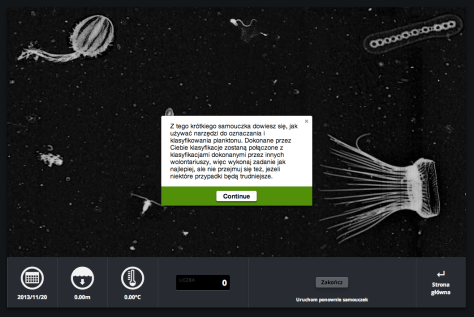
To help more people access our projects we’ve been stepping up our efforts to translate the websites. You can now participate in Plankton Portal in both French and Polish (as well as English), and there are more languages on the way for this and other projects. We’re excited about this chance to spread word of the Zooniverse around the world.
Finally, don’t forget that you can follow us on FacebookTwitter, and Google+. (or all three!) to keep up with news and updates from the Zooniverse.
Happy November!

Want to work with the Zooniverse?

As part of a large expansion of the Oxford Zooniverse team, I’m delighted to announce that there are four new jobs available at Zooniverse HQ in Oxford. We’re looking for developers who are excited at the prospect of helping us find more planets, keep an eye on more animals and generally make the Zooniverse more awesome.

5202453944_ed67b41917_b

We’re looking for the following kinds of people:

Infrastructure Engineer
Senior Front-End Developer
Data Scientist/Hadoopist
Senior Application Developer

These jobs mark the start of the next stage in the Zooniverse’s evolution, and we’re really excited about expanding the team in Oxford. If you’d like to know more, you can contact me on cjl AT astro.ox.ac.uk or 07808 167288.

Chris

The Elise Andrew Effect – What a post on IFLS does to your numbers

AP-IFLS

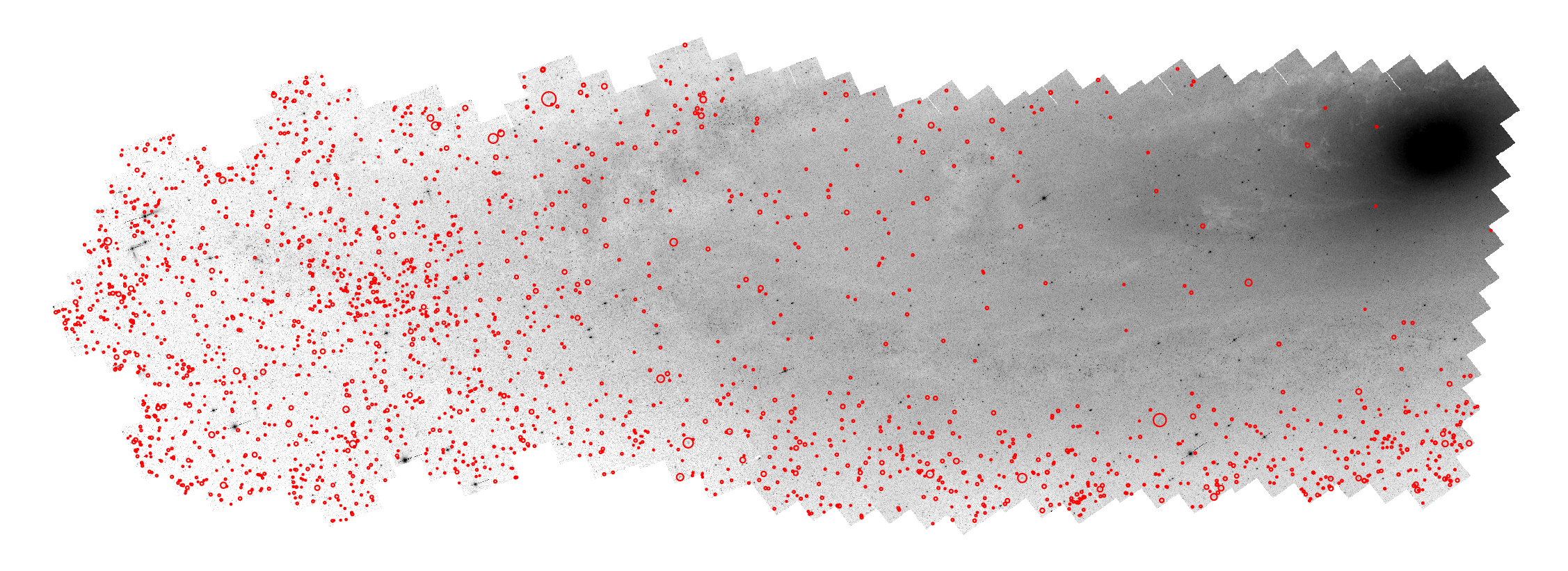
Recenty the Andromeda Project was the feature of one of the posts on the ‘I fucking Love Science’ Facebook page. The page, which was started by Elise Andrew in March 2012, currently has 8 million likes, so some form of noticeable impact was to be expected! Here are some of the interesting numbers the post is responsible for:

I’ll start with the Facebook post itself. As of writing (16 hours after original posting), it has been shard 1,842 times, liked by 6,494 people and has 218 comments. These numbers are actually relatively low for an IFLS post, some of which can reach over 70,000 shares!

AP-IFLS-2
The ‘IFLS spike’ in the Andromeda Project classifications and active users

Let’s now have a look at what it did for the Andromeda Project. The project, which was launched two days previous and was already pretty popular, had settled down to around 100 active users per hour. This number shot up to almost 600 immediately following the post. In the space of 5 minutes the number of visitors on the site went from 13 to 1,300! After a few hours it settled down again, but now the steady rate looks to be about 25% higher than before. The number of classifications per hour follows the same pattern. The amazing figure here is that almost 100,000 classifications were made in the 4 hours following the post. This number corresponds to around 1/6th of the total needed to complete the project!

PH-IFLS-spike
The number of visitors per day to the Planet Hunters site over the last two weeks. Visits increased by a factor of ten on the day of the IFLS post, and three days later the numbers are still greater than before.

Two days after her post about the Andromeda Project, Elise put up a post about the discovery of a seventh planet around the dwarf star KIC 11442793, which was found by citizen scientist on the Planet Hunters project. This post proved even more popular than the previous one with more than 3,000 shares, and led to a similar spike of the same magnitude in the number of visitors to the site (as can be seen in the plot above).

Finally, what did it do for the Zooniverse as a whole? Well there have been over 4,000 new Zooniverse accounts registered within the last four days and the Facebook page, which was linked in the AP article, got a healthy boost of around 1,000 new likes. So all things considered, it seems that an IFLS post can be very useful for promoting your project indeed!

Thanks Elise, the Andromeda Project, Planet Hunters and  Zooniverse teams love you!

Chicago-based Zoolovers – The Zooniverse needs you!

Are you a Zooniverse volunteer over the age of 21 and living in the Chicago area? If so, the Zooniverse needs your help. Next month’s Adler After Dark (the over 21’s night at the Adler Planetarium each month) is going to be about DIY science. There will be a panel session about people who have become involved in science through non-traditional academic routes. We want there to be a Zooniverse volunteer on the panel talking about how they got involved in the Zooniverse.

Venue : Adler Planetarium

Date : Thursday, November 21

Time : 6PM

This is a good experience and a great chance to meet some of the people behind the Zooniverse, along with other like-minded people who love citizen science! If you fit the bill and would like to help us out, please email stuart@zooniverse.org.

When Can I Become a Scientist?

Today’s post comes from Virginia Jones, a Zooniverse Teacher Ambassador Workshop participant.  Virginia has taught science at Bonneville High School for 28 years.  She lives in Idaho Falls, ID with her hiking partner, Cleo, a Labrador puppy. She enjoys sharing the excitement of scientific discovery with people of all ages.

Like most 6 year olds, my granddaughter is eager to learn about everything. She is especially drawn to nature and animals. In fact, she wants to be a scientist or a veterinarian when she grows up. One day she said to me, “Grandma, can you teach me science?” I told her that I could do better than that. “You can be a real scientist today, “ I said.

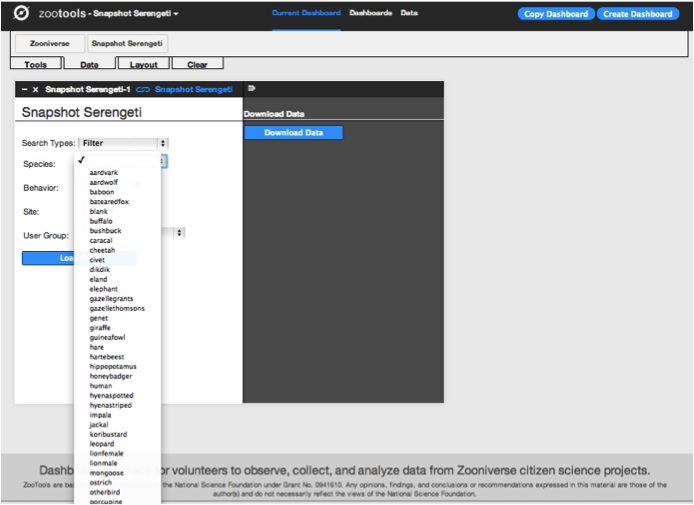
We logged into Zooniverse and chose Snapshot Serengeti. Some of the pictures were beautiful. Many of the pictures featured the rear end of animals, a source of endless laughter for the 6 year old citizen scientist. While I had to maneuver around the site in the beginning, she became familiar with the steps very quickly. She is a very good reader, so in no time at all she was helping with the classification and learning about the animals of the Serengeti.

Her young eyes were able to spot animals that I might have missed. We went through a series of pictures that looked like grass dancing in the wind. On the last picture, I was ready to push the nothing here button when she yelled;”there’s a bird!” I would have missed the guinea fowl in the deep grass but Anne Marie saw it immediately.

We spent a pleasant half hour identifying animals, discussing what it must be like to live in the Serengeti and arguing about which animal’s rear end we were looking at. When we finished, Anne Marie couldn’t believe how easy and fun it was to help the scientists. Maybe next time we will look at galaxy pictures and be astronomers for an afternoon with Galaxy Zoo. Perhaps the ocean will call us and we can explore the ocean floor with Seafloor Explorer. She may even be ready to look for dips in light curves to discover extra solar planets in Planet Hunters.

I am lucky that Anne Marie still needs to have some adult guidance to work in the Zooniverse. I can still spend some quality time with her and she still looks to me as an authority on all things science. It won’t be long before she is leaving her grandmother behind and making discoveries of her own.

You are never too young (with a little help) or too old to enjoy making discoveries in the Zooniverse. Everyone can have the satisfaction of advancing science as a citizen scientist.

So Long, and Thanks for All the Fish!

It seems like only a couple of weeks ago I announced that I’d be heading off soon to pastures new and yet somehow that time has already come – today is my last day working with the Zooniverse.

It’s pretty much impossible for me to describe how much fun I’ve had over the past five years. Playing a part in shaping the Zooniverse from the early days of Galaxy Zoo (2) when we were a tiny team in Oxford through to where we are today has been a blast. In a coincidence of timing my son Caio has been around for almost exactly the same amount of time as I’ve been involved with the Zooniverse, and to be honest I’m not really sure I remember life before either. I checked the commit logs of the Galaxy Zoo 2 codebase and the first code was saved on 25th October 2008 – just over a month before Caio came into the world. Significantly this was more than two months before Chris began paying me but that’s just a testament to what a remarkably persuasive individual he is 🙂

These last few years have been filled with so many significant moments it’s hard to pick out highlights but if I had to then the launch of Galaxy Zoo 2 and furiously coding as people around me were sipping champagne is pretty memorable. Taking what felt like a massive leap into the unknown with Planet Hunters and then going to find exoplanets is definitely up there too. And announcing Old Weather (still my favourite Zooniverse project) to the world and seeing how people responded to the Zooniverse doing something ‘other’ than astro was very special.

I’m not going to try and thank every individual I’ve been working with because I’m bound to forget important people. Suffices to say, I love you all dearly and I’m going to miss working with you day to day immensely.

So farewell and stay in touch!

ArfX

Bringing the Unknown to Students

Next up in our series of Zooniverse Teacher Ambassador Workshop participants,  we have a guest post from Dave Pinkus.  Dave is a Science Teacher at the Biotechnology High School in Freehold, New Jersey.  Dave has been teaching High School science courses for 13 years and is the 2013-2014 Monmouth County Teacher of the Year.

I often forget what made me fall in love with science, decide to major in geology and later teach children physical science.  I don’t particularly enjoy Newton’s Laws, or Stoichiometry, or measuring Strikes and Dips.  What I fell in love with as a teenager was that there are tangible things that are unknown and I could be the one to describe them.  Through most of my career as a physics teacher, I have given very few opportunities to my students to be intimate with the truly unknown.

Last year, I created a few opportunities, including a research project and engineering design challenges.  It is very difficult to fit these activities into our busy curriculum and it is sometimes just as difficult to have the materials that are necessary.  These projects also lacked the authenticity factor of doing real research to answer something that the broader science community currently doesn’t know.

The Zooniverse sites are fabulous platforms that can deliver authentic data to our students and do not require lab equipment or much time out of our normal lessons.  The data is presented in a format that should be digestible for most grade levels.  In addition to utilizing the sites for class projects this year, I am also planning on introducing one or two of the sites at Back to School Night for my student’s parents.  I will be sure to introduce the same sites to my students on the days leading up to Back to School Night.  This can really afford an opportunity for my students and their parents to have a meaningful STEM experience, together.

New Project: Plankton Portal

It’s always great to launch a new project! Plankton Portal allows you to explore the open ocean from the comfort of your own home. You can dive hundreds of feet deep, and observe the unperturbed ocean and the myriad animals that inhabit the earth’s last frontier.

Plankton Portal Screenshot

The goal of the site is to classify underwater images in order to study plankton. We’ve teamed up with researchers at the University of Miami and Oregon State University who want to understand the distribution and behaviour of plankton in the open ocean.

The site shows you one of millions of plankton images taken by the In Situ Ichthyoplankton Imaging System (ISIIS), a unique underwater robot engineered at the University of Miami. ISIIS operates as an ocean scanner that casts the shadow of tiny and transparent oceanic creatures onto a very high resolution digital sensor at very high frequency. So far, ISIIS has been used in several oceans around the world to detect the presence of larval fish, small crustaceans and jellyfish in ways never before possible. This new technology can help answer important questions ranging from how do plankton disperse, interact and survive in the marine environment, to predicting the physical and biological factors could influence the plankton community.

The dataset used for Plankton Portal comes a period of just three days in Fall 2010. In three days, they collected so much data that would take more than three years to analyze it themselves. That’s why they need your help! A computer will probably be able to tell the difference between major classes of organisms, such as a shrimp versus a jellyfish, but to distinguish different species within an order or family, that is still best done by the human eye.

If you want to help, you can visit http://www.planktonportal.org. A field guide is provided, and there is a simple tutorial. The science team will be on Plankton Portal Talk to answer any questions, and the project is also on Twitter, Facebook and Google+.

The world's largest and most popular platform for people-powered research. This research is made possible by volunteers—millions of people around the world who come together to assist professional researchers.