All posts by The Zooniverse

Online citizen science projects. The Zooniverse is doing real science online,.

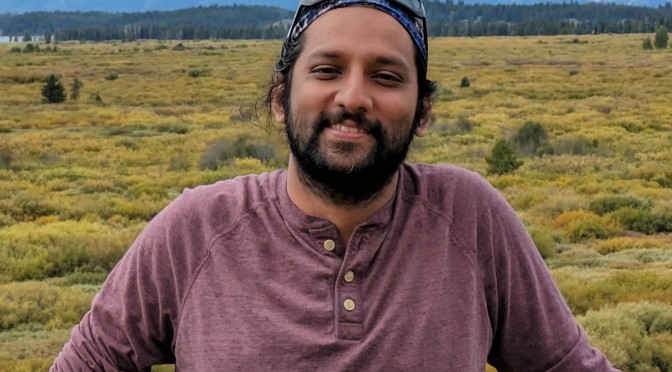
Who’s who in the Zoo – Ramana Sankar

Name: Ramana Sankar

Location: University of California, Berkeley

Tell us about your role within the team:

I’ve been with the Zooniverse team for two years now as a postdoc working with Lucy Fortson at University of Minnesota. My main role was to help with building human-machine interfaces for project teams on Zooniverse (particularly in the avenue of speeding up project completion rates and improving avenues serendipitous discovery), and also with providing data science assistance to projects.

What did you do in your life before the Zooniverse?

I did my Ph.D. at Florida Institute of Technology. My main focus was on studying the formation of thunderstorms on Jupiter. I was (and still am) interested in understanding more about the dynamics of the jovian atmosphere and how the fluid dynamics and chemical processes shape the cloud structures we see when we look at Jupiter. As part of this work, I also tried out a few deep learning approaches to reduce data from the JunoCam instrument and gained some machine learning and data science experience, which drew me to apply for the postdoctoral scholar position with the Zooniverse team at UMN.

What does your typical working day involve?

Most of my day is spent with code. I break my tasks into astrophysical research (focusing on Jupiter’s atmosphere), machine/deep learning (developing new models for the project teams that I am assisting) and working on aggregation utilities for project teams.

How would you describe the Zooniverse in one sentence?

A platform that reduces the barrier of entry for scientific pursuits

Tell us about the first Zooniverse project you were involved with

As part of my introduction to the team, a fellow postdoc at UMN and I was asked to create a test Zooniverse project to get a hang of using the Zooniverse project builder. We built the “Chi Square Kitties” project where we asked people to rate the fits of cats inside various containers. We scraped the web for cat images (there seemed to be a limitless supply) and asked a simple question of whether the cat inside the container was an underfit, overfit or a purr-fect fit!

Of all the discoveries made possible by the Zooniverse, which for you has been the most notable? (and why?)

I love the fact that the Gravity Spy team found a glitch class called “Air compressor” which was noise from a nearby A/C unit. This is the kind of discovery that is incredibly difficult (if not impossible) without having human eyes on the data. This is the kind of discovery which is fueled by Zooniverse!

What’s been your most memorable Zooniverse experience?

On the Jovian Vortex Hunter project, the volunteers came up with very creative names for some of the types of clouds that was observed. Some of my favourite ones are “red-compact-nursery” for subjects which contain very small red cyclones which seem to be forming in between the folded filamentary regions. These creative names (in my view) are actually much more useful than very descriptive scientific jargon, since it helps to create very interpretable labels based on what the feature looks like, rather than the underlying physics.

What are your top three citizen science projects? 

The best things about citizen science is that they cater to a very wide audience. Some projects can be highly accessible and can be done by basically anyone, while others require very technical expertise. There are a ton of amazing projects on Zooniverse which span this experience range, but I will pick some non-Zooniverse projects to highlight some of the reasons why I really love the citsci methodology:

1. JunoCam: the Juno spacecraft almost did not have a camera since it did not fit within the payload mass and budget constraints. Fortunately, a last minute decision was made to put a simple 4-channel camera (previously flight tested on the MSL) and not have a dedicated science team for the instrument. Instead, JunoCam relies on thousands of artists and hobbyists for downloading and processing the raw footage. JunoCam is a story to be told for the way it engages people, particularly artists, in scientific communication, and also how, now, there are several papers written on using the data processed by citizen scientists for new science!

2. PVOL (Planetary Virtual Observatory and Laboratory): This is a website for amateur observers to post their observation of giant planets to a centralized server which can be used by research to provide contextual information to any related studies. PVOL has helped fueled a lot of research into giant planet atmospheres, especially in the context of long cadence studies (longevity of features, periodicity of instabilities) and also in very short term (e.g., meteor impacts, etc.) This is a very useful way to use a very skilled hobby (astrophotography) for an extremely useful cause.

3. RadioJOVE: A project for interested parties to build and operate a simple multi-wavelength radio telescope. This was started as a way to observe Jupiter (and now other sources) in the radio wavelengths. What is amazing about this project is that it teaches a very niche skill (putting together and using a radio telescope) to non-scientists. Through the method of citsci, this project has made great strides in science communication and ways to inspire kids to pursue STEM degrees.

What advice would you give to a researcher considering creating a Zooniverse project?

Volunteers are not simply labelers. They do not replace a complicated algorithm, but instead provide value far beyond a simple classification. The greatest strength of Zooniverse is the fact that volunteers want to be engaged deeply in science, and that needs to be baked into the ethos of any Zooniverse project

How can someone who’s never contributed to a citizen science project get started?

Find your passion in science and search for local resources. For example, if you’re interested in ecology, there are probably conservation groups that could use your help with taking photos of local fauna and/or flaura. If you’re an astronomy enthusiasts, you can talk to the local planetarium, who can provide you with resources and ways to contribute. Finally, you can see if there are public seminars in their local university for departments related to their interest. These can help answer many of the questions you might have about the field.

Where do you hope citizen science and the Zooniverse will be in 10 years time?

I hope that the bridge between science and citizen science narrows further than it currently is. I hope that more research teams can use citizen science not only as a method to analyze and process data, but also as a way to drive science engagement and reduce the barrier of entry to research. I also hope that future spacecraft missions follow in the path laid by JunoCam and have a strong citsci component

Is there anything in the Zooniverse pipeline that you’re particularly excited about?

I’m really interested in how machine learning will play a role in Zooniverse. As the world heads deeper into the use of AI and automation, I am interested in seeing how Zooniverse will adopt these tools while maintaining efficiency, and more importantly, accuracy. Several projects on Zooniverse already use a variety of AI-based tools, so I am looking forward to seeing many more projects make use of these resources.

When not at work, where are we most likely to find you?

Either at home playing video games (catching up on my huge backlog which built up over grad school) or out hiking. I know these are polar opposites, but if I can get over the barrier of pulling away from my PC, I’m always ready to do a 5 mile hike!

Do you have any party tricks or hidden talents?

I learnt to sing Carnatic music, which is a classical South Indian music tradition, and I like to think I can hold a tune (although others can be the judge of that)!

Adventures of a Junior Designer

Guest post written by Keanu Glover, Junior Designer with the Zooniverse team at the Adler Planetarium in Chicago from June-August 2023. Prior to joining the Zooniverse, Keanu was an i.c.stars intern, an intensive 6-month program supporting pathways to economic mobility through IT and software engineering workforce skills training, job experience, and leadership development. After his role within the Zooniverse, Keanu will join the United Airlines Apprenticeship Program.

Pivoting into a new field of work brings forth so many different thoughts such as “can I do the task” “how will I fit in” “do I belong”? For me, transitioning from basketball and athletics to Tech and Design had me nervous at first but once I was submerged into the tech space, I realized the skills I developed playing sports transitioned seamlessly. When I got the opportunity to work for the Zooniverse at Adler Planetarium as a Junior Designer I realized I was given the opportunity to work for great people and contribute to a great situation. 

Before this opportunity I had never been to the Adler or even thought about what it was. Most of the time these types of opportunities are intimidating. Lucky for me it didn’t have that effect on me. I had prepared myself for whatever opportunities were for me! 

I was really excited, having the opportunity to learn something new, be a part of something bigger than myself, contributing to a real project that I can add to my portfolio, and also having the opportunity to build new relationships with experienced professionals.

During my interview with Laura Trouille (Zooniverse Co-PI and Adler VP of Science Engagement) as part of asking about what interested me in applying for the position, she asked, “Do you have past connections with the Adler or astronomy?” This reminded me of a story about moving countless times when I was young, driving across state lines. When the sun would set and the stars would show themselves, my mother used to listen to Janet Jackson and I used to look out the backseat window at the stars. While I looked out I would wonder if our new destination would be our last.

My first week working with the Zooniverse was different, for sure! I had just got out of the i.c.stars program where I was working 12 hour days for 4 months, building a data collection application with a small group of 5 people. All hands on deck as they say.

When I first met Sean Miller, the Zooniverse designer and my mentor for the summer, I learned that work doesn’t have to be as intense. For example my first day we sat down and he told me we would have a meeting in the morning and another in the afternoon. I asked him “what time, like 8am?” He looked at me and said “whoa no! We are going to meet at 10 am”. I was caught by surprise, but was so happy he said that. I quickly understood every company has different cultures. (The Zooniverse strives to schedule meetings between 10-4pm to accommodate different work schedules, commute times, work-life balance.)

For me I felt an energy working with the Zooniverse team. Everyone knows what they are supposed to do, and how every element of their roles are interconnected. For me coming in as a summer intern I didn’t want to disappoint my job placement program: i.c.stars, my family, or Sean, who hand picked me to join his team. 

Sean gave me all the tools and time I needed to get the most out of my time here at Zooniverse. He never made me feel less than for not knowing something; he was always patient, understanding, and an outstanding communicator. I think it’s safe to say that he enjoyed my company for the three month period. Sean is an amazing teacher with so many resources that helped prepare me for the project and the type of work I wanted to get into after the Zooniverse. The rest of the Zooniverse team were beyond accepting of me! They were always willing to explain and help me with things about the Zooniverse site and the Adler as a whole and when it wasn’t about work they always invited me to the beach for a walk or to have lunch.

I had never participated in Zooniverse before I joined the team. When I was tasked to research the platform my first thought was “this is really cool”. I always wondered if there was a platform that allowed people to feel like a true researcher. The platform reminded me of when I would have days off from school and I would watch the Travel Channel, History channel, and Animal Planet. When I was younger I would think it was the coolest thing to be a part of those experiences.

I picked up the concept of the site pretty quickly. I made over 80 different classifications, commented on other projects, and tried to build my own project using zooniverse.org/lab just so I could put myself in the volunteers’ shoes. The site was easy to use and was not complicated at all to navigate. The more I used it the more I started to think about features I could add and how I could help the Zooniverse platform evolve and grow. For example, Sean and I realized that on the ‘Recents’ page (where you can see your recent classifications for any given Zooniverse project) the participants’ recent classifications maxed out at 20. Now if I was a participant that has classified a lot, I might want to see more than 20 recent classifications. So one of the new features we decided to add was paginations and being able to to view and paginate through 100 recent projects. 

My main objective was to experience a professional design sprint for the Zooniverse “Recents Page”. Breaking down the project into three main phases. Discovery phase is where we deep dive into UI/UX research and gain better knowledge on why design is so important. The Definition phase is when I was able to set a foundation for my redesign, meaning  keeping things in scope and remembering to build what the page needs and how it fits into the bigger picture of page designs for Zooniverse, this was a challenge. I found during the discovery and definition phases researching other websites similar to Zooniverse was a big help and allowed me to build on ideas based on the functionality of these other websites and platforms. The Development phase is where we started to build the project. During this phase of the project I learned how critical it is to always have the volunteer in mind when designing new functionalities, but also making sure to keep features that already exist on the Zooniverse platform. The Retrospective phase allowed me to look at my progress and knowledge I gained this summer.  I hope my redesign of the ‘Recents’ page is well received, As I redesigned it with the volunteer in mind. I wanted to keep things similar but give it an upgrade on new features and provide a little more versatility in finding classified projects. Giving the volunteer what they need before they ask for it is something I wanted to do. This redesign will be great for super-users as well as new participants. Stay tuned for more info and announcements about the new Recents Page.

I have come a long way. This time working for Zooniverse is an experience that I will never forget. This experience was about me developing new skills and embracing new challenges. It was also about creating an opportunity for future interns to follow in my footsteps. Leaving a great impression was very important to me. Being professional, showing a great work ethic, and also being a leader. For anyone who has the opportunity to work for Zooniverse I think it is a great place to be and it provides the opportunity to learn and be a part of a community who will support your learning process. I loved my time here at Zooniverse and I wish I could stay! 

Museums, whales, and citizen science

Guest post from Eilidh O’Brien, Staff Scientist, Whales of Iceland Museum

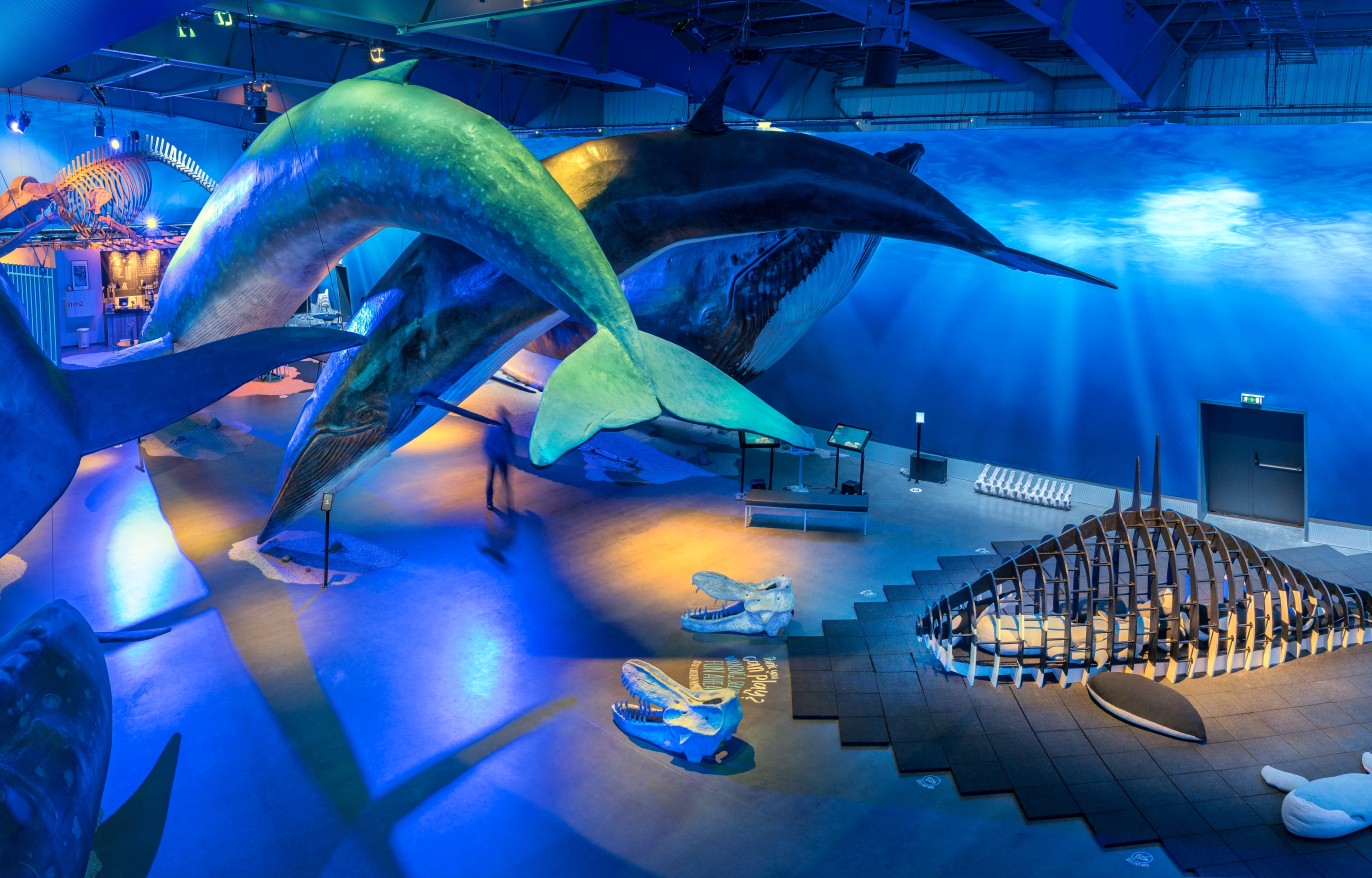
Appropriately located in Reykjavík’s harbour district, Whales of Iceland is the largest museum dedicated to cetaceans in Europe. Much of the space inside is dedicated to life-sized models of the 23 species of whales, dolphins and porpoises that have been sighted in the waters around Iceland throughout history, some very common while others are very rare. When the museum was founded these models were the main focus of the exhibition: a chance for visitors to experience the true size of these gigantic marine animals, and to learn a little about each of the species on display. However, this focus is now evolving and Zooniverse is set to play an important part.

Iceland is a hotspot for cetaceans – and so, also for cetacean researchers! Some remarkable discoveries have been made here in the last decade, from the first recordings of humpback whales singing in their feeding grounds over winter, to the unusual antagonistic interactions between killer whales and long-finned pilot whales. We want to highlight this at Whales of Iceland so that our museum is not just a place to learn about cetaceans themselves, but also how scientists study these fascinating and complex animals, what this research has uncovered, and all the things that we still do not know!

In addition to learning about the research happening here in Iceland, we want to give visitors the opportunity to take part in some real scientific projects. So, thanks to Zooniverse, our newest exhibit will include a citizen science station where anyone can have a shot at being a scientist! We will feature a range of Zooniverse projects for visitors to choose from, giving them a variety of different marine mammal species and different aspects of wildlife ecology to learn about.

Our aim is to make Whales of Iceland a more interactive and thought-provoking experience. We hope that our museum will continue to offer visitors the chance to marvel at the size and beauty of these wonderful creatures, but also to engage with the natural world in ways they may not have before, and to feel that they have not just learned, but discovered.

This collaboration is still in its early stages. With the green light from Zooniverse Co-PI Dr. Laura Trouille, we have already launched a scaled-down version of what we hope the final exhibit will be, and it has been a really promising success! Museums provide a perfect platform for citizen science; we are a small museum relatively speaking, but our footfall in peak season can be more than 400 people in a day. That’s a lot of potential citizen scientists! In ecology, we would call this a mutualistic symbiosis – or, in other words, everyone wins! Our museum guests can provide valuable contributions to scientific projects all over the world, while at the same time gaining first-hand insight into the life of a whale researcher.

We are so excited to develop and expand our collaboration with Zooniverse, as well as other citizen science initiatives. Our finished research exhibit will be unveiled very soon – watch this space!

Fixed Cross-Site Scripting vulnerability on hosted media domains

We recently fixed a security vulnerability whereby an attacker could upload executable content to our media storage domains.

On 13th November 2022, a security researcher notified us of a cross-site scripting (XSS) vulnerability affecting our media storage domains. This XSS vulnerability made it possible for attackers to upload content to our storage domains that could then be shared as links for use in ‘phishing’ or other attacks.

We fixed the vulnerability on the morning of the 15th November 2022 by blocking script access to the API from the impacted domains ensuring any malicious code failed to gain access to authenticated private data. This remedial action was followed by a another fix on the 16th November that deployed block rules on our Content Distribution Network (CDN) provider to prevent malicious resource links being served to users. In addition, on the 8th of December we deployed a change to the API to only allow non-malicious files to be uploaded to these storage domains.

The mitigation and fix steps described above allowed us time to research the problem and audit our storage systems for any live exploits. After this audit we determined that this vulnerability had not been exploited for any malicious purpose; no data was leaked and no users were exposed to injected code.

We’d like to thank Michal Biesiada (https://github.com/mbiesiad) for bringing this issue to our attention and for following responsible disclosure by reporting it to us in private, as requested on our security page.

Bursts from Space

This is a guest post by summer intern Anastasia Unitt.

The study of celestial objects creates a huge amount of data. So much data, that astronomers struggle to make use of it all. The solution? Citizen scientists, who lend their brainpower to analyse and catalogue vast swathes of information. Alex Andersson, a DPhil student at the University of Oxford, has been applying this approach to his field: radio astronomy, through the Zooniverse. I met with him via Zoom to learn about his project detecting rare, potentially explosive events happening far out in space.

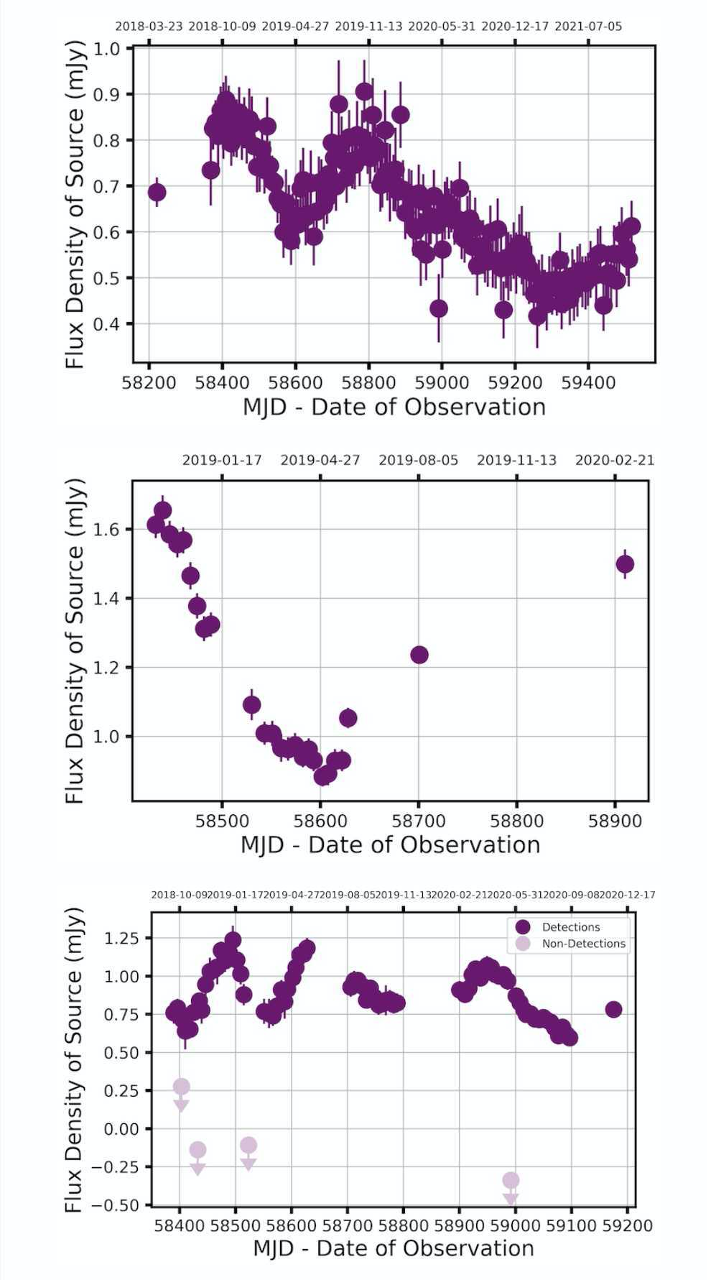
Alex’s research uses data collected by a radio telescope located thousands of miles away in South Africa, named MeerKAT. The enormous dishes of the telescope detect radio waves, captured from patches of sky about twice the size of the full Moon. This data is then converted into images, which show the source of the waves, and into light curves, a kind of scatter plot which depicts how the brightness of these objects has changed over time. This information was initially collected for a different project, so Alex is exploiting the remaining information in the background- or, as he calls it: “squeezing science out of the rest of the picture.” The goal: to identify transient sources in the images, things that are changing, disappearing and appearing.

Historically, relatively few of these transients have been identified, but the many extra pairs of eyes contributed by citizen scientists has changed the game. The volume of data analysed can be much larger, the process far faster. Alex is clearly both proud of and extremely grateful to his flock of amateur astronomers. “My scientists are able to find things that using traditional methods we just wouldn’t have been able to find, [things] we would have missed.” The project is ongoing, but his favourite finding so far took the form of a “blip” his citizen scientists noticed in just two of the images (out of thousands). Alex explains: “We followed it up and it turns out it’s this star that’s 10 times further away than our nearest stellar neighbor, and it’s flaring. No one’s ever seen it with a radio telescope before.” His excitement is obvious, and justified. This is just one of many findings that may be previously unidentified stars, or even other kinds of celestial objects such as black holes. There’s still so much to find out, the possibilities are almost endless.

A range of light curve shapes spotted by Zooniverse citizen scientists performing classifications for Bursts from Space: MeerKAT

Unfortunately, research comes with its fair share of frustrating moments along with the successes. For Alex, it’s the process of preparing the data for analysis which has proved the most irksome. “Sometimes there’s bits in the process that take a long time, particularly messing with code. There can be so much effort that went into this one little bit, that even if you did put it in a paper is only one sentence.” These behind-the-scenes struggles are essential to make the data presentable to the citizen scientists in the first place, as well as to deal with the thousands of responses which come out the other side. He assures me it’s all worth it in the end.

As to where this research is headed next, Alex says the prospects are very exciting. Now they have a large bank of images that have been analysed by the citizen scientists, he can apply this information to train machine learning algorithms to perform similar detection of interesting transient sources. This next step will allow him to see “how we can harness these new techniques to apply them to radio astronomy – which again, is a completely novel thing.”

Alex is clearly looking forward to these further leaps into the unknown. “The PhD has been a real journey into lots of things that I don’t know, which is exciting. That’s really fun in and of itself.” However, when I ask him what his favourite part of this research has been so far, it isn’t the science. It’s the citizen scientists. He interacts with them directly through chat boards on the Zooniverse site, discussing findings and answering questions. Alex describes their enthusiasm as infectious – “We’re all excited about this unknown frontier together, and that has been really, really lovely.” He’s already busy preparing more data for the volunteers to examine, and who knows what they might find; they still have plenty of sky to explore.

Adler Zooniverse Summer Intern Experience: Tasnova & Colored Conventions

By Tasnova, Guest Writer and Adler Zooniverse Summer ’22 Teen Intern

This summer, I worked as an intern for the Adler Planetarium in Chicago, alongside Lola Fash and Dylan. As a group, we carried out Zooniverse projects and interviews with the researchers leading them. In this blog post, I will share about my experience with the main project that I took part in: Transcribe Colored Conventions

In July 2022 I interviewed Dr. Jim Casey and Justin Smith, two of the research leads for the Colored Conventions project with Zooniverse. Dr. Casey is an assistant research professor of African American Studies at Penn State University, managing director of the Center for Black Digital Research, and co-founder for the Colored Conventions project. Justin Smith is a Ph.D. candidate in English and African American studies at Penn State and a member of the Douglass Day team.

Before I dig into what the Colored Conventions were, I’d like to share my own experience while working on these projects. I chose to focus on Transcribe Colored Convention because I am a huge history lover. I want to learn everything; learning feeds my curiosity. I was really excited to learn about the Colored Conventions since they are often neglected in textbooks; my school never taught me about the Colored Conventions. It was my first time learning anything about the Colored Conventions. I was so excited to get to interview the amazing people leading the Zooniverse project to transcribe documents related to the Colored Conventions.

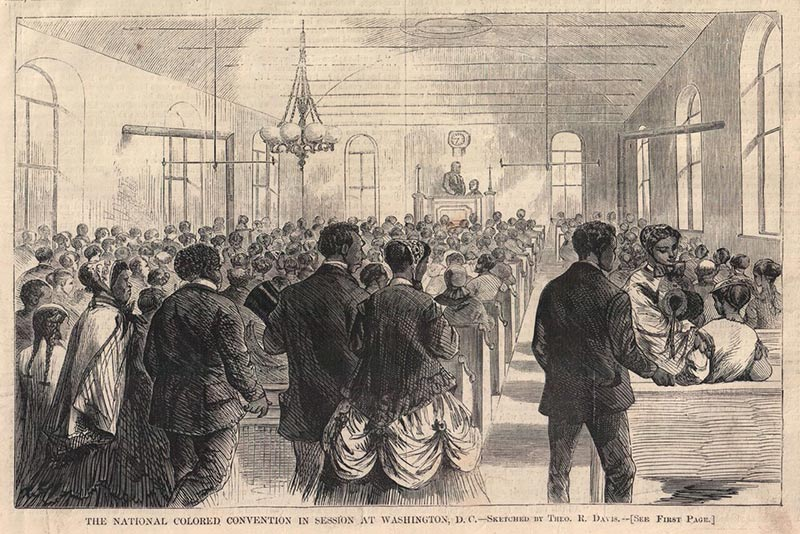
The Colored Conventions were events that took place during the nineteenth century and spread across 34 states.  In these Conventions, the participants talked about how they could get access to voting rights, education, labor, and business. 

Artist rendition of the Colored Convention meetings. Credit: https://www.nytimes.com/2016/08/05/arts/design/colored-conventions-a-rallying-point-for-black-americans-before-the-civil-war.html

However, despite how important they were, no one really talks about the Colored Conventions today. It is incredibly sad for me to see this important part of our history being neglected.

Another interesting aspect about the Colored Conventions that I learned about through interviewing the team is that the documents related to the Conventions were very male dominated. What this means is that while men’s efforts were well documented in the Conventions’ archive, women’s efforts were not. For example, of the names initially identified and highlighted in the documents, 98% belong to men.

An early researcher who recognized women’s contributions to the Colored Conventions is Dr. Psyche William Foresham, a University of Maryland professor who wrote the essay “What Did They Eat? Where Did They Stay?” In the essay she talked about how women organized restaurants and boarding houses for the people who traveled from other states to join the Convention meeting. They also financially supported them. The essay was eye opening for other researchers, and prompted them to read the Conventions’ documents more carefully to find references to women that might have been overlooked. As a result of these efforts, they found more references to women in the Convention documents.

Zooniverse volunteers also helped transcribe the Colored Convention documents, further unlocking the data for the researchers. The researchers were thrilled to see so many people actually participating in transcribing the documents and caring deeply about the project. The volunteers transcription efforts also uncovered additional evidence of references to women’s efforts in the Colored Convention documents. In my own journey learning about this project, I was happily surprised to see that so many people participated in transcribing the documents and cared about this piece of history that was neglected for so long.

Here are some clips from the full recording of my interview with Dr. Jim Casey and Justin Smith.


A few final thoughts: When I was interviewing the researchers, I loved seeing how passionate they were. It feels rare to talk with people who are passionate about their work. If I see someone who is really passionate about their work and the effort they put in, it’s incredibly motivating. I hope to feel the same in my career.

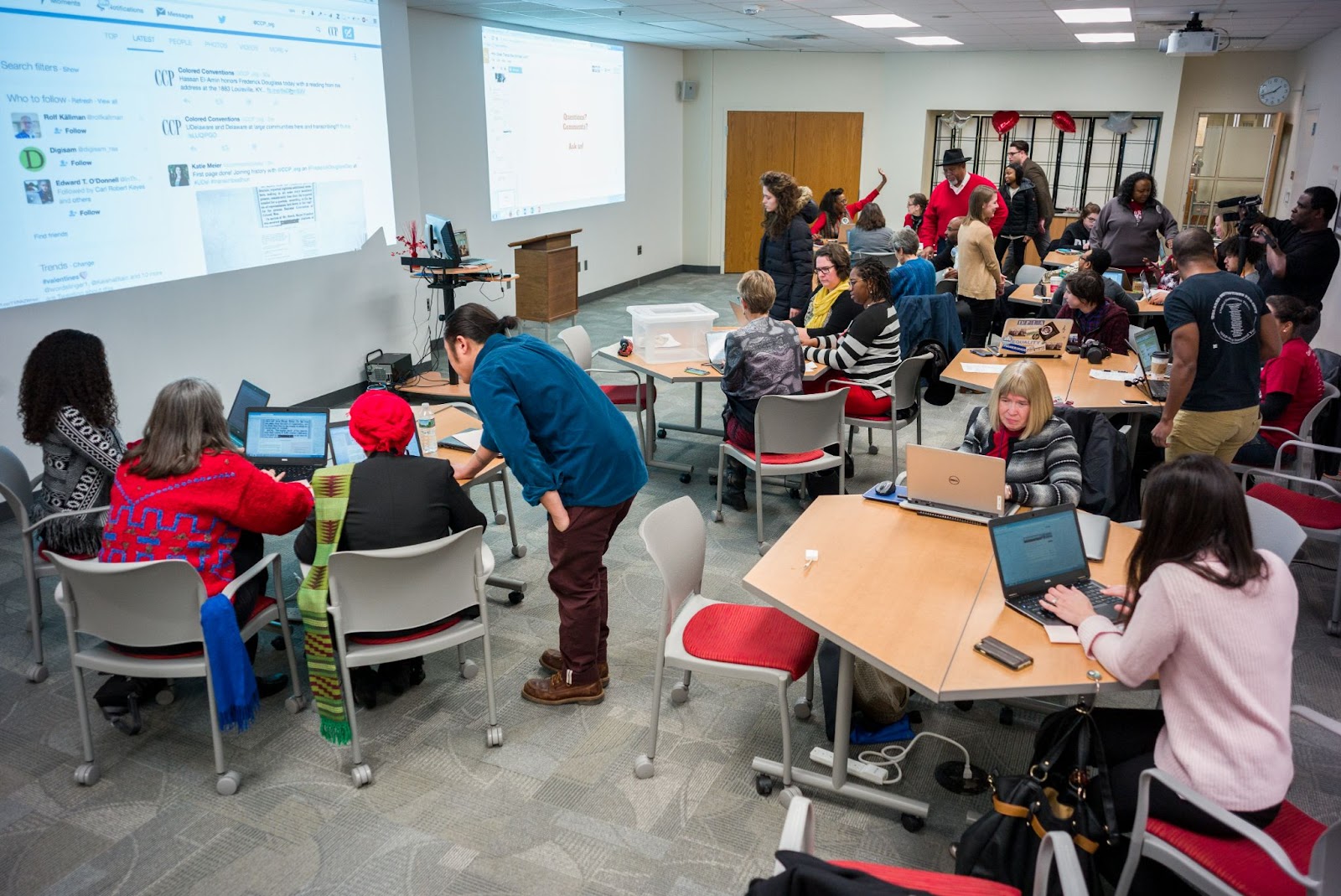
Colored Convention Project team helping the volunteers during the Transcribe-a-Thon. Credit: Dr. Jim Casey

During my interview, I was nervous in the beginning because this was my first time interviewing a researcher, or anyone. My hands and feet were cold. I tried to calm myself down so I wouldn’t stutter. I think I did a good job interviewing them. My mentor, Sean (who is the Zooniverse designer at Adler), helped me a lot in preparing for the interview. He helped me see that the pressure is not on me as an interviewer; instead, the pressure is on the interviewees because they need to answer the questions. I think that really helped me to calm down because I kept saying to myself that “the pressure is on them, not me.” And my interviewees were such nice people too! I was proud of myself for how I carried out the interview.

Last, but not least, thank you to my teammates Dylan and Lola Fash for helping me out with my summary, video editing, and my blog. 

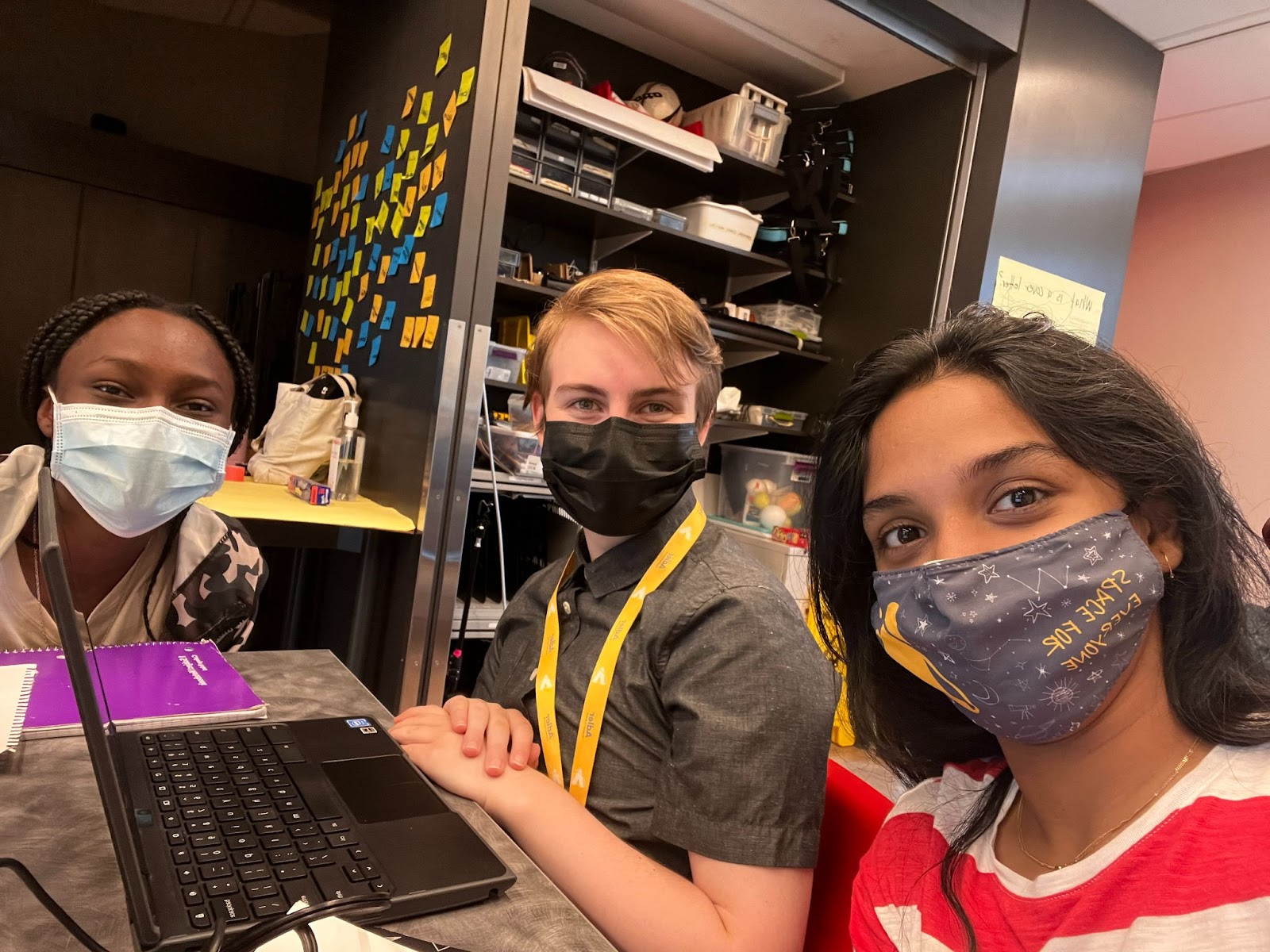
These are my Zooniverse intern colleagues. They helped me with every single challenge in my internship. Photo credit: Tasnova] 

Adler Zooniverse Summer Intern Experience: Dylan & Active Asteroids

By Dylan, Guest Writer and Adler Zooniverse Summer ’22 Teen Intern

Every once in a while, you get an opportunity that’s so cool, you sort of can’t believe that it’s happening. When I was told that I would have the chance to interview Dr. Colin Orion Chandler, a (then) grad student at Northern Arizona University, who is responsible for creating and leading the Active Asteroids project on Zooniverse, I was beyond thrilled. Every year, the Adler Planetarium in Chicago hires several interns to fill a variety of placements around the museum. As Zooniverse interns, Lola Fash, Tasnova, and I got to interview several researchers on three different projects: Transcribe Colored Conventions, NASA GLOBE Cloud Gaze, and my focus, Active Asteroids

What are active asteroids, and why should we care?

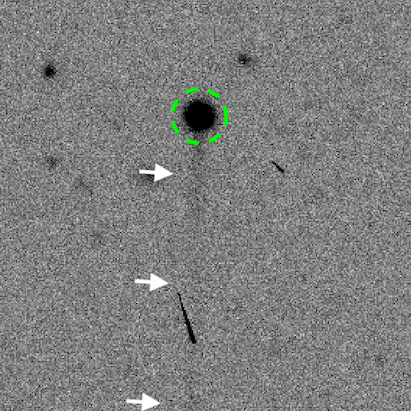
An active asteroid pictured on the Active Asteroids project About page, on the Zooniverse website. The green circle shows where a coma would appear, and the white arrows point to the tail of the asteroid. (Photo Credit: Zooniverse)

Active asteroids are bodies that follow a typical orbit for an asteroid, but, when observed, they are seen to have comae, which are clouds around the object, and tails, which form when water, dry ice, or dust streak out behind the object. These bizarre objects are extremely rare, so we don’t know much about them, but their tails and comae lead researchers to believe that they might have water on them. According to Dr. Chandler, “Water gives us fuel power. Things that we need to drink, to live, gives us things to breathe. It lets us grow food. I mean, it does a huge number of things. But you have to actually know where you might find it and how hard it is to get out of there.”

The hunt for active asteroids

Studying active asteroids could yield remarkable amounts of scientific information, but they are so faint that scientists have trouble finding them. However, the Dark Energy Camera in Chile is sensitive enough to photograph these asteroids, and it sometimes catches an asteroid in part of an image when it was photographing a different object altogether. 

To get data from these archived images, Dr. Chandler and his team break the images into chips, cut out the asteroid, and then focus and enhance the image so that, if there is a tail, we will be able to see it. Will Burris, one of Dr. Chandler’s students, has helped streamline this process. All of these steps have been automated so that computers can process the nearly 30 million images that could contain active objects, and narrow it down to about 10 million where the objects are most likely to appear. 

The image above demonstrates the process by which the Active Asteroids team finds images of potential active asteroids before they pass the images along to volunteers who can better identify them. (Photo Credit: Zooniverse)

The next step in the process is to identify whether or not there is a tail or coma around the object in the image, and that’s where volunteers come in. Computers are unable to identify active asteroids with a reasonable degree of accuracy, so the task falls to human minds. But, because of the sheer volume of images, Dr. Chandler and his team are unable to process them on their own. Instead, they harness the power of the crowd to classify these images for them, so they can process the data in a reasonable amount of time. When we spoke, Dr. Chandler explained why he opted to go this route, and why he chose to use Zooniverse specifically, stating that, without Zooniverse “It [Active Asteroids] wouldn’t have been as successful, not even by a fraction.”

Once Zooniverse volunteers have fully sorted the data, Dr. Chandler and his team examine the results and single out promising candidates that should be followed up on later with different telescopes. William Oldroyd, in particular, helps with this process. One improvement he’s looking to make is discarding feedback from overly optimistic citizens. Some citizens flag far more asteroids as active than what truly exists, which can throw off the data collected by the Active Asteroids team. The observation and analysis team hopes that they will be able to separate these overly optimistic classifications from the rest, so that they can improve the accuracy of the data that comes in. 

With a complete dataset, Dr. Chandler as well as his project co-founder, Jay Kueny, and their chief science advisor, Chad Trujillo, examine the results. If an object was flagged as active, they follow up in one of two ways; direct observation and archival research.

Studying active asteroids

Pointing a telescope directly at a candidate active asteroid to look for more signs of activity seems like the most obvious way to confirm whether or not it is active. However, this is often difficult for several reasons. 

For one, many candidates are so faint that it can be difficult for even the most advanced telescopes, such as the James Webb Space Telescope, to pick them up. 

For another, they can only be observed at certain times in their orbits, and those intervals are usually years apart. Even if an asteroid is visible, it might not be active at that time, since there are many different reasons that an asteroid becomes active, and they each result in different patterns in activity. In an impact event, activity is temporary and only associated with the collision. Likewise, in the event of a rotational breakup, which occurs when an asteroid spins too quickly and falls apart as a result, an asteroid will only have activity corresponding with breakup events.

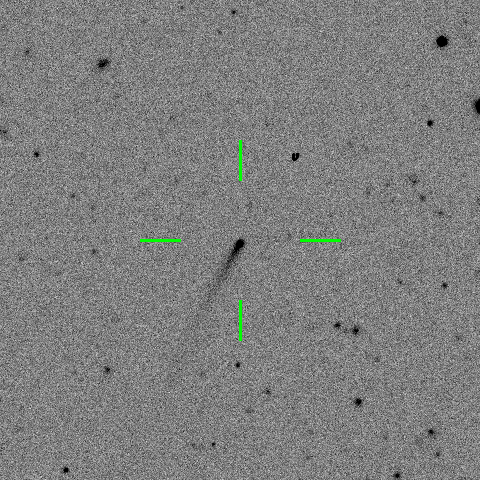
The image is one that volunteers classified on Active Asteroids. This object has already been confirmed as active. However, if one were to look at it with a telescope right now, it might not currently have a tail, or it might not be visible at all. (Image Credit: Zooniverse)

The asteroids that are most likely to show repeated activity are asteroids that are active due to sublimation, a process in which, as the asteroid gets closer to the Sun, the frozen carbon dioxide and water on its surface turn into gas and form a coma and tail behind it. Although this is a recurring event, a formerly active asteroid will not always be sublimating, so even if it can be observed, activity might not be detected. 

For all of these reasons, when an object is identified as a promising candidate for activity, researchers prefer to follow up by looking through archived images that contain that object. When we talked, Dr. Chandler referred to “archival investigations” as “instant gratification” since he did not have to deal with the limitations of direct observation, and he could immediately confirm activity and further investigate the object by using images that were already taken. 

Dr. Chandler and his team have already used the results from Active Asteroids to find and study several promising objects, and they are in the process of publishing their findings.

Reflections on my experience

All in all, working as a Zooniverse intern and learning about Active Asteroids has been an amazing experience. Going into the interview, I was worried that Dr. Chandler would be unapproachable and difficult to talk to. However, he seemed more than happy to discuss his work with me, and we actually talked well beyond the time when I’d originally expected the interview to stop. We were able to talk not just about Active Asteroids, but also what it’s like to be an LGBTQ+ person pursuing a career in science. As a young trans person, I often feel like I lack a connection with adults in my community, so getting to talk to someone with an identity similar to mine who was successfully pursuing a career in the field I aspire to join was an incredibly powerful experience. I wish I had a larger word count and some more time since I feel like I could probably write a whole book on interning at the Adler Planetarium and studying the Active Asteroids project on Zooniverse.

When I originally heard about active asteroids, I was mildly intrigued, but not all that excited about writing about them. Although I love all things space related, six months ago I would have said that asteroids are just about the most boring thing in space. However, after having done this project, I’ve become enthralled by active asteroids, and small planetary bodies in general. The idea of all the smaller rocks, tumbling through strange orbits in all kinds of places around the Sun, some with water or other invaluable resources that we may never even find, has found a special place in my heart. I hope this blog post has given you a piece of that.

Adler Zooniverse Summer Intern Experience: Lola Fash & NASA GLOBE Cloud Gaze

By Lola Fash, Guest Writer and Adler Zooniverse Summer ’22 Teen Intern

This summer I had the opportunity to be a Zooniverse intern at the Adler Planetarium in Chicago, with two other interns, Tasnova and Dylan.  As a group, we carried out a series of interviews with researchers leading Zooniverse projects. My focus project was the NASA GLOBE Cloud Gaze on Zooniverse. I led the interview with  NASA scientist Marilé Colón Robles, the principal investigator for the project, and Tina Rogerson, the co-investigator and data analyst for the project. 

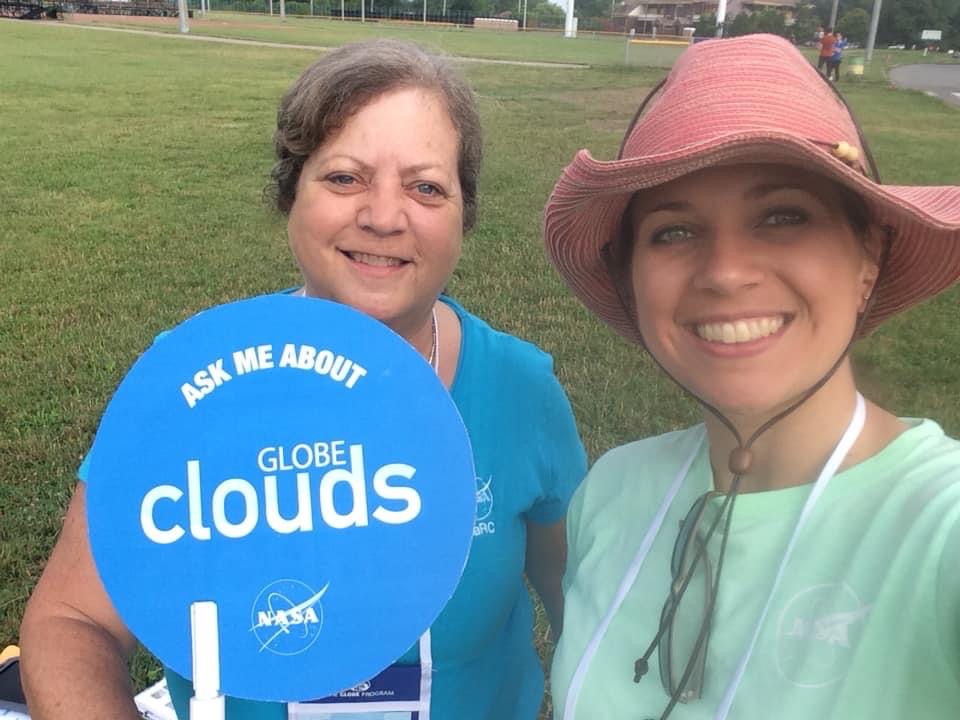
Marilé Colón Robles (right) and Tina Rogerson (left) outdoors working on GLOBE Clouds. Photo Credit: Tina Rogerson. 

NASA GLOBE Cloud Gaze is a collaboration between the Global Learning and Observations to Benefit the Environment (GLOBE) Program, NASA’s largest citizen science program, and Zooniverse. When NASA began to study clouds to understand how they affect our climate, they launched about 20 satellites to collect data on Earth’s clouds.  Unfortunately, these satellites are limited to only collecting data from above the clouds, which only paints half of the picture for scientists. They needed data from the ground to complete the picture. In 2018, they launched the first ever cloud challenge on GLOBE Clouds, which asked people all over the world to submit observations of clouds and photographs of their sky through the GLOBE Observer app. People responded faster than expected, submitting over 50,000 observations across 99 different countries during the month-long challenge. Because of the high volume,  it would take months for researchers alone to go through each submission. So instead, they sought help, thus birthing the Zooniverse CLOUD GAZE project, where people help them classify these photos.  Zooniverse participants classify the photos by cloud cover (what percent of the sky is covered by clouds), what type of cloud is in the image, and if they see any other conditions like haze, fog, or dust.

Why are clouds so important? 

We see the immediate effects of these clouds in our atmosphere. For example, when you go out on a sunny day and the sun gets blocked by low altitude clouds, you feel cooler right away. But rather than looking at short-term effects, the CLOUD GAZE project is working to understand the long-term role clouds play on our climate. 

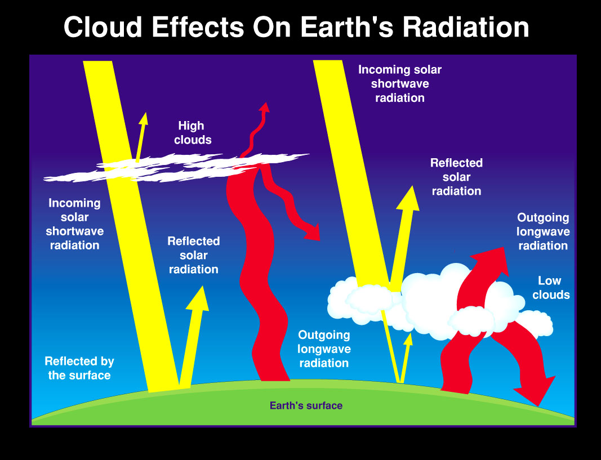
Clouds play a significant role in maintaining Earth’s climate. They control Earth’s energy budget, the balance between the energy the Earth receives from the Sun and the energy the Earth loses back into outer space, which determines Earth’s temperature. The effects clouds have varies by type, size, and altitude. 

Credit: NASA GLOBE CLOUD GAZE

Cirrus, cirrostratus, and cirrocumulus clouds are high altitude clouds that allow incoming radiation to be absorbed by Earth, then trap it there, acting like an insulator and increasing Earth’s temperature. Low altitude clouds, such as stratus and cumulonimbus, keep our planet from absorbing incoming radiation, and allow it to radiate energy back into space.

The classifications made by Zooniverse participants are needed to determine the amount of solar radiation that is reflected or absorbed by clouds before reaching the surface of Earth and how that correlates to climate over time. 

In my interview, I had the honor to meet with NASA Scientists Marilé Colón Robles and Tina Rogerson, learn more about the NASA GLOBE Cloud Gaze effort, and hear their predictions for the future. 

Clip 1: Introductions

This first clip is of Marilé, Tina, and me introducing ourselves to one another. Note: The other participants you’ll see in the recordings are Sean Miller (Zooniverse designer and awesome mentor for us interns) and Dylan and Tasnova (my fellow interns).

Clip 2: What prompted you to start NASA GLOBE Cloud Gaze on Zooniverse? 

Quote from Tina from this Clip 2: “We have 1.8 million photographs of the sky. We want to know what’s in those photographs.”

Clip 3: What have your GLOBE participants been telling you about what they’re seeing in their local environments about the impacts of climate change?

What are your hopes and goals for this project? 

In the interview, I asked them about their hopes and broader goals for the project. They talked about how in order to really understand climate change, we need to gather the best data possible. The majority of the data we have on clouds are from the 20th century. One of the project goals was to update our databases on clouds in order to conduct proper research on climate change. Tina Rogerson, Cloud Gaze’s data analyst, gathers this information and compiles it into easily accessible files. The files include data from a range of different sources: satellites, Globe observations, and Zooniverse classifications (see https://observer.globe.gov/get-data). They give people a chance to analyze clouds at different points and connect the dots to analyze the whole.  

Scientist Marilé Colón Robles explained that one of the goals of the project is to make a climatology of cloud types based on the data they have collected. This would help us have a record on how the clouds have changed in a given location in relation to the climate of that area. We would have information on the entire world, every single continent, yes, including Antarctica.

Why did I pick this project to focus on? 

I chose this project because I wanted to challenge myself. I have always shied away from topics and conversations about climate change and global warming. I felt I could never fully comprehend it so I should instead avoid it by all means possible. My fellow interns and I had three projects to choose from: Transcribe Color Convention, Active Asteroids, and NASA GLOBE CLOUD GAZE. If it were any other day, I would have chosen one of the first two projects to be my focus but I wanted to change, to try something new. The only way to grow is to step out of your comfort zone and I am so glad I did. 

People make the mistake of believing that climate change can’t be helped and that after our Earth becomes inhabitable we can just pull a Lost In Space and find a different planet to live on. I had the chance to speak with Dr. Michelle B. Larson, CEO of Adler Planetarium, and we talked about how there isn’t another planet for us to go to if we mess this one up. Even if there was, it would take years and a lot of resources to ready the planet for ourselves. Those are resources and years that we could be spending on fixing our home. 

The CLOUD GAZE focused on one of the most important and understudied factors in Earth’s climate – clouds. People all over the world are helping in their own way to help save the planet. Some make sure to always recycle their garbage. Some take public transportation more often, and switch to electronic vehicles to cut down on their carbon footprint. You and I can help by taking pictures of our sky, submitting it in the GLOBE Observer app, and by going to the Zooniverse Cloud GAZE project, classifying as little as 10 images of clouds per day to multiply the data on clouds, which in turn helps further our research and our understanding of climate change.  

An Interview with Jovian Vortex Hunters

This is a guest post by summer intern Anastasia Unitt.

Talking about the weather is a national pastime in England. When I meet Dr. Ramana Sankar on a sunny day in Oxford, we find ourselves discussing dramatic clouds and ferocious storms – in stark contrast to the empty blue skies above us. Ramana is telling me about the turbulent meteorology of our solar system’s fifth planet: Jupiter.

Jupiter is a gas giant. Its atmosphere is made of very different stuff to ours, predominantly hydrogen and helium, but it does have clouds of water vapour like we do, as well a variety of storms and hurricanes. These vortices are governed by the same physics as Earth’s own, just on a much larger scale; Jupiter’s most famous storm, the Great Red Spot, is twice the width of Earth and has raged for over 300 years. Wind speeds on the planet can approach 900 miles per hour at its poles, encouraged by jet streams formed by the planet’s 10 hour long rotations – the fastest in our solar system. For those interested in meteorology, it’s a fascinating place to study.

Ramana tells me that to research Jupiter’s weather he works with a very important colleague: Juno, a space probe launched in 2011. Five years later in 2016 it reached Jupiter. Ever since, it has been sending back data, including images which show a diverse array of weather formations, varied in form, swirling, morphing, spinning. I’m surprised by how many different colours appear in these clouds, not only orange as I expected, but also shades of blue and grey. The enormous variety of features in the images provide an opportunity to learn more about how storms work on Jupiter, and Ramana explains that to do this they need to collect observations of the weather captured in Juno’s images. There are thousands of these pictures, so he has enlisted citizen scientists on Zooniverse to look through them and annotate features. They mark storms, clouds, and anything else they notice, building a catalogue of formations. With their help Ramana can spot repeating patterns, as well as explore unusual or rare vortices.

Swirling Jovian storms, in images captured by NASA’s Juno space probe.

I find myself wondering what causes this dramatic Jovian weather, and according to Ramana astronomers are curious about this too. To answer this question, he says we need to go back to how the planet was made: “long ago, the sun formed and around it was this disc of gas and dust, which contracted to form different planets.” This compression generated enormous amounts of heat; even now, the temperature at Jupiter’s core is thought to be about 24,000°C, maintained by high internal pressure due to its immense size. As Ramana puts it: “Imagine a boiling kettle. Bubbles are coming up due to the stove heating the bottom of the pan. The storms on Jupiter are these bubbles, but rather than forming over two minutes, they form over 5-10 years.” This is in contrast to Earth, where storms form due to heat from the sun. I ask Ramana what this internally-originating heat means for his study of Jupiter’s weather, and he explains that this is something he is exploring. “The question comes down to: why are these storms distributed at specific locations, why is the heat preferentially pointed one way versus the other? Getting the catalogue of vortices and seeing where they’re forming can help us.”

With this aim in mind, citizen scientists have classified over 35,000 photographs of Jupiter’s stormy surface. When I ask Ramana what their best finding has been so far, he pauses for a moment before he responds, clearly spoilt for choice amongst the many complex vortices they have observed. He eventually lands on one particular feature: “One of my favorite types of vortex is called a brown barge, and that’s because you’d imagine vortices are generally circular, but a brown barge is very elongated. Imagine a brown cucumber, that’s essentially what it is.” Ramana explains that precisely what causes this brown colouration is a mystery. It could be chemicals present in the clouds themselves, or haze particles in the upper layers of the atmosphere reacting with sunlight. However, the citizen scientists have made an interesting discovery about these formations: “Volunteers are finding barges which are not brown. So for all this time I thought that brown barges are brown, but it turns out there are more complications. Investigating these not-so-brown barges is a new avenue for research.”

Not-so-brown barges. On the left is an image of a typical brown barge. On the right are examples of barge-like vortices without the typical brown colouration.

When not enthusing about Jupiter’s (mostly) brown cucumber-shaped storms, Ramana is quick to point to his citizen scientists as one of his favourite parts of the project. They’ve gone above and beyond their role as storm counters; some have even been digging into additional data, outside of what Ramana has provided. “A lot of volunteers kind of go into the depths. They’re pulling in all of this data from everywhere else, like news websites, even mission reports, things like that. [The] volunteers go out of their way to explore the data by themselves.”

It sounds to me like the citizen scientists have been understandably bewitched by Jupiter’s diverse and spiraling cloud formations. On the Zooniverse talk boards I can see them excitedly discussing all kinds of interesting storms and features that they have discovered. Now they have built Ramana’s catalogue of storms, I enquire what his plans are for the next steps. “The idea is to create a subset of interesting features (like the not-so-brown barges), and then either use some sort of numerical weather modelling code to study how these features formed, or we could get context images to all of these features: look one rotation before, one rotation after. How did the feature morph between those 15 hours?” He’s excited about the findings – the volume of data the citizen scientists have analysed means there’s plenty to explore going forward.

It’s fascinating to hear how much these volunteers have contributed to our understanding of the weather on a planet 365 million miles away from our own. For a while Ramana and I discuss the motivations of citizen scientists. Is it a desire to learn, an attraction to science, or simply a way to pass the time? Ramana says from his experience it’s a mixture of the three. “The bottom line that I personally have heard about from people who have done Zooniverse projects is that they just want to spend five minutes of their time doing something else that’s not for their daily lives. Log in, classify a few things, get back to work.” Unfortunately it’s also time for Ramana and I to get back to work, so we part ways. However, as I’m walking under England’s blue and (currently) cloudless sky, I find I’m carrying thoughts of Jupiter’s distant swirling storms along with me.

Would you like to be a Jovian vortex hunter? Follow the link to take part in Ramana’s project: https://www.zooniverse.org/projects/ramanakumars/jovian-vortex-hunter

Comic-Con and the Zooniverse

Guest post from Zooniverse participant Gracie Ermi:

San Diego Comic-Con brings together some of the biggest fans of the most popular shows, games, comics, and films. Science is a huge source of inspiration for a lot of pop culture, so myself and 14 other scientists from around the country decided that Comic-Con would be a great venue to showcase ways that science is making a difference in the world and how it relates to our favorite media. All 15 of us are national STEM ambassadors for the IF/THEN Initiative – a program focused on increasing access to diverse STEM professionals for students, especially young girls. In addition to putting on panels about the intersection of science and pop culture, we hosted a STEAM Fair (STEAM = Science, Technology, Engineering, Arts and Math) that families in the area could attend even if they didn’t have Comic-Con tickets. At the STEAM Fair, each scientist demonstrated something from their specific field with a fun activity.

As a computer scientist who has worked on many wildlife conservation technology projects where data collection and annotation can be a big challenge, I am a huge fan of Zooniverse and the incredible generosity and human-power of this community. I thought, wouldn’t it be cool if kids who came through the STEAM fair could contribute to a real, active science project? Zooniverse was the perfect tool to use to demonstrate the types of projects I work on and to show kids that they can make a difference right now in wildlife research. I had kids identify animal species in images from the Snapshot APNR project – they loved it! Families were super excited to learn about Zooniverse (I handed out stickers so that they could remember the website if they wanted to keep exploring it at home), and some kids spent quite a while at my table, meticulously narrowing in on the species they were identifying. Everyone seemed to really enjoy getting to help out the Snapshot APNR project, and in the end around 2000 people came through the STEAM Fair over the course of 4 days. It was a huge success!

IF/THEN Ambassadors at the Comic-Con STEAM Fair. Learn more about the team at ifthensteamsquad.org!

Gracie Ermi facilitating a Zooniverse data labeling activity at the IF/THEN Comic-Con STEAM Fair