Where: Adler Planetarium, Chicago, IL
When: August 8-9, 2013
Join us in advocating for citizen science in the classroom. Citizen science is an emerging tool for teachers – it provides an opportunity for students to participate in real research, analyse real data, at home or in school. The Zooniverse and the Adler Planetarium want to find US Middle or High School teachers who can help bring citizen science on the web, into the classroom. We need your expertise and we want to bring you to Chicago to talk to us!”
We would like to invite US middle and high school teachers, to apply for a 2 day workshop at the Adler Planetarium in Chicago on the 8th and 9th of August 2013. Travel, hotels and working meals will be paid for and a generous $1000 stipend should cover any additional costs. The first $500 installment will be paid at the end of the workshop.
During the workshop participants will be introduced to the array of Zooniverse projects and the existing educational resources available to help bring them into the classroom. Members of the development team will provide insight into the process of project selection, design and development that allows a scientific dataset to be transformed into an interactive citizen science project. In addition, there will be live virtual presentations from at least five science teams, giving the participants the opportunity to ask questions and interact with researchers from a variety of disciplines.
Participants will have the opportunity to share any experience they have of using Zooniverse projects in the classroom and will begin developing a lesson plan for the project of their choice. This lesson will need to be completed and submitted within 4 weeks of the workshop, along with a blog post for publication on the our blog describing their experience in promoting the Zooniverse. After this the second $500 installment of the stipend will be paid. The lesson should also be tested in their classroom, by the end of the 2013-2014 school year and a simple evaluation questionnaire submitted.
Teachers who are interested in attending this workshop should apply by the 7th of June 2013, they will need to include 500-word summary explaining why they would like to participate and how they plan to spread the word about the Zooniverse to their colleagues and local communities. Successful applicants will be informed by the 12th of June 2013.
UPDATE:
Applications for the Zooniverse Teacher Ambassadors Workshop are now closed. Thanks very much for your interest. We’ll be reviewing applications next week.
Zooniverse held it’s second annual conference for new project scientists a couple of weeks ago, where we introduced them to the process of building a successful online citizen science projects. This intense two-day event bombarded new recruits with a ton of information relating to data reduction, web development technology, design and of course education.
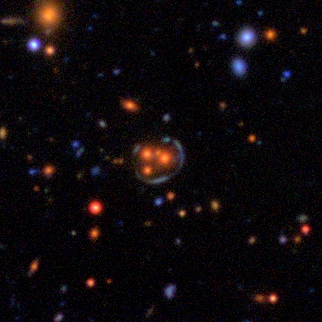
Zooniverse projects have immense outreach potential, the expertise and experience that the team has collected over the years lead to complex and often intimidating science being simplified for a general audience. If you have yet to be convinced by this process, check out SpaceWarps. The hunt for the warping effects on the light from distant galaxies, caused by huge foreground galaxies acting as lenses, has been transformed into a two minute tutorial and a couple of clicks.
The projects become a tool for science teams to share their research with the public, their funders: The Tax Payers. Better still, beyond sharing their research they can ask people to participate and what better way is there to engage the public? Taking this a step further though, many science teams do wonder what, if anything, they have to offer for more formal education settings?
Formal science education in the US is about to undergo some changes with the impending adoption of the Next Generation Science Standards (NGSS). Twenty-six states were involved in the development of these standards, which have a heavy focus on inquiry based learning, and more have signed up to implement the use of them. Their recent release has cause some excitement in the Chicago Zooniverse HQ, as they very specifically call out large data sets online.
“Students need opportunities to analyze large data sets and identify correlations. Increasingly, such data sets—involving temperature, pollution levels, and other scientific measurements—are available on the Internet. “
There is also a move away from the outdated and laughable idea of a linear scientific method, towards a far more realistic concept of three spheres of activity for scientists and engineers. When using Zooniverse projects in an educational setting it is a struggle to fit them into the pigeon-hole boxes of the linear scientific method. Perhaps because they are in fact real science projects and not simplified lab experiments designed to train children in the so-called scientific method.
The spheres of activity are much more representative of the circular, back and forth process that most researchers recognize as science. Particularly, in the modern world of large data-sets and massive international collaborations, where many researchers only work on a small pieces of large puzzles, not unlike Zooniverse volunteers. Their piece of the puzzle is just a bit smaller!
Zooniverse projects already ask volunteers to take part in several of the practices identified in the spheres of activity. They observe, they measure, they analyze. In our discussion tools and forums they ask questions, argue, imagine, reason and often critique! The recent addition of the Navigator classroom tool to Galaxy Zoo will provide more opportunity for students to undertake more of the practices from ‘Evaluating’ and ‘Developing Explanations and Solutions’ spheres.
The most exciting of these little boxes though has to be the one in the top of the “Investigating” sphere. This little box calls out “The Real World”, students should be investigating the real world, using real data. So to summarize, the NGSS wants students to investigate the real world using large data sets online…
April was a very busy month is the world of Zooniverse education. Here are a few highlights and photos.
NSTA
We attended and presented at the annual National Science Teachers Association Conference in San Antonio April 11-14. Most conversations focused on the recent release of the new US Next Generation Science Standards (NGSS). Educators from all walks of life took some time to learn all about this exciting new development in science education. Getting up to speed on these new standards is definitely on our list of summer to-dos.
We spent most of the conference at our booth in the exhibit hall having great conversations with teachers about current Zooniverse projects, ZooTeach, the Galaxy Zoo Navigator, and the upcoming Planet Hunters Educators Guide. While not mingling with science teachers you can bet we took advantage of Texas-sized desserts (yes, that cinnamon roll was delicious).
Our little corner of the exhibit hall at NSTA
The NSTA Exhibit Hall San Antonio 2013 Largest Cinnamon Roll in the USA.
New Office!
The Chicago branch of the Zooniverse development team outgrew its office. We’ve recently moved into new digs on the museum floor. Not only is there more room, but we’re across from the classroom where field trip programs happen at the Adler! Seeing students engaged in science learning is a great motivator here at Zooniverse HQ.
Zooniverse HQ at the Adler
Zoo Workshop 2
April 29th-30th saw fifty-five scientists, developers, educators, designers, moderators, and citizens science enthusiasts gatherat the Adler Planetarium to discuss all things Zooniverse. This meeting serves multiple purposes, first and foremost it’s a terrific opportunity to have face-to-face conversations with people usually dispersed around the globe. Even with Skype and Google Hang-Outs, sometimes you can’t beat sitting down and talking over a coffee.
Secondly, this meeting is a great opportunity to bring science team members behind upcoming projects into the Zooniverse fold. In his talk entitled Lifecycle of a Zooniverse Project, Rob Simpson gave the science teams behind upcoming projects a crash-course in what to expect over the lifetime of their project. The development team used this meeting to begin conversations with these science team members about the design and implementation of their projects. Not to give too much away, but there are some AMAZING projects in the pipeline).
Kyle Willet giving a case study of Galaxy Zoo and at Zoo Workshop 2.
Gravitational lenses – or ‘space warps’ – are created when massive galaxies cause light to bend around them such that they act rather like giant lenses in space. By looking through data that has never been seen by human eyes, our new Space Warps project is asking citizen scientists to help discover some of these incredibly rare objects. We need your help to spot these chance-alignments of galaxies in a huge survey of the night sky. To take part visit www.spacewarps.org.
Gravitational lenses help us to answer all kinds of questions about galaxies, including how many very low mass stars such as brown dwarfs – which aren’t bright enough to detect directly in many observations – are lurking in distant galaxies. The Zooniverse has always been about connecting people with the biggest questions and now, with Space Warps, we’re taking our first trip to the early Universe. We’re excited to let people be the first to see some of the rarest astronomical objects of all!
The Space Warps project is a lens discovery engine. Joining the search is easy: when you visit the website you are given examples of what space warps look like and are shown how to mark potential candidates on each image. The first set of images to be inspected in this project is from the CFHT (Canada-France-Hawaii Telescope) legacy survey.
Computer algorithms have already scanned the images, but there are likely to be many more space warps that the algorithms have missed. We think that only with human help will we find them all. Realistic simulated lenses are dropped into some images to help you learn how to spot them, and reassure you that you’re on the right track. Previous studies have shown that the human brain is better at identifying complex lenses than computers are, and we know at the Zooniverse that members of the public can be at least as good at spotting astronomical objects as experts! We’re going to use the data from citizen scientists to continuously train computers to become better space warp spotters.
This is a really exciting project and you can read more on the Space Warps blog. As with our other projects it can also be found on Twitter (@SpaceWarps), on Facebook and you can discuss any interesting objects you find on Space Warps Talk. We’re really excited about this project and think you’ll be able to make some amazing discoveries through it.
Stateside, April 21-27 is National Volunteer week. Thanks to the collective efforts of 826,026 people scattered around the world, a heck of a lot of scientific research has occurred that otherwise would not have been undertaken. don’t know about you, but I think that’s pretty mind-boggling.
Whether you make one classification or 10,000 classifications, each Zooniverse volunteer furthers the cause of getting science done. It’s nice to know that we’re all in this together.
Well, I’m feeling inspired. To celebrate National Volunteer Week,I’m going to do some classifications on one of my favorite projects, Cyclone Center.
Thanks again for your efforts. Keep clicking!
Awesome! Since I started writing this post the number of Zooniverse volunteers has hit 826,049.
It’s always a good feeling a be making a codebase open and today it’s time to push the latest version of Galaxy Zoo into the open. As I talked about in my blog post a couple of months ago, making open source code the default for Zooniverse is good for everyone involved with the project.
One significant benefit of making code open is that from here on out it’s going to be much easier to have Zooniverse projects translated into your favourite language. When we build a new project we typically extract the content into something called a localisation file (or localization if you prefer your en_US) which is basically just a plain text file that our application uses. You can view that file for our (US) English translation file here and it looks a little like this:
So how do I translate Galaxy Zoo?
I’m glad you asked… It turns out there’s a feature built into the code-hosting platform we’re using (called GitHub) which allows you to basically make your own copy of the Galaxy Zoo codebase. It’s called ‘forking’ and you can read much more about it here but all you need to do to contribute is fork the Galaxy Zoo code repository, add in your new translation file and (there’s a handy script that will generate a template file based on the English version), translate the English values into the new language and send the changes back up to GitHub.
Once you’re happy with the new translation and you’d like us to try it out you can send us a ‘pull request’ (details here). If everything looks good then we can review the changes and pull the new translation into the main Galaxy Zoo codebase. You can see an example of a pull request from Robert Simpson that’s been merged in here.
So what next?
This method of translating projects is pretty new for us and so we’re still finding our way a little here. As a bunch of developers it feels great to be using the awesome collaborative toolset that the GitHub platform offers to open up code and translations to you all.
At this time next week we’ll be rubbing elbows with science teachers and informal educators at the National Science Teacher Association’s annual meeting in San Antonio, Texas. This year’s conference theme is Next Generation Science: Learning, Literacy, and Living. It’s promises to be four days packed with excitement and science fun (and delicious TexMex food).
Zooniverse education will be out in full force! Laura and I will be at the Zooniverse booth in the exhibition hall (Booth #1444) throughout the conference. We’re also facilitating a workshop entitled Citizen Science Investigations in the Classroom on Saturday April 13th from 12:30 – 1:30pm. If you happen to be attending NSTA, we hope that you’ll stop by and say hello (and score one of our snazzy new Zooniverse stickers). If you’re not attending but want to follow our wacky and sciencey adventures, we’ll be tweeting (@zooteach) throughout the conference.
One of the joys of working in the Zooniverse is the sheer variety of people who are interested in our work, and I spent a happy couple of days toward the end of last year at a symposium about Discovery Infomatics – alongside a bunch of AI researchers and their friends who are trying to automate the process of doing science. I don’t think they’d mind me saying that we’re a long, long way from achieving that, but it was a good chance to muse on some of the connections between the work done by volunteers here and by our colleagues who think about machine learning.
I’m still convinced that that will especially be needed as the size of datasets produced by scientific surveys continues to increase at a frightening pace. The essential idea is that only the proportion of the data which really needs human attention need be passed to human classifiers; an idea that starts off as a non-brainer (wouldn’t it be nice if we could decide in advance which proportion of Galaxy Zoo systems are too faint or fuzzy for sensible decisions to be made?) and then becomes interestingly complex.
This is particularly true when you start thinking of volunteers not as a crowd, but as a set of individuals. We know from looking at the data from past projects that people’s talents are varied – the people who are good at identifying spiral arms, for example, may not be the same people who can spot the faintest signs of a merger. So if we want to be most efficient, what we should be aiming for is passing each and every person the image that they’d be best at classifying.
That in turn is easy to say, but difficult to deliver in practice. Since the days of the original Galaxy Zoo we’ve tended to shun anything that resembles a test before a volunteer is allowed to get going, and in any case a test which thoroughly examined someone’s ability in every aspect of the task (how do they do on bright galaxies? on faint ones? on distant spirals? on nearby ellipticals? on blue galaxies? what about mergers?) wouldn’t be much fun.
One solution is to use the information we already have; after all, every time someone provides a classification we learn something not only about the thing they’re classifying but also about them. This isn’t a new idea – in astronomy, I think it’s essentially the same as the personal equation used by stellar observers to combine results from different people – but things have got more sophisticated recently.
As I’ve mentioned before, a team from the robotics group in the department of engineering here in Oxford took a look at the classifications supplied by volunteers in the Galaxy Zoo: Supernova project and showed that by classifying the classifiers we could make better classifications. During the Discovery Infomatics conference I had a quick conversation with Tamsyn Waterhouse, a researcher from Google interested in similar problems, and I was able to share results from Galaxy Zoo 2 with her*.
We didn’t get time for a long chat, but I was delighted to hear that work on Galaxy Zoo had made it into a paper Tamsyn presented at a different conference. (You can read her paper here, or in Google’s open access repository here.) Her work, which is much wider than our project, develops a method which considers the value of each classification based (roughly) on the amount of information it provides, and then tries to seek the shortest route to a decision. And it works – she’s able to show that by applying these principles we would have been done with Galaxy Zoo 2 faster than we were – in other words, we wasted some people’s time by not being as efficient as we could be.
A reminder of what Galaxy Zoo 2 looked like!
That doesn’t sound good – not wasting people’s time is one of the fundamental promises we make here at the Zooniverse (it’s why we spend a lot of time selecting projects that genuinely need human classifications). Zoo 2 was a long time in the past, but knowing what we know now should we be implementing a suitable algorithm for all projects from here on in?
Probably not. There are some fun technical problems to solve before we could do that anyway, but even if we could, I don’t think we should. The current state of the art of such work misses, I think, a couple of important factors which distinguish citizen science projects from other examples considered in Tamsyn’s paper particularly. To state the obvious: volunteer classifiers are different from machines. They get bored. They get inspired. And they make a conscious or an unconscious decision to stay for another classification or to go back to the rest of the internet.
The interest a volunteer will have in a project will change as they move (or are moved by the software) from image to image and from task to task, and in a complicated way. Imagine getting a galaxy that’s difficult to classify; on a good day you might be inspired by the challenge and motivated to keep going, on a bad one you might just be annoyed and more likely to leave. We all learn as we go, too, and so our responses to particular images change over time. The challenge is to incorporate these factors into whatever algorithm we’re applying so that we can maximise not only efficiency, but interest. We might want to show the bright, beautiful galaxies to everyone, for example. Or start simple with easy examples and then expand the range of galaxies that are seen to make the task more difficult. Or allow people a choice about what they see next. Or a million different things.
Whatever we do, I’m convinced we will need to do something; datasets are getting larger and we’re already encountering projects where the idea of getting through all the data in our present form is a distant dream. Over the next few years, we’ll be developing the Zooniverse infrastructure to make this sort of experimentation easier, looking at theory with the help of researchers like Tamsyn to see what happens when you make the algorithms more complicated, and talking to our volunteers to find out what they want from these more complicated projects – all in our twin causes of doing as much science as possible, while providing a little inspiration along the way.
* – Just to be clear, in both cases all these researchers got was a table of classifications without any way of identifying individual volunteers except by a number.
We need you and your students to help us craft a top-notch resource for teachers! Educators at the Adler Planetarium have been hard at work creating an educators guide aimed at helping teachers bring the thrilling hunt for exoplanets into their classroom. The first draft is nearly ready and we want to know what you think.
We’re looking for US-based 6th -8th grade teachers to try one or more lessons from the Planet Hunters Educators Guide this spring with their students. Each lesson can be taught as a stand alone activity and takes approximately 45 – 60 minutes of class time. We want to know what works, what needs to change, and any other feedback you can provide.
Besides, one of your students may just discover a new planet! You can’t get that in gym class (although physical fitness is very important).
We were delighted by the response to our call for volunteers to attend our project workshop and we’re delighted to announce that our two winners are Katy Maloney and Janet Bain. Katy is a Planet Hunter from Montreal (you can see her in this recent video about online communities. Janet is well known to those from Old Weather where she serves as moderator of the very active forum.
As Jules explained in her post, these workshops are a chance for the strange mix of people behind the scenes of the Zooniverse – developers, educators and scientists – to get together to discuss what works and what doesn’t, and to plan the year ahead. We think it’s very important to have volunteers there – and we hope that Katy and Janet (along with Jules, who we’ve invited back) will keep you all informed and involved in the discussions.
There were a few comments in the discussion under that last post from people – particularly locals – who would clearly have dearly loved to come. Unfortunately, it wouldn’t be possible to run the workshop as a public event; both because of the format (which features spontaneously arranged small group discussions) and also to allow everyone to speak freely about often quite difficult issues. What I do find heartening is that we’ve grown a community who want to help us plan and develop for the future, and we need to take that seriously.
I’ll write more over the next couple of weeks and months about what we’re going to do to be more open, but for now for those who really wanted to come we’ll work hard to organise some truly public events. We have a meeting in Oxford on the 22nd June which I hope British Zooites will be able to attend, and we’ll arrange a similar event in Chicago as soon as possible. We’ll also try hard to webcast these events so all can attend.
Chris
The world's largest and most popular platform for people-powered research. This research is made possible by volunteers—millions of people around the world who come together to assist professional researchers.