Rob and Grant are running out of ideas for the Advent Calendar

Hey everyone, for today’s advent calendar Rob and I made this short video talking about the various ways in which you can take part in the Zooniverse, and the multiple means by which you can keep up-to-date with what we’re doing.

https://vimeo.com/81544627

It also serves as an introduction for me, the new Zooniverse community manager. It is a bit silly at points, and we did it in one take with no script, so apologies for the rough feel!

Here are some of the links I mention in the video:

Zooniverse on Facebook

Zooniverse on Twitter

Daily Zooniverse

Merry Christmas one and all!

Zooniverse by Numbers: 2013 Edition

Each year around this time we like to take stock of the size of the awesome Zooniverse population of volunteers. Last year we celebrated the fact that there were 740,000 of you. That number has swelled to 890,000 now – despite us making it easier and easier for anyone to take part without signing up for a Zooniverse account! At the exact time of writing zooniverse.org reported 891,493 of you – which is actually a prime number . It’s also the colour code for a lovely shade of purple.

You’re based all over the world, in fact our web stats show that you literally come from every country in the world! However you are mostly located in the USA, UK, Canada, Poland and other Western nations. That means that you likely have quite a large combined carbon footprint. If you’re all typical North Americans then you produce about 20 tons of CO2 each every year. From some other nations if might be only about 5 tons. So collectively you’re producing somewhere between 4 and 18 million tons of CO2 each year. Crikey.

Never mind your carbon footprint – what about your actual dimensions as a group of people? It’s pretty hard to visualise that many people. If you all stood on each others shoulders you’d reach more than 1,500 km (~970 miles) into the sky. Of course then many of would be crushed under the community’s weight so instead let’s lie you end-to-end. At nearly 1,000 miles it would take light about 5 ms to travel along the line and it’s almost as far as the Proclaimers would be willing to walk to fall down at your door.

Sokol1924

More acrobatically, if we made you all into a human pyramid then you’d tower 1.3 miles above the surface of the Earth. If you we stacked you into an actual pyramid (square-based) then rather spectacularly you’d be about the same size as the Great Pyramid of Giza. In fact the Great Pyramid is a bit squat, so you’d have the same size footprint in the sand, but would be nearly twice as tall.

Kheops-Pyramid

We used to measure you by the number of stadiums that you would fill. At 890,000 you’re now much bigger than the world’s largest stadium, Rungnado May Day Stadium in North Korea, which can hold up to 150,000 people. You’d occupy almost 10 Wembley Stadiums, and more than 21 Wrigley Fields.

World religions is a potential way to measure you – though many are quite massive. There are literally billions of Christians, for example. There are, however, more Zooniverse volunteers in the world than Rastafarians or Unitarian Universalists. Though you can’t stand against the Vatican, there are several countries you measure up to. For example at 890,000 you outnumber the people of Cyprus (865,000), Fiji (858,000), and Montenegro (620,000). You’re miles ahead of some smaller nations, including Luxembourg (537,000), Malta (416,000), and Iceland (325,000).

THE-WORLD-FLAG

Of course, if you compare us to the armies of the world, things look much better for the Zooniverse. In fact there are only 5 armies larger than us – China (2.2 million), USA (1.4 million), India (1.3 million), North Korea (1.1 million), and Russia (1 million). Does all this mean that we need a flag?!

Finally, let’s get gross. 890,000 people is an awful lot. You collectively shed about 6 kg of skin cells every day. That’s 6 kg of material left to bob around in our atmosphere and to be vacuumed up from the world’s household surfaces. Nicely done, everybody.

I wonder what number I’l be calculating these stats for next year. I’m excited to find out!

[This post is part of the 2013 Zooniverse Advent Calendar]

Andromeda Project We Hardly Knew Ye

This time last year we launched the Andromeda Project. The aim was the get everyone’s help in locating the star clusters in the Andromeda Galaxy, our next-door neighbour in intergalactic space. The project went better than we could have imagined, and just over two weeks later we had completed more than 1,000,000 classifications and the project’s science team were busy wrangling data.

Cliff at AAS

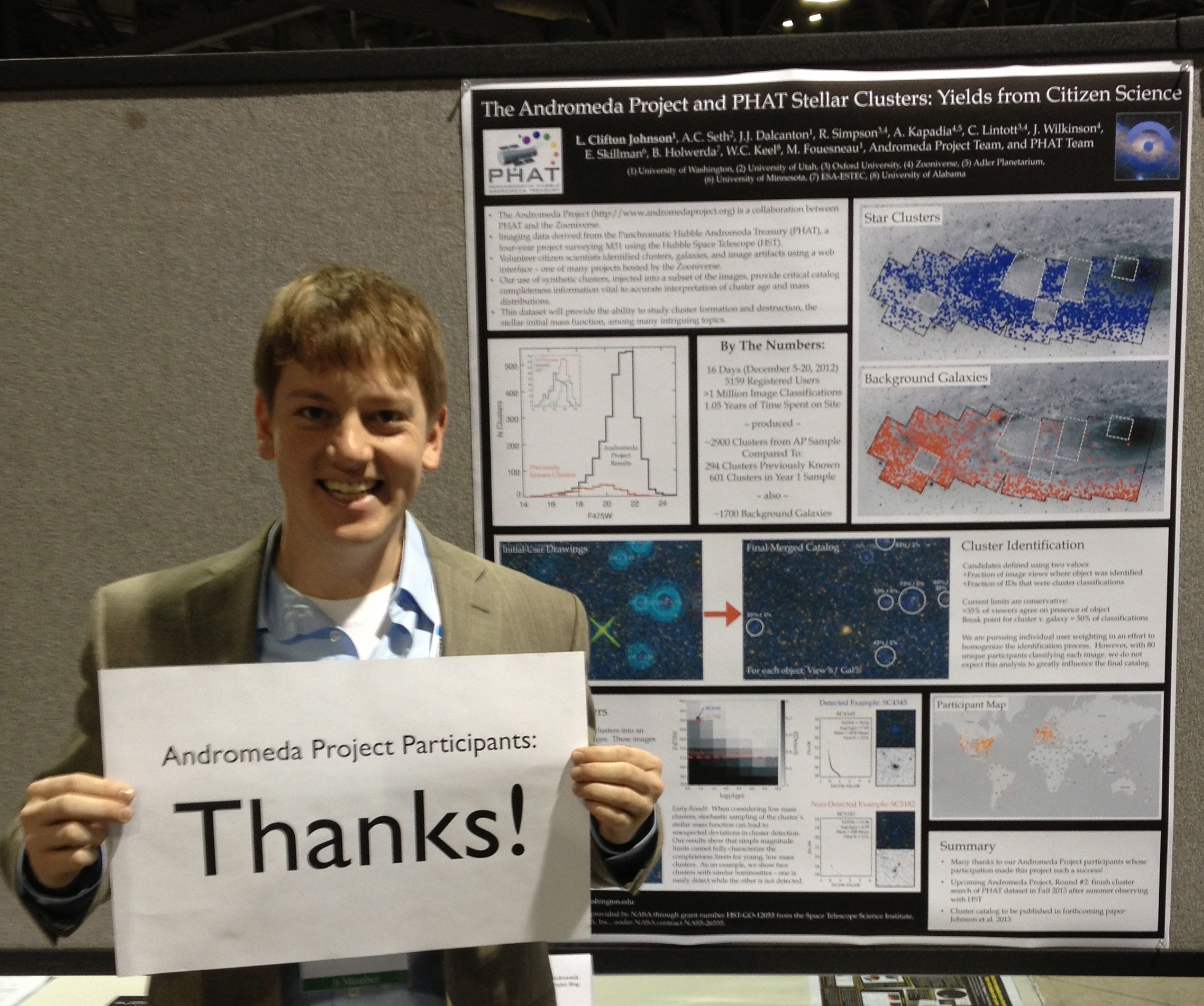
In fact, in January Cliff Johnson took a poster to one of the world’s biggest astronomy meetings – the January meeting of the AAS – and presented the results from the Andromeda Project, which had only launched 6 weeks prior. It was an amazing example of the power of citizen science to help researchers accomplish the kind of data analysis that computers cannot do reliably.

We decided to do a second round of the Andromeda Project to complete the job we’d started, using both the data that remained in the archive and also new data that was only just being taken last year when the project launched. So in October 2013 (just two months ago) we once again invited the Zooniverse community to come and find star clusters and galaxies. They once again astounded us by gobbling up the data even faster – ably assisted by a trench of new users brought to the project from Facebook’s popular I F***king Love Science page. In a week the job was done.

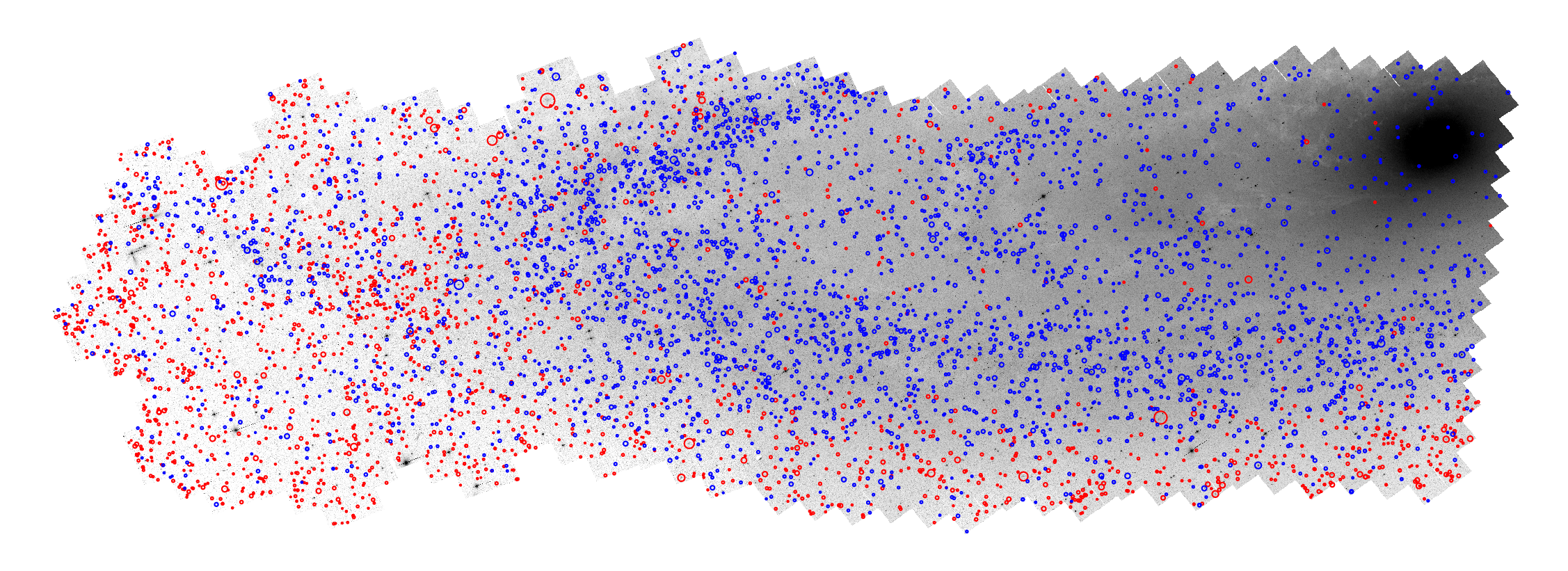
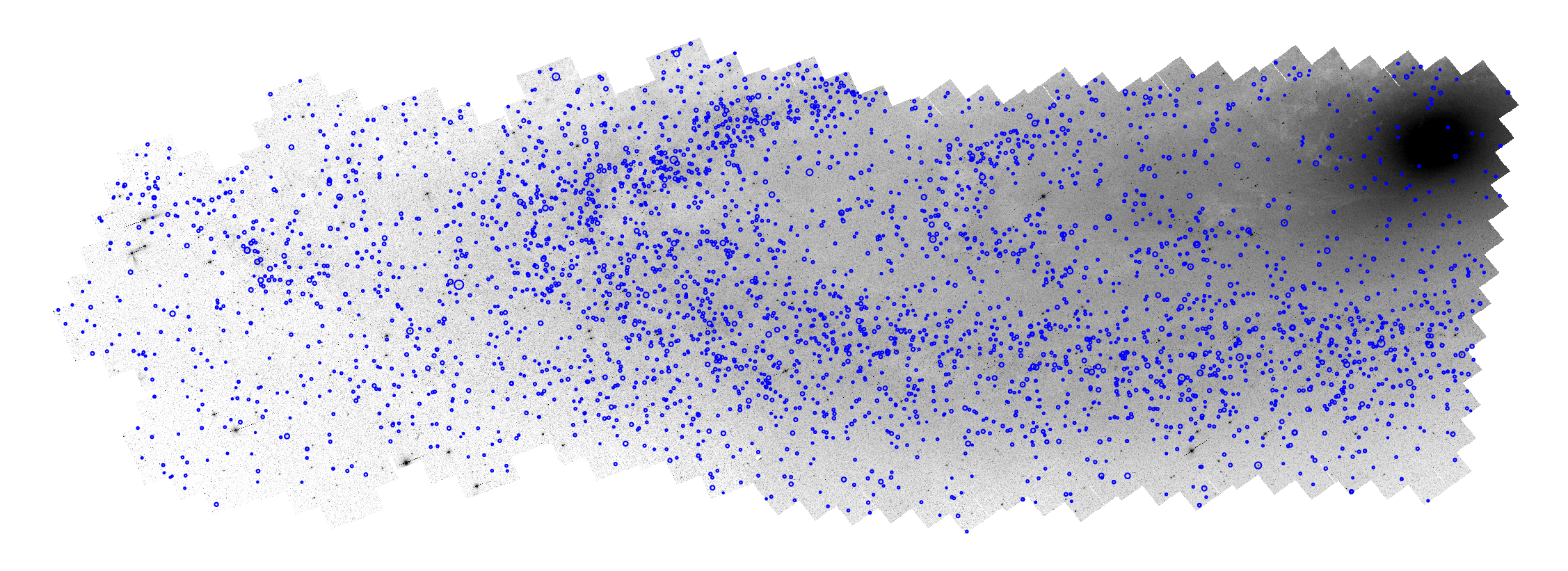
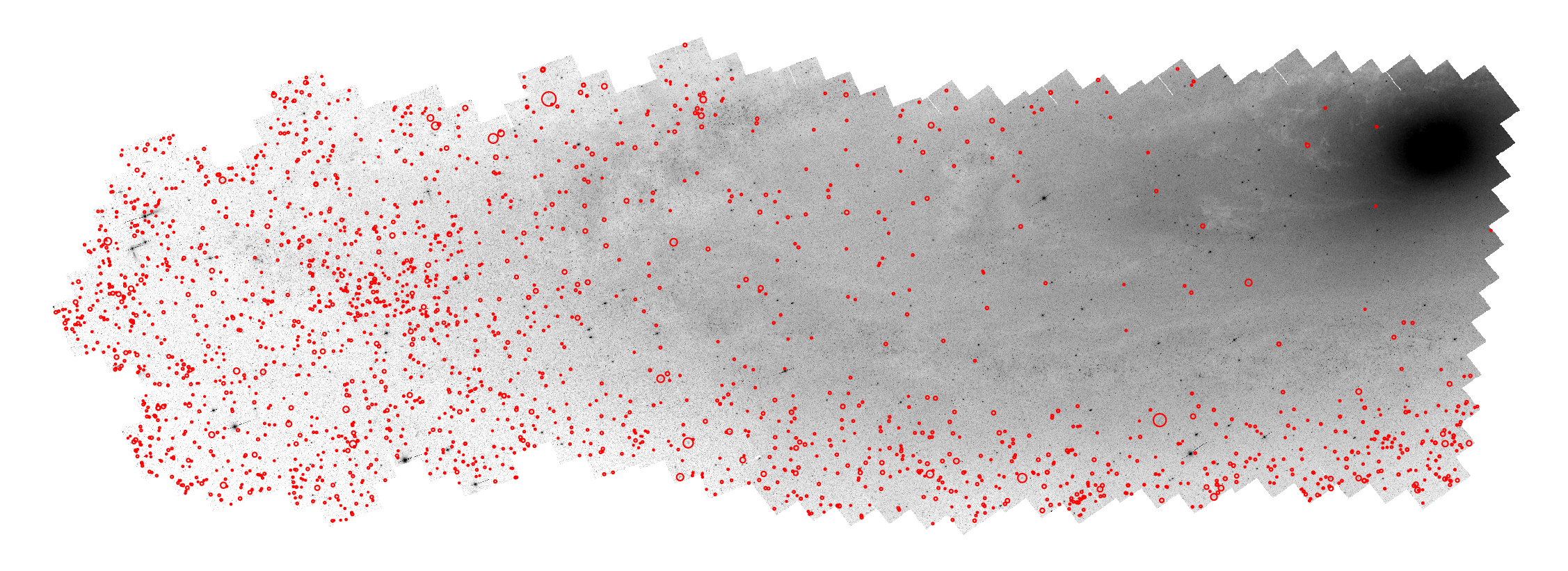
The science team have already begun processing the data from this second round and the results are amazing. In fact: they’re right here just for you, just because it’s nearly Christmas and just because we wanted to give you a present. So here they are: the first maps of all the star clusters and galaxies in the data from the PHAT survey of Andromeda. Marked and classified by  the wonderful Andromeda Project community.

AP Map
Clusters are in blue, galaxies in red. The background image is single-band F475W data showing the galaxy itself.

You can see how the background galaxies are best seen at the outer edges (because we are looking through less material), and the clusters are found predominately in the spiral arms (where more star formation is happening). These plots will form part of the publications the science team and currently working on, and which will most likely appear on the Zooniverse Publications page sometime in 2014. Follow along on the blog, Twitter and Facebook for updates from the science team in the coming weeks and months.

Congratulations to everyone who helped out and gave their time to the Andromeda Project: you were amazing!

So as much as I’d like to wish the Andromeda Project a happy birthday, it seems like I should really wish it a happy retirement. Luckily we have more space-based projects coming soon to the Zooniverse – so the community will have plenty to get along with. However, the Andromeda Project will always have a special place in our hearts for its efficient and dedicated volunteers. Who knows, maybe one day it will come out of retirement for one last hurrah? We can only hope.

Andromeda Project, we hardly knew ye.

Our 2013 Advent Calendar Begins

It’s December 1st and that can mean only one thing at The Zooniverse: our advent calendar returns! It’s time for another citizen-science-fuelled, festive charge at the unsuspecting Christmas break for many around the world. 24 digital days of fun from us to you, our lovely, lovely volunteers! It’s a fun way of saying thank you each year. To kick things off, behind door 1 is is a bit of digital wallpaper for you: a pair of galaxies made from galaxies.

Galaxy from Galaxies

This lovely mosaic was created by Galaxy Zoo‘s Kyle Willett who was the lead author of this year’s mammoth Galaxy Zoo 2 paper. Whether it’s galaxies like these or science like this that bring you to the Zooniverse, we hope you enjoy what you find.

Have a fun December, and check back on zooniverse.org/advent to see what we have behind the door each day.

ZooTools: Going Deeper With Zooniverse Project Data

One of the best things about being an educator on the Zooniverse development team is the opportunity to interact with teachers who are using Zooniverse projects in their classroom and teachers who are interested in using Zooniverse projects in the classroom. Teachers cite several reasons about why they use these projects – Authentic data?  Check. Contributing to cutting-edge research across a variety of scientific fields?  Check.  Free?  Check. Classifying a few galaxies in Galaxy Zoo or identifying and measuring some plankton in Plankton Portal can be an exciting introduction to participating in scientific investigations with “the professionals.”  This isn’t enough though; teachers and other educators are hungry for ways to facilitate deeper student engagement with scientific data. Zooniverse educators and developers are consistently asked “How can my students dig deeper into the data on Zooniverse?”

This is where ZooTools comes into play. The Zooniverse development team has recently created ZooTools as a place where volunteers can observe, collect, and analyze data from Zooniverse citizen science projects. These tools were initially conceived as a toolkit for adult volunteers to use to make discoveries within Zooniverse data but it is becoming apparent that these would also have useful applications in formal education settings. It’s worth pointing out that these tools are currently in beta. In the world of web development beta basically means “it ain’t perfect yet.”  ZooTools is not polished and perfect; in fact it’s possible you may encounter some bugs.

Projects like Galaxy Zoo and Planet Hunters have an impressive history of “extra credit” discoveries made by volunteers.  Galaxy Zoo volunteers have made major contributions to the astronomy literature through the discovery of the green peas galaxies and Hanny’s Voorwerp .  In Planet Hunters volunteers use Talk to share methods of exploring and results from the project’s light curves.  ZooTools lowers the barrier of entry by equipping volunteers with some simple tools to look for interesting relationships and results contained within the data.  No specialist knowledge required.

We’ve only begun thinking about how ZooTools could be used in the classroom.  I started my own investigation with a question that came from a Zooniverse classroom visit from last spring.  While making observations as a class about some of the amazing animals in Snapshot Serengeti one young man asked about civets. He wanted to know If they were nocturnal. We had an interesting discussion about how you could find out this information.  The general consensus was to Google it or look it up on Wikipedia.  I wondered if you could use the data contained within Snapshot Serengeti to come up with a reasonable answer.  I was excited to roll-up my sleeves and figure out how to use these tools to find a likely answer.  Here are the steps I took…

Step 1: Log-in to Zooniverse and go to ZooTools.

Step 1

Step 2: Select a project. Currently only have a few projects have data available to explore using ZooTools.

Step 2

Step 3: Create a dashboard.

Step 3

Step 4: Name your dashboard something awesome. I called mine Civets! for obvious reasons.

Step 4

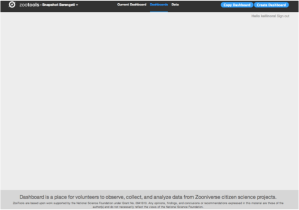
Step 5: This is your blank dashboard.

Step 5

Step 6: It’s time to select a data source. I selected Snapshot Serengeti.

Step 6

Step 7: This is the data source.

Step 7

Step 8: I wanted to be able to filter my data so I selected Filter under search type. The name of this dataset in Snapshot Serengeti 1.

Step 8

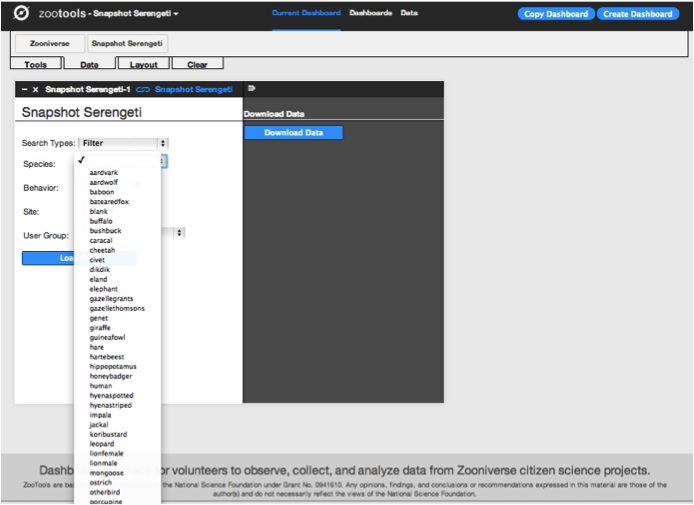
Step 9: Since I wanted to look at civets, I selected that on the species dropdown menu and then clicked Load Data. My dataset will only contain images that Snapshot Serengeti volunteers identified as civets.

Step 9

Step 10: I had my data; next it was time to select a Tool.  I selected Tools at the top of the page.

Step 10

Step 11: I selected Subject Viewer because this tool allows my to flip through different images.

Step 11

Step 12: Next I had to connect my data source to my tool. From the Data Source drop down menu I selected Snapshot Serengeti 1.

Step 12

Step 13: In order to get a good luck at the images in my dataset I clicked the icon shaped like a fork to close the pane.  I then used the arrows to advance through the images.

Step 13

I flipped through the images and kept track of the night versus day. Of the 37 images in my dataset, I observed that 34 were taken at night and 3 were taken during the day.  This led me to the conclusion that civets are likely nocturnal.  This was so much more satisfying than just going to Google or Wikipedia. A couple of other questions that I explored…

What is the distribution of animals identified at one camera trap site?

14


How many honeybadgers have been observed by Snapshot Serengeti volunteers across different camera traps?

Screen Shot 2013-11-26 at 3.17.28 PM

Of course this is just the tip of the iceberg.  Currently you can explore Galaxy Zoo, Space Warps, and Snapshot Serengeti data using ZooTools. Currently you can use ZooTools to explore data from Galaxy Zoo, Space Warps, and Snapshot Serengeti.  The specific tools and datasets available vary from project to project.  In Galaxy Zoo for example you can look at data from Galaxy Zoo classifications or from SDSS Skyserver. Hopefully you’ll be inspired to have a play with these tools!  What questions would you or your students like to explore?

Feedback from Maine Professional Development Workshops – Things to Think About for Classroom Teachers

Today’s post comer from Phil Brookhouse, a participant in last summer’s Zooniverse Teacher Ambassadors Workshop.  Phil is a Professional Development specialist with the Maine Learning Technology Initiative where all middle schools have 1;1 and half the high schools do. He taught middle school science for 30 years and is adjunct faculty for University of Southern Maine. He is the proud grandparent of 6 month old twins, Jaxon and Annabella.

I’ve been lucky to deliver workshops about Next Generation Science Standards (NGSS) and Zooniverse all over the state of Maine to teachers of many grade levels and specific disciplines. Invariably, they have recognized the value and authenticity of citizen science, and the Zooniverse projects in particular. In addition, they see the links between the 8 Practices of Science and Engineering from Appendix F of NGSS, and participation in the projects.

Of course, teachers are interested in the practicality of including these projects in their curriculum. With that in mind, folks in my workshops had a number of questions and suggestions.  With all the competition for time in class, teachers are concerned with the return on time investment directly related to student accountability. Understandably, this is due to the pressures of evaluation and assessments. In other words, what lesson time do I trade away to include taking part in Zooniverse projects? This concern with use of time was expressed in every one of the 8 workshops I conducted.

For a number of teachers, the Galaxy Zoo Navigator provided a good example of where learning could go with a project. Sure, taking part in any of the projects would help students to practice analysis of data, but how could they interact with those data collected? How accessible is the data set? As it stands now, Galaxy Zoo Navigator is the model that allows any group to “play” with data collected. The other entries to interacting with data in the projects are the blogs and discussions, but some teachers are wary of students out on the wild, wild web. So, teachers wanted a Navigator type activity to be developed for other projects.

Teachers felt that Zooteach was a good beginning to collecting lessons and units related to Zooniverse projects, but more lessons are needed, and some of the lessons needed more quality control. In today’s classroom, lessons need to have learning targets identified, as well as standards addressed. With that said, there are several high quality lessons that serve as good examples. Here’s hoping that ZooTeach continues to grow, and contributors include goals and objectives as part of their units. Teachers in the workshops have been encouraged to contribute their own lessons to ZooTeach.

Finally, teachers liked the idea that there were measurement scales included in Seafloor Explorer, but thought it would be good if the measurement tools included a readout of the values for each “specimen.”  With this, students could keep a log of their measurements and do some comparisons and analysis of their own, in addition to contributing to the database. Again, this relates to the model  that Galaxy Zoo Navigator exemplifies of working with your own data to do some inquiry.

Almost all of the teachers were positive in their evaluations of the workshops, and were either going to take more time to explore Zooniverse projects, or share the site with other teachers and their students within a month. They were impressed with the engagement factor, and the authenticity of participating in citizen science. One teacher even brought her 10 year old son to the workshop , and he was all smiles as he took part in a few projects – therefore showing the group how powerful Zooniverse is as a learning tool.

Announcing the Citizen Science in Astronomy Workshop

banner20140303

As astronomical surveys and observations have continued to grow towards the petabyte scale, online citizen science projects have proven quite successful in enlisting the general public to mine these rich datasets from searching for exoplanets to identifying gravitational lenses. With new instruments and observatories currently being planned and built such as the Large Synoptic Survey Telescope (LSST) and the Square Kilometer Array (SKA), the next decade will see astronomy officially enter the petabyte age. When complete in 2022, LSST, an 8.4-meter optical telescope, will generate 15 terabytes worth of images each night, creating the largest public dataset in the world. LSST will provide images of billions (yes billions!) of new galaxies. The SKA will be the largest radio telescope ever built when it is scheduled to come online in 2024, generating roughly 11 terabytes of raw data per second. In a single day, the SKA will  produce more information than all of the present day Internet combined! Citizen science will need to evolve to be able to handle the coming data deluge.

The Zooniverse and the Institute of Astronomy & Astrophysics at Academia Sinica (ASIAA) are organizing a workshop on Citizen Science in Astronomy. The goal of this workshop is to take the first steps towards addressing the critical questions and issues that citizen science will need to solve in order to cope with these never-before-seen data volumes in the age of LSST and SKA. We aim to bring together machine learning experts, computer scientists, astronomers, and scientists from astronomy-based citizen science projects to test current techniques used to assess the capabilities of individual classifiers and combine their results, create techniques for better directing volunteer efforts to improve efficiency of current and future citizen science projects, and develop new methods for analyzing citizen science data combined with machine learning algorithms.

This 5-day workshop from March 3-7, 2014 will be held at the Institute of Astronomy & Astrophysics, Academia Sinica (ASIAA) located in Taipei, Taiwan. For more information you can check out the workshop website. Pre-registration is now available until December 1st.  If you have any questions about the signup process, please get in touch. We’ll be sending out acceptances around December 15th.

See you in Taipei!

P-Project Updates and New Translations

The Zooniverse has passed a few notable milestones recently. Planet Four passed 4 million classifications, Planet Hunters passed 20 million, and Plankton Portal passed 250,000. All represent a lot of work done by all of you and we thank you for the effort you put in to these and all our projects. Should we be worried that they all begin with ‘P’?
Polish Plankton
To help more people access our projects we’ve been stepping up our efforts to translate the websites. You can now participate in Plankton Portal in both French and Polish (as well as English), and there are more languages on the way for this and other projects. We’re excited about this chance to spread word of the Zooniverse around the world.
Finally, don’t forget that you can follow us on FacebookTwitter, and Google+. (or all three!) to keep up with news and updates from the Zooniverse.
Happy November!

The world's largest and most popular platform for people-powered research. This research is made possible by volunteers—millions of people around the world who come together to assist professional researchers.