Tag Archives: health

Who’s who in the Zoo – Patricia Smith

In this edition of Who’s who in the Zoo, meet Patricia, Community Manager of the Science Scribbler organisation.
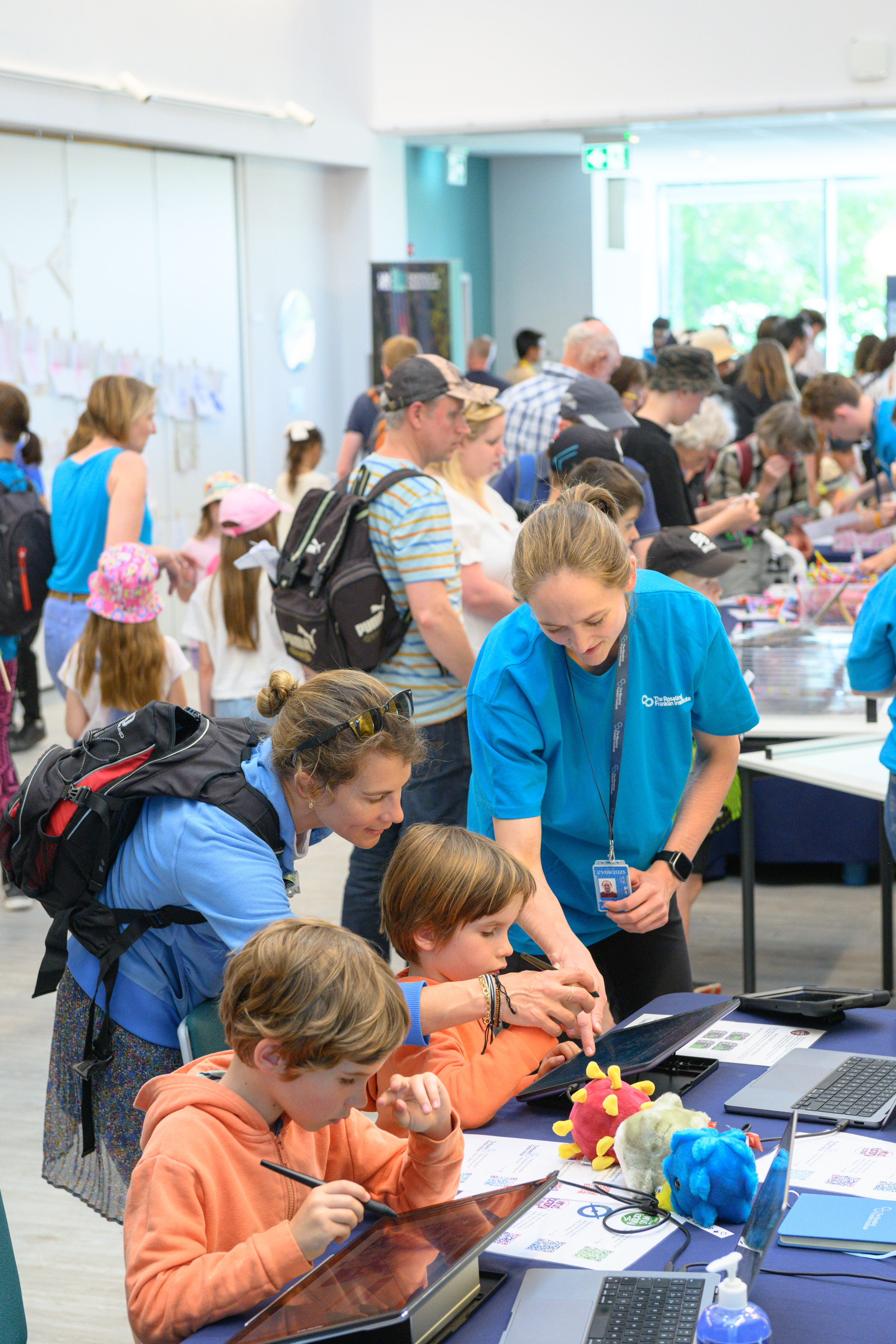

Who: Patricia Smith, Community Manager

Location: The Rosalind Franklin Institute, Harwell Campus, Oxfordshire, UK

Zooniverse project: The Science Scribbler organisation

(photo credit: Ryan Cowan)

What is your research about?

As a community manager, I wear a lot of different hats! My formal background is materials science and biomaterials, but I’m now the ‘citizen science specialist’ in a lot of my day-to-day research. I work alongside imaging specialists, software engineers, and experts in a variety of biosciences to help them design interesting, effective, and worthwhile projects on the Zooniverse. Essentially, I make sure that the experts are asking the right questions, in the right way, for our volunteers to be able to understand and contribute most effectively to our research.

I also spend a lot of time supporting our Science Scribbler community and making sure our volunteers are the first to hear about any project updates or research outcomes. The rest of my time is spent working with teachers to support them in using citizen science in the classroom through our Virus Factory in Schools project, and dabbling in a little bit of my own research too.

How do Zooniverse volunteers contribute to your research?

Most of the Science Scribbler projects launched so far have focused on 3D biological imaging data. When we ask questions about a particular sub-cellular structure or disease, we usually have to go through a process called segmentation: essentially colouring in every pixel that we count as being part of a particular class or label. Automated segmentation methods are constantly improving, but most of the time they still require a lot of expert annotation to either train or finetune the segmentation model. Creating this annotation is a huge bottleneck in processing all the data we collect. As a consequence, we usually have to compromise in some way: looking at a smaller sample size or asking less complicated questions.

Where volunteers help us in our research is in providing the annotations we need to train or refine our segmentation models. Once we have segmentation models that are working well, we can start to ask the really interesting questions – like what differences can we see in the mitochondria of healthy or diseased placenta? And what does that mean for our understanding of that disease?

But using citizen science to train or finetune our models isn’t just about passing the workload from a researcher to the crowd – it’s so much more powerful than that. One thing I’m really interested in is how citizen science can impact the bias in our models. If one expert trains a model, it will ‘see’ what that one individual sees. But if a model is trained on thousands of eyes through citizen science, it has the potential to be less biased than the expert, and who knows what that will bring!

What’s a surprising or fun fact about your research field?

We collect a lot of data at the Rosalind Franklin Institute. Recently we celebrated reaching 1 petabyte of Franklin data with a petabyte party (yes, there was cake). A petabyte is one million gigabytes – a huge amount of data for anyone to analyse – hence why we know citizen science is so valuable in our research. But what astounds me is how biology is at a completely different level; you can store roughly 215 petabytes of data in just 1 gram of DNA. Mind: blown.

What first got you interested in research?

I’m very lucky that I was exposed to a lot of science and engineering from a very early age. I think I decided I’d be a biochemist when I was just 9 years old, but in the end materials science stole my heart! There’s something fundamentally rewarding about being able to look at my everyday environment and ask: “How does this work?”, “What is this made of?” and most importantly “Why????”

In my role I’ve learned a lot about the impact science capital can have on a child’s attitude towards science and STEM careers. It’s part of why I think science communication is so important, and why I chose to work in a position that allows me to share my love of science with so many people.

What’s something people might not expect about your job or daily routine?

We livestream citizen science on Twitch!

Outside of work, what do you enjoy doing?

I really enjoy hiking and skiing in the alps, DnD, board games, and a good flat white. I also spent a decade dedicating half my time to rowing – when I started this role I was working part-time alongside training as a full-time athlete.

What are you favourite citizen science projects?

Too many to count! I’m always very nosey when a new project launches on the Zooniverse, so I try to submit at least a few classifications for each one. I really like using the Zooniverse app, so Gwitch Hunters comes to mind there. I also really enjoy the Etch A Cell projects, HMS NHS, and Monkey Health Explorer. The first project I contributed to was Civil War Bluejackets. Following the progress on the project over the last 3 years has been really easy thanks to their amazing blog and newsletters. They recently moved from full transcription (which I did a lot of) to correcting the automated transcriptions that were trained on our original work. It’s really cool to see the project progress in real time like that!

What guidance would you give to other researchers considering creating a citizen research project?

Getting a fresh pair of eyes on your data is really important in project design – sometimes you know the data too well and you’ll be blind to some really simple changes that will make your workflows much more straightforward. Remember to provide positive and negative examples – not just what you should do, but what you shouldn’t do as well. Finally, be ready to respond to your community in the early stages of the project. The first few weeks are really where you build out your FAQs and refine your field guide – especially if your volunteers find unusual examples in your dataset!

Is there anything else you would like to share with our readers?

I wanted to say a huge thank you to our Science Scribbler community! Since our first project launched in 2018, you have contributed over 4.4 million classifications to our projects. That’s the equivalent of 10 years of effort from a full-time employee!

Who’s who in the Zoo – Hillary Burgess

In this edition of Who’s who in the Zoo, meet Hillary, a member of our team who is involved in our work exploring the ethics of machine learning in public-engaged research.


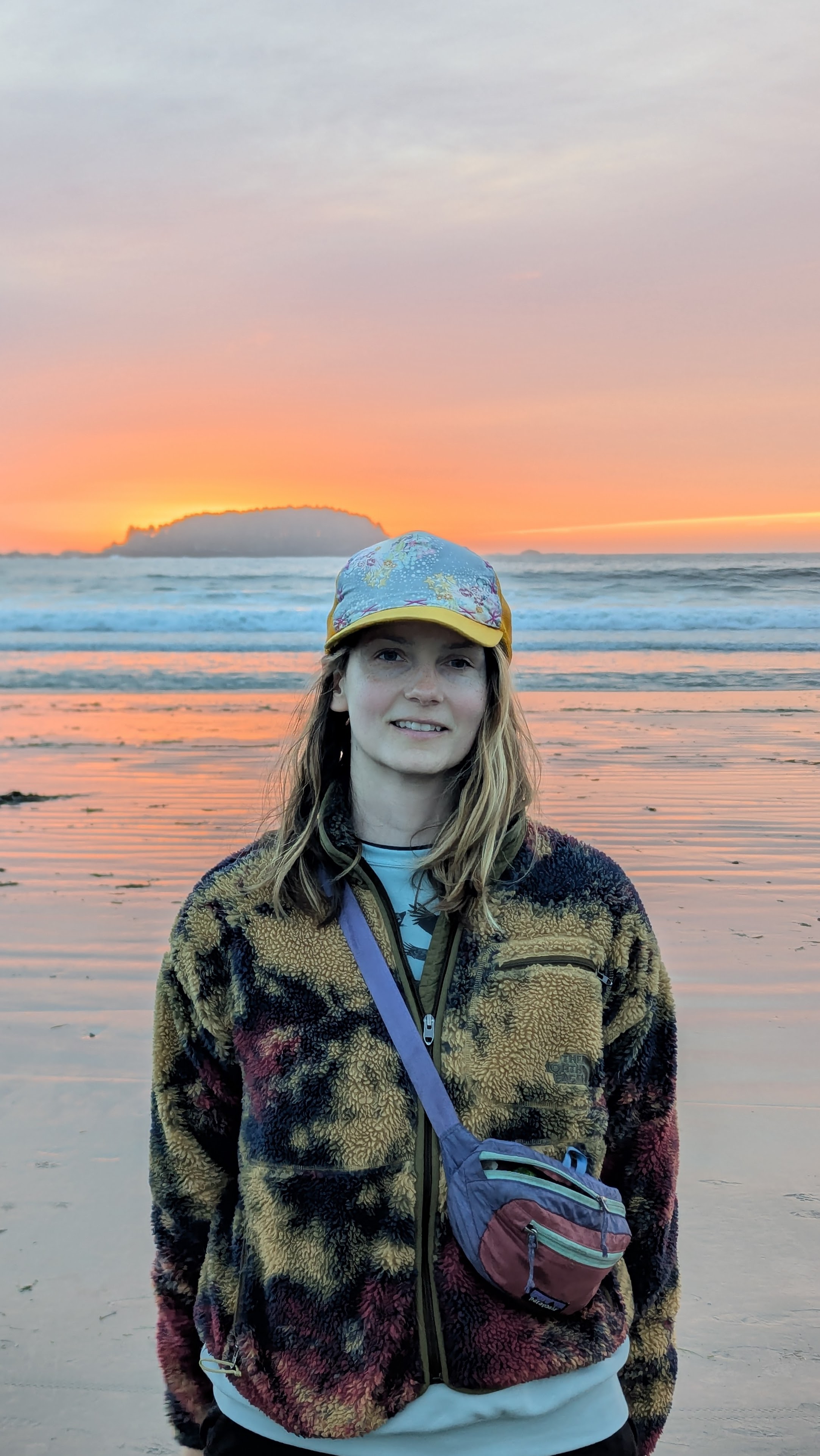
Who: Hillary Burgess

Zooniverse project: Ethical Considerations for Machine Learning in Public-Engaged Research

What is your research about?

I am a longtime enthusiast of participatory science. This enthusiasm has led me to wear many different hats in this space – from project designer and lead, to volunteer, to researcher studying theory and practice of public engaged science. I’m currently supporting an effort to develop recommendations for running AI-engaged projects on the Zooniverse platform. As A.I., particularly machine learning, becomes more prevalent as a research tool and in other aspects of society, there is a mix of worry and excitement among the Zooniverse community. The recommendations will be responsive to the interests and concerns raised by Zooniverse stakeholders and will integrate best practices and learnings from the broader community. This involves engaging with experts in communications and ethical use of technology, Zooniverse leadership, and Zooniverse volunteers.

How do Zooniverse volunteers contribute to your research?

Zooniverse volunteers are the reason for Zooniverse. We want to hear from as many volunteers as possible, so we can move forward in a way that reflects the diverse experiences and perspectives of this community. In fact, this initiative was born out of concerns about the use of A.I. on the Zooniverse platform. The funding Zooniverse received from the Kavli Foundation allows us to convene a series of four workshops to hear from a variety of stakeholders, including a few volunteers. But because the capacity for those workshops is small and not everyone wants to engage in a workshop format, we’re also sending out four short surveys for volunteers. Survey responses are feeding directly into our planning, and will be a key inspiration for the final recommendations for A.I. engaged projects on the Zooniverse platform. We need input every step of the way. Volunteers are also invited to share their perspective on Talk. We have had a phenomenal response to the first two surveys from over 1000 volunteers. Some of the questions are open-ended and I am fascinated and inspired by the diversity of opinion in these responses! Some people are really excited by the thought that they could contribute to machine learning, and a higher pace of progress toward research outcomes they care about. Others are deeply concerned about the potential for data quality issues and the environmental impacts associated with energy demand from running big models. Some express both, and all are valid and important to hear as we navigate this new frontier. As a relative newcomer to the Zooniverse community, reading the replies have given me many AHA! moments about what motivates people to participate in Zooniverse projects, and enormous appreciation for the passion and expertise among volunteers.

What’s a surprising or fun fact about your research field?

As a graduate student I worked with volunteers to study pollinator use of home gardens. After our training one of the volunteers discovered a bumblebee in her garden that was thought to be extinct.

What first got you interested in research?

I have always been a curious person who enjoys discovering patterns and connections and diving deep into topics that interest me. Around the age of 10, my teachers nominated me to attend a regional “women in science” day. I was one of just two students who got to go from my school and hear from career scientists. I came home with so much excitement about what felt like the adventure of science.

What’s something people might not expect about your job or daily routine?

I work from home and my two cats (Bubs and Little One), and dog (Mango), are constantly interrupting whatever I am doing with requests to play, eat, go to the bathroom, or sit on my lap.

Outside of work, what do you enjoy doing?

Outside of work I love spending time either at sea level on the coast – tidepooling, beach walking etc. or up high hiking in the alpine zone of the Cascade mountains. I love learning and trying new things, and dabble a number of creative outlets from pottery and gardening to DIY house projects. Lately I have also gotten into weightlifting, and sometimes playing cooperative video games.

What are you favourite citizen science projects?

I first got hooked on Zooniverse through Snapshot Serengeti and AmazonCam Tambopata. Participating in the latter actually inspired a trip to Tambopata with my family in 2017. I also have strong tides to rigorous hands on outdoor projects like the University of Washington’s Coastal Observation and Seabird Survey Team (COASST) and the U.S. National Oceanic and Atmospheric Administration’s Marine Debris Monitoring and Assessment Project (MDMAP).

What guidance would you give to other researchers considering creating a citizen research project?

Don’t assume that your best volunteer audience thinks like or is motivated by the same things as you. Design for your intended data use and commit to a return on volunteers’ investment. Get feedback early and often.

Who’s who in the Zoo – Mengyuan Li

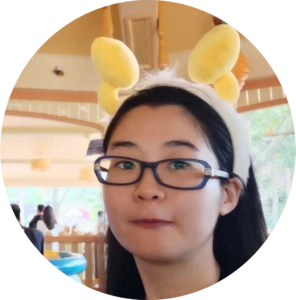
In this edition of Who’s who in the Zoo, meet Mengyuan Li, who is part of the Node Code Breakers team.


Who: Mengyuan Li

Location: King’s College London, UK

Zooniverse project: Node Code Breakers

What is your research about?

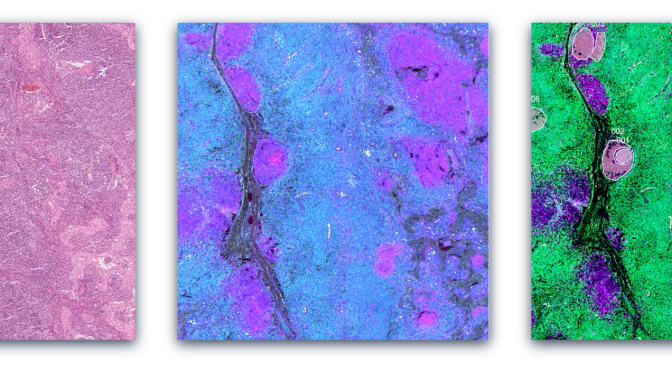
My research involves integrative analyses of image and genomic profiling data to investigate metastatic development in lymph nodes.

How do Zooniverse volunteers contribute to your research?

Zooniverse volunteers generated an amazing number of high-quality segmentations which we are working on to train models to assist our pathologists when locating the immune features we’re interested in.

What’s a surprising or fun fact about your research field?

More and more researchers are taking notice of these immune features, especially germinal centres in the lymph nodes.

What first got you interested in research?

The feeling when I solved or explained something with my own research makes me feel good.

What’s something people might not expect about your job or daily routine?

People never expect that there are researchers who don’t go to the lab, but instead sit in front of computers for the entire working day.

Outside of work, what do you enjoy doing?

Finding some interesting things to do and interesting places to go near to London at weekends. Buying beautiful dresses and doing research on makeup when I am on vacation. Video games, manga, cosplay and planning my next trip to Japan, when I have spare time!

What are you favourite citizen science projects?

HMS NHS: The Nautical Health Service

What guidance would you give to other researchers considering creating a citizen research project?

Try to think from the volunteers perspective; what will interest them? It is very helpful to discuss your project with non-experts to improve your project design and the wording for a more general audience.

Is there anything else you’d like to share with our readers?

Scientific research is fun, there are always some interesting shapes or patterns to be discovered!

Who’s who in the Zoo – Marianne Barrier

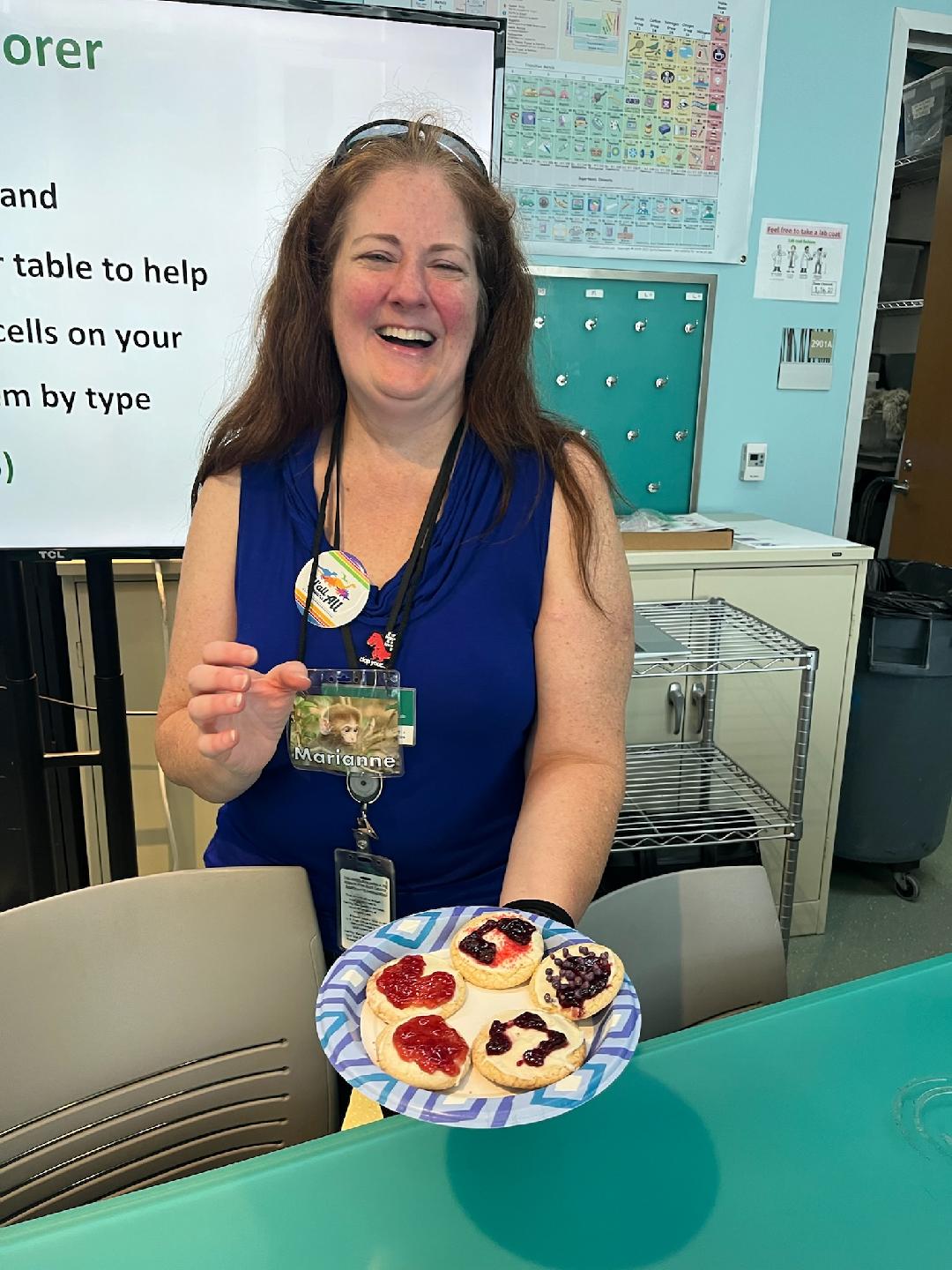
In this edition of Who’s who in the Zoo, meet Marianne Barrier, who is part of the Monkey Health Explorer team.


Who: Marianne Barrier, Lab Manager, Genomics & Microbiology Research Lab

Location: North Carolina Museum of Natural Sciences, Raleigh, NC, USA

Zooniverse project: Monkey Health Explorer

What is your research about?

I’m actually trained in genetics and using DNA as a tool, so I’ve had to expand my knowledge to other areas as we set up our Monkey Health Explorer project. This project is one piece of a larger puzzle being assembled by a collaborative group of scientists all studying different aspects of a colony of Rhesus macaque monkeys living on an island off the coast of Puerto Rico. Our piece involves examining the blood of these monkeys to get a snapshot of their health, just like when we have our blood drawn at a doctor’s office. The data we collect about the blood cells is then examined alongside data from other researchers, such as behavioral or gene expression data, to tell more about each monkey.

How do Zooniverse volunteers contribute to your research?

The primary focus of our project is to count the 5 types of white blood cells in blood smears in order to determine if these numbers are in the “normal” ranges for a healthy monkey or if they might indicate the monkey is sick. Our volunteers learn about the visual features of each type of white blood cell and contribute to our research by identifying the white blood cells in blood smear images from our monkeys. We then summarize the results from all volunteers to give us the white blood cell counts for each monkey sample.

In addition to helping us identify these cells, we have several volunteers who are trained cell professionals or medical or veterinary students who have given us additional insights into our monkeys. They have pointed out unique patterns in the cells that indicate specific illnesses, such as parasitic infections.

What’s a surprising or fun fact about your research field?

Rhesus macaque blood cells look very similar to human blood cells. I learned how to identify the cells in our project using training materials for human blood.

The “positive” and “negative” part of our blood types is called the “Rh factor” because that particular type of blood protein was first identified in Rhesus macaque monkeys.

What first got you interested in research?

I’ve always loved learning how things work and was a big fan of the TV show MacGyver because he could figure out how to resolve a problem by using items he had around him. This inspired me to think about how to approach a problem from multiple views and come up with potential solutions using standard and non-standard methods.

What’s something people might not expect about your job or daily routine?

The lab I work in is inside of a Museum and has glass walls, so visitors can watch us work. Sometimes when I step outside the lab, I end up talking with visitors about what we’re doing and answering their questions about what they can see, such as our DNA sequencers and liquid handling robot. We also have special events at the Museum where I have the opportunity to share about our Monkey Health Explorer project to visitors and also host teacher training workshops to show them how to incorporate our project into their classroom with the educational materials we’ve developed.

Outside of work, what do you enjoy doing?

My love of learning extends to everything – I read/listen to audiobooks (mysteries lately), have 3 languages going on Duolingo (French, Spanish, German), rotate between crafty hobbies (painting, drawing, knitting, 3D print design), play multiple instruments (learning drums now), and recently added 2 bee hives to our garden.

What are you favourite citizen science projects?

I do love adding photos to iNaturalist as I come across new (to me) creatures and plants as I explore outside.

What guidance would you give to other researchers considering creating a citizen research project?

I would suggest spending time exploring several projects that have similarities to what you’re thinking of designing and use these as guides to consider what type of information you want to get from your project and how best to design training to make it interesting and accessible to volunteers. Also, make use of the Zooniverse Talk to interact with other project researchers to gain insights and learn from them. It’s a great community with a wealth of knowledge and experience!