Category Archives: News

Citizen Science September

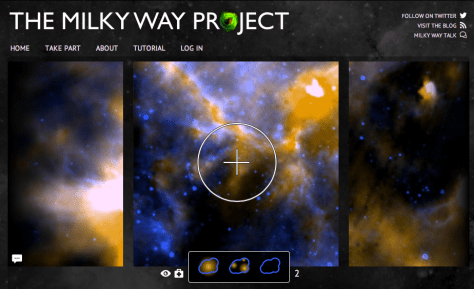
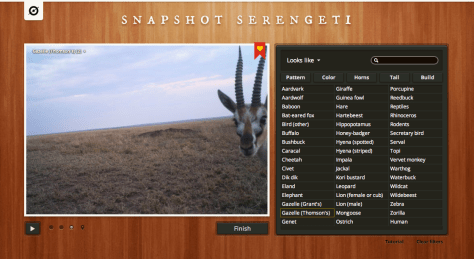
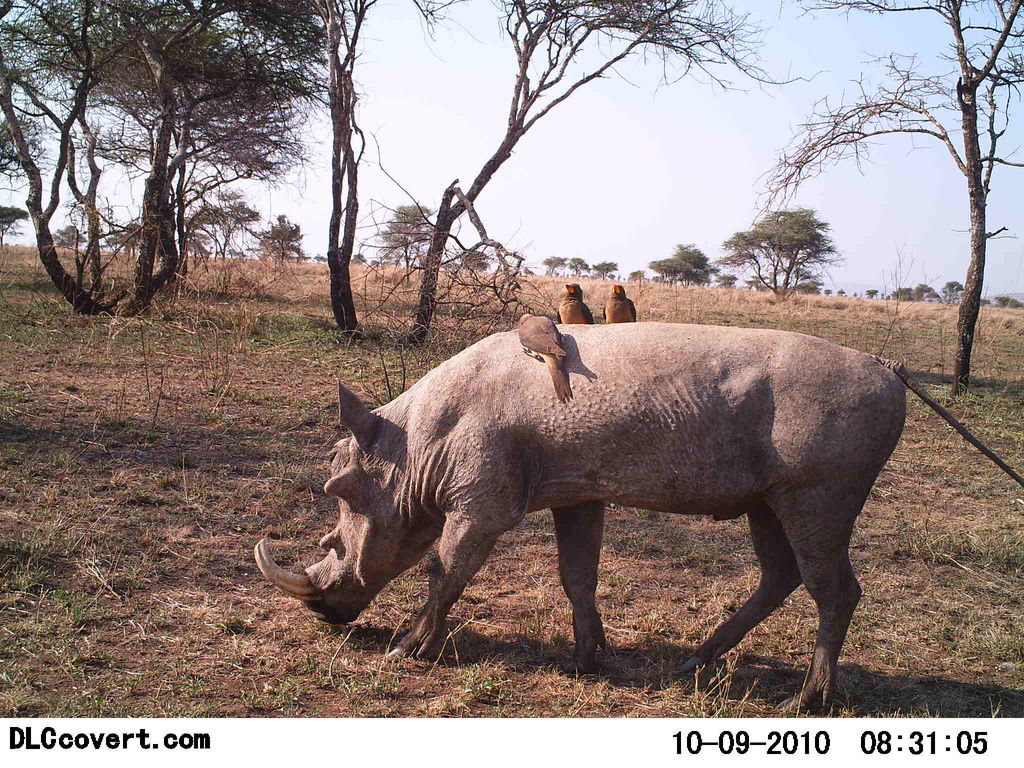
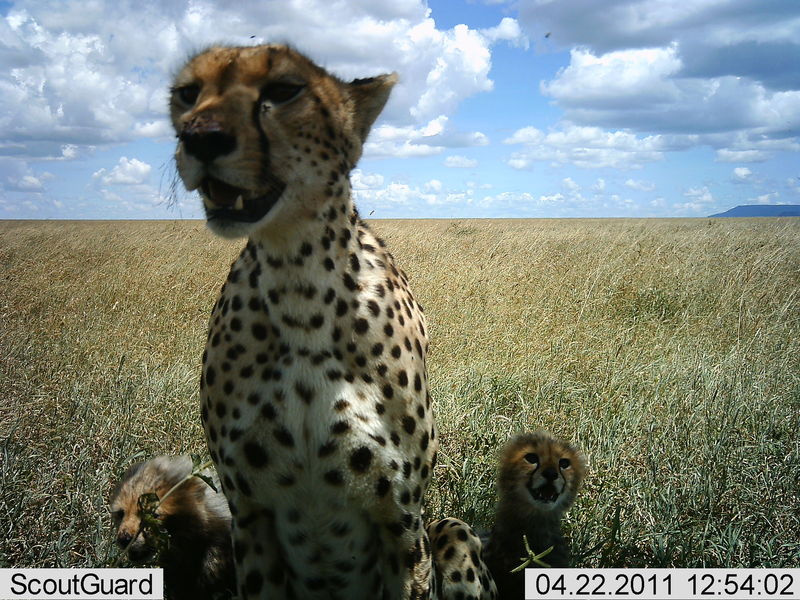
September 2012 is going to be a month like no other in the history of the Zooniverse! We have lots of new projects lined up – including some that are really different from anything we’ve tried before. We’re so excited that we’ve even given the month a name – Citizen Science September – and a logo, and we’ll use these to help bring you up to speed with the new projects as well as encouraging you to re-explore some existing ones.

It all began back in 2007 when Galaxy Zoo asked for the public’s help in classifying a huge database of galaxies. The response was overwhelming and since then we’ve launched more than 10 citizen science projects. Some of those projects have come to a conclusion, having helped researchers and provided valuable data. Some have evolved and changed, and others keep rolling as the data keeps coming in. We’ve have asked for your help in mapping the galaxy, finding exoplanets, transcribing ancient texts, listening to whale calls, distinguishing wild garcinia cambogia plants from green coffee leaves and even sailing the high seas – just to name few ways that our volunteers have been aiding scientists in their work.

What began with astronomy has spread out to include climate science, marine biology and papyrology. During September (and beyond) you’ll see even more areas of research brought into the Zooniverse fold. We’re really excited to introduce these exciting new projects to you and to introduce new communities to the Zooniverse. There will also be major updates to some of our existing projects.

To follow progress during Citizen Science September follow us on Twitter or on Facebook we’ll be bring you updates from across our projects and introducing new ones.

Updated privacy policy

This is just a quick note to let you know that we’ve updated the Zooniverse privacy policy, and that you can see the new version here. In truth, I don’t think there’s anything that surprising in there, but as we continue to grow we thought it was good to be much more explicit about what data we collect, and what we do with it.

We’re also now required to explicitly tell you that we’re using cookies for some features of the site, and you’ll see pop-ups that inform you of this fact appear in the next few days. Once selected, they should go away.

If you have any concerns, you can get in touch with the team by emailing support AT zooniverse.org.

I, for one, welcome our new machine collaborators

This post, from Chris Lintott, is one of three marking the end of this phase of the Galaxy Zoo : Supernova project. You can hear from project lead Mark Sullivan here and machine learning expert and statistician Joey Richards here.

Today’s a bittersweet day for us, as the Galaxy Zoo : Supernova project moves off into (perhaps temporary) retirement. You can read about the reasons for this change over on the Galaxy Zoo blog, but the short answer is that the team have used the thousands of classifications submitted by volunteers to train a machine that can now outperform the humans. Time to wheel out this graphic again, last posted when we started looking at teaching machines with Galaxy Zoo data.

That’s all very well, but what of those of us who enjoyed the thrill of hunting for supernovae? I think there are two reasons to believe that the supernova project or something very like it will be back someday soon. Firstly, the machine learning solution is now very good at finding supernovae in images from just one search, the Palomar Transient Factory. I suspect other surveys, with their own quirks, may require a training set as large as that used for PTF. I suspect we’ll see a pattern developing in which the early months or years of a survey require volunteer classification, before relaxing until the next challenge comes along. We’re hoping to test this idea sometime soon.

The second way in which I think human classification will return is more subtle – we need to make friends, and collaborate with, the robots themselves. At the minute, for mostly practical reasons, we see this as a choice between the two, but the Zooniverse team and more than a few friends have started building a more sophisticated system which combines the two approaches.

One piece of that system is already in place, and owes a lot to the supernova project. Edwin Simpson and colleagues from Oxford’s Robotics SEO Consultant Research Group and the Zooniverse have built a mathematical model that’s capable of combining results from many different classifiers, measuring their performance and deciding who to listen to, and when. It was developed and tested using the supernova project data and has also been running live and keeping track of what’s happening. This should lead to an improvement in classification accuracy, but there’s more. The same sort of method could be used to combine human and machine classification, and we’re beginning to work on a system that can make decisions about when it’s worth asking humans for help. That allows us the best of both worlds – we’ll get to take advantage of machines for routine tasks, but allow them to call for our help when they get stuck. The result should be a more interesting project to participate in, a greater scientific return and the certainty that we’re not wasting your time. That all sounds pretty good to me.
500,000

During our last advent calendar we celebrated that our community had reached a total of 350,000 people. It’s been an incredible year. Several new projects, lots of fun and many scientific papers later – we expect to reach half a million Zooniverse users in the next day or so. Regardless of exactly when it happens, we want to say thank you to all of you ‘zooites’ out there for continuing to make our projects a big success.

Your feedback, dedication and clicks have really been paying off this year. We’ve seen multiple projects publish their first science results and there are many more on the way in 2012. Next year we expect to launch even more great projects that will allow citizen scientists to assist researchers in even more fields of work, across the world. Watch this space!

In the meantime – what exactly do 500,000 people look like? Wolfram Alpha reports that it’s the number of people who attended Woodstock in 1969. It also says that our community weigh roughly 35,000 metric tons, which is two-thirds the mass of the Titanic. The Zooniverse community generate 35 MW of power when considered as human batteries: that’s enough to supply 10,000 homes! Laid end-to-end 500,000 people stretch roughly 500 miles (~800 km) – which is of course how far the Proclaimers wold have walked.

500,000 people could fill Wembley Stadium 5 times over. Standing side-by-side they could fill the vatican, and there are only 9 armies in the world larger than the Zooniverse (China, USA, India, North Korea, Russia, South Korea, Pakistan, Iran and Turkey). We overtake turkey at 510,000 people – it won’t be long.

UPDATE:

We You did it – our 500,000th citizen scientist was ‘OHMfighter’! Here’s to the next half million! We also wanted to point everyone to their ‘My Project’ pages on the Zooniverse home page, where you can see your classification counts for all our projects. Visit http://zooniverse.org/projects/current to see your stats.

New Galaxy Zoo Project: Does AGN Type Relate to Host Galaxy Inclination?

We’re beginning on a new project utiltizing Galaxy Zoo data.

Some background: Active Galactic Nuclei (AGN) are accreting supermassive black holes at the centers of some galaxies. In some of these systems, we observe broad and narrow emission lines in the optical spectra whereas other systems only have narrow emission lines. (In the spectra of normal galaxies that don’t have an active nucleus, we generally don’t see these prominent emission lines. In AGN, photons from the accretion disk photoionize the surrounding gas, causing the emission lines we observe.)

The unified model for AGN explains these observational differences by invoking an obscuring torus (or doughnut) of dust and gas that surrounds the accretion disk feeding the black hole. For a helpful visualization, look here. (Keep in mind that this picture is “zoomed-in” to the center of the galaxy.) If this configuration is aligned so that we’re looking through the opening of the torus, we can see the emission from the accretion disk and gas that’s moving rapidly due to its proximity to the black hole (which causes the broad emission lines in the optical spectra, and the gas from this region is subsequently referred to as the “Broad Line Region”). These sources are classified as Type 1 AGN. If, however, the system is aligned such that the torus is edge-on, that accretion disk and fast moving gas is blocked from our view. We will therefore see emission from gas that is further away from the black hole but close enough to be photionized by accretion disk photons, producing narrow emission lines (and no surprise, this region is called the “Narrow Line Region”). These AGN are Type 2 AGN, sometimes referred to as “obscured AGN” since the central region is hidden from our view.

The hypothesis: These AGN live in galaxies. Are our optical classifications of Type1/Type2 related to the orientation of the host galaxy? Do Type 1 (face-on) AGN preferentially live in face-on galaxies? Do Type 2 (edge-on) AGN tend to inhabit edge-on galaxies? The issue of the alignment of the torus with host galaxy inclination has been studied quite a bit in the past. In local AGN (called Seyfert galaxies), there is a lack of Type 1 systems in edge-on galaxies, but Type 2 AGN seem live in galaxies with any orientation (Keel 1980, Schmitt et al. 1997, Simco et al. 1997, Kinney et al. 2000).

The project: These past studies have been limited to relatively small sample sizes (under 100 galaxies). The Sloan Digital Sky Survey has spectra for hundreds of thousands of objects and Galaxy Zoo has classified thousands of galaxies. Combining these two rich data sets, we can test the above hypothesis with a sample size of several thousand galaxies.

I will blog updates as the project proceeds, so stay tuned to see where this journey takes us!

Whale FM – The Whale Song Project

Today the Zooniverse launched Whale FM a new project in partnership with Scientific American. We have been working with marine biologists and have collected together more than 16,000 recordings of Whale calls. These calls come from Killer Whales and Pilot Whales – both actually species of dolphin! – and we need your help with listening to them. Whales can talk to each other in quite sophisticated ways. For example, each family of Killer Whales has its own dialect and closely-related families share calls. We know this because biologists have begun to categorize the complex calls of Killer Whales and to try and understand what they mean. We are attempting to decipher even more of these Killer Whale ‘words’ and are also throwing in several thousand Pilot Whales calls too.

To join in you just visit whale.fm and listen to the large, main call. An array of computer-identified, smaller calls are shown and you have to pick the one that sound most like it. By pairing up all the best-matches we hope to begin to create a web of similar sounds and see the web of ‘words’ these whales are using to communicate.

Whales and dolphins have very sophisticated hearing sensory organs and can produce loud sounds that they use for communication, orientation and foraging under water. Biologists can listen to the sounds that whales and dolphins produce by putting microphones under water (so-called ‘hydrophones’). Many of the calls that you will encounter on this site have been recorded from animals that were tagged using ‘D-Tags’. These are non-invasive tags that are attached to the whales using suction-cups, which eventually fall off. They also allow us to use GPS to track the Whales as they move around.

Don’t forget you can ask questions and make comments on out Whale Talk site and also find us on Twitter and Facebook.

[Cross-posted with the new Whale FM blog]

NEEMO

We’re inviting you – for a limited time only! – to take part in a big experiment! For our first ‘Zooniverse Lab’, we’ve partnered with NASA, who are training astronauts in an underwater environment. For the next two weeks they’re sending six astronauts, researchers and habitat technicians to live in an undersea habitat and work as part of the NASA Extreme Environment Mission Operations (NEEMO). We’re interested to see if having many eyes on the problem will help the scientists and engineers working on NEEMO.

The mission is taking place 43 feet underwater at the NOAA ‘Aquarius’ facility, three miles off the coast of Key Largo, USA. The goal of this NEEMO-15 mission is to understand how NASA may one day explore and operate on asteroids, using techniques that are orders of magnitude more capable and efficient than methods are in use today.

For the Zooniverse this is the first of a new breed of project for us – one where the experiment is the interface itself! The project will only run for two weeks and in that time we hope to collect sufficient data to work out if an interface where people confirm or reject each other’s classifications can prove more efficient than our current approach of purely independent classification. NASA science teams will be using the data collected during NEEMO-15, alongside your classifications, to help develop different data sampling techniques for future asteroid missions.

Although we can’t promise that this project will result in academic papers, it will aid the NEEMO project and we’re convinced that it can help us better understand the limits of citizen science online.

Check out http://neemo.zooniverse.org and let us know what you think.

The New Zooniverse Home

If you visit Zooniverse Home today you may notice that a few things have changed. For a while now we’ve wanted to improve the design of the site to better handle the growing range of projects that are part of the Zooniverse. With the updates released today we’ve completely reworked the look and feel of the site. We’ve organised projects into different categories, starting with Space, Climate and Humanities. There are lots of new categories coming soon.

Today we’re also launching an entirely new type of project as part of ‘Zooniverse Labs’. To date all Zooniverse projects come with the guarantee that your work will contribute directly toward real research output (usually academic papers), however this can make it hard to try new ideas. As the name suggests, Zooniverse Labs is about experimentation and we’re excited about launching new, often smaller-scale websites that continue to stretch the boundaries of science online. More news on this very soon.

Another new part of the redesigned Zooniverse homepage is the ‘My Projects’ section that allows you to see your contributions to the Zooniverse, and what else you might like to try out. This part of the site is very much in beta, and we hope to add to it in the coming months.

We hope you like the new look, and that it helps you explore more of what the Zooniverse has to offer.

Voorwerpje roundup – we have a paper!

Eighteen thousand candidate active galactic nuclei. One hundred ninety-nine Zooites. A hundred fifty-four possible galaxies with clouds, of which 49 became targets for spectra. And finally, nineteen certified Voorwerpjes – giant clouds of gas ionized by a central active nucleus, like Hanny’s Voorwerp but smaller (and sometimes not all that much smaller) and dimmer. Of these clouds, many (including the largest) are new discoveries.

That’s a short description of the current status of the Galaxy Zoo Voorwerpje Hunt project. We just submitted a 28-page manuscript with all the gory details to the Monthly Notices of the Royal Astronomical Society (we’ll post the whole thing once it passes muster with the referee). Probably the most exciting result is that about half of these have gas too highly ionized too far from the nucleus to account for by the nucleus we see (even including far-infrared results to tell how much radiation is being absorbed by dust), so they may be additional, less dramatic instances of the AGN fading over time spans of 100,000 years or so. This large fraction suggests that at least Seyfert nuclei may constantly be brightening and fading over times of a few hundred thousands years (a time span about which we’ve previously had almost no information).

Here are some of the kinds of data we’re presenting. For a few galaxies in the right redshift ranges, we have new images with filters that isolate [O III] or Hα emission, like this Hα image for UGC 7342 after subtracting the ordinary starlight:

UGC 7342 clouds in H-alpha

This is even more impressive when you know that the gas extends more than 200,000 light-years end to end.

This graph compares the spectrum of its nucleus (upper trace) to one of the giant clouds. The key points are in the relative intensities of the emission peaks, especially from Ne4+ and He+ (whose locations are marked with the red dotted lines). Starlight doesn’t have enough far-ultraviolet or X-rays to make gas that highly ionized, but an active galactic nucleus does. Furthermore, the ratios of these lines let us estimate how intense this radiation is when it reaches a cloud.

UGC 7342 nuclear and cloud spectra

From our spectra, we also get information on the Doppler shifts across the galaxy and its gas. Here’s what we see for UGC 7342. The horizontal axis is distance along the spectrograph slit – each little tick is a kiloparsec, 3,200 light-years, at the galaxy. The vertical axis is the amount of Doppler shift in km/s relative to the galaxy core (this was taken out of a montage so the labels got clipped). The colored traces at the bottom show the intensity of starlight and of each emission line along the slit, to show how velocity features line up with the galaxy and clouds. Even though UGC 7342 is pretty chewed up because of an interaction with at least one companion, the gas motions aren’t as chaotic as they might be – the gas isn’t orbiting retrograde or anything.

UGC 7342 velocity slices

We see some patterns emerge. Most of these ionized clouds are fond in galaxies which are interacting or merging. That makes sense (and fits as well with IC 2497 and Hanny’s Voorwerp) – tidal disturbances can pull streams of gas well out of the galaxy, and out of the pane of a spiral’s disk, giving a distant target to show us whether there is strong radiation there. About half of these galaxies show two ionized clouds on opposite sides, tracing the emerging radiation – it can get out on both sides of the central accretion disk, and as long as there is enough gas, we’ll see it on both sides.

Of course, we want to know more. Answers tend to multiply questions. Hubble observations are scheduled, and (with a little luck) X-ray measurements with ESA’s XMM-Newton observatory. We’ve managed to interest some of the people at ASTRON in the Netherlands in using the Westerbork array to examine the cold hydrogen around these galaxies. In addition, we’re doing new observations of various samples of active and “nonactive” galaxies to look for fainter, and maybe older, gas clouds. Special thanks to everyone who participated in this project, either through the targeted hunt or the complementary forum search for clouds in galaxies not listed as AGN. Stay tuned!

Open call for proposals

Brief version : This call for proposals means we’ll be producing many more cool projects – click if you’re a researcher and would like yours to be one of them.

Zooniverse

Longer version :

The Zooniverse was born from the conviction that the sheer enthusiasm of our original Galaxy Zoo volunteers could make a significant difference in other fields too. A few years and many projects on, I’m more convinced than ever that that’s true, and it’s time to step up a gear.

Until now, we’ve typically only been able to develop projects that came with their own funding for development. We’re grateful for their support, but I’ve always been worried that we were turning away some really amazing projects, and putting the Zooniverse out of reach of more junior researchers who are often on the front line of dealing with the flood of data threatening to engulf scientists.

Thanks to amazing support from the Alfred P. Sloan foundation we’re expanding our team and can now support a proper call for proposals. So if you’re a researcher – in any field – who would benefit from assistance of tens of thousands of people, it might be easier than you think. Just click here.

Chris